
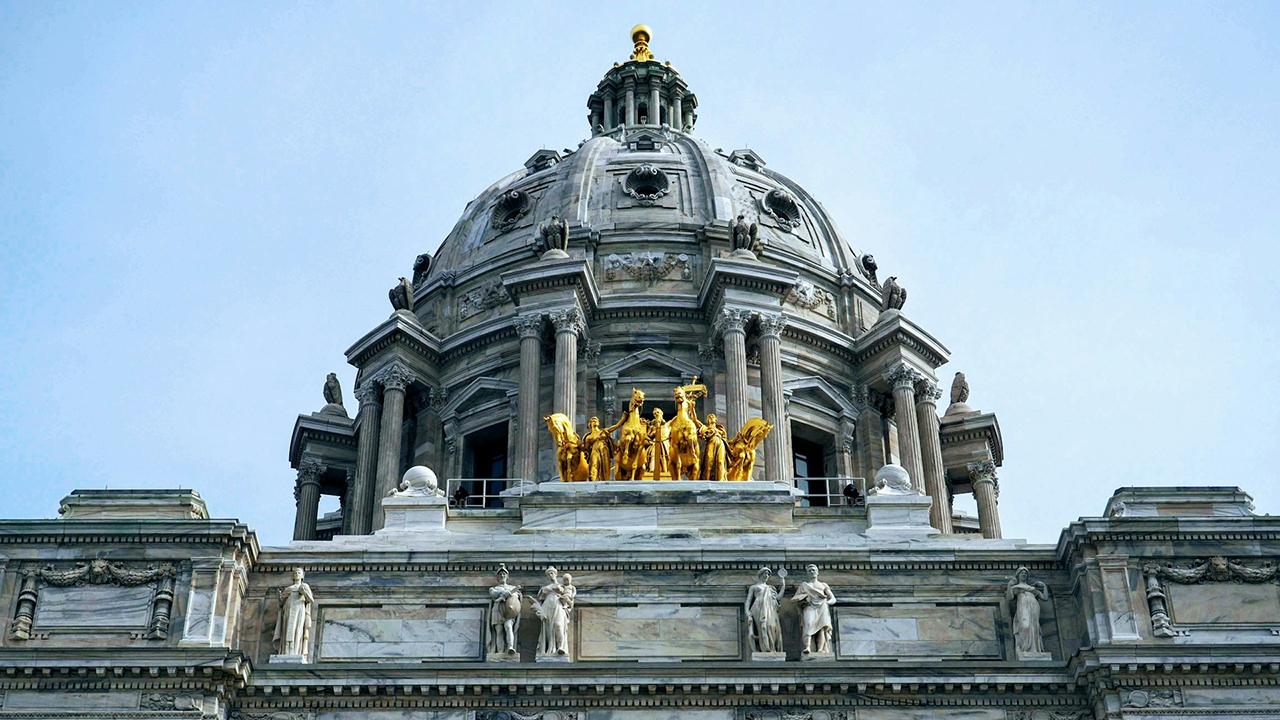
Fresh Energy has been advancing bold, equitable clean energy and climate policy for over three decades. As we enter the second half of Minnesota’s biennium, we’re navigating a difficult legislative landscape: the assassination of Speaker Melissa Hortman and her husband Mark; the shooting of State Senator John Hoffman and his wife Yvette; and the unlawful, racist, and violent conduct of federal agencies in Minnesota.
Despite these challenges, our commitment to a rapid, equitable energy transition remains unwavering. Climate change isn’t taking a break, and neither are we.
The Minnesota Legislature convened on February 17, 2026, and this session will be as difficult as last year. With a divided House maintaining its 67-67 split and a condensed, non-budget year timeline, we’re approaching our work strategically: defending our hard-won clean energy victories like 100% Clean, pursuing clean energy opportunities where we can, and building the foundation for transformative change ahead.
Don’t feel like reading? You can listen to our podcast! Tune in to our annual legislative outlook podcast episode featuring Fresh Energy staff Margaret Cherne-Hendrick, Justin Fay, Brynn Kirsling, and John Berns, our contract lobbyist.
Protecting Minnesota’s climate laws: defending Minnesota’s 100% clean electricity standard
Nothing is more important this session than defending Minnesota’s commitment to 100% carbon-free electricity by 2040, one of the nation’s strongest clean energy standards.
This law, passed in 2023, is the foundation for Minnesota’s economy-wide decarbonization. As we transition our power sector from dirty and expensive coal and gas to clean wind, solar, and battery storage, we can use that clean electricity to power electric vehicles, heat and cool our homes with heat pumps, and transition our whole economy to run on clean electricity. Minnesota is already halfway to decarbonizing its electricity sector — and our 100% clean law helps us get to where we need to be to mitigate climate change.
Last year, we successfully defended 100% clean against attempts to weaken it; we expect similar challenges this year and are ready to defend it again. Our Action Network was essential to defending 100% clean last year; join today to speak up for strong clean energy and climate laws in Minnesota.
Clean energy and climate policy we’re advancing in 2026
Here’s what Fresh Energy is pursuing this year to help Minnesotans transition to a carbon-free economy:
Capping energy burden to ensure affordability
Energy burden — the percentage of household income spent on energy costs — is a critical equity issue. Under the leadership of Shubha Harris, Fresh Energy’s chief equity policy officer, we’re exploring legislation to establish a statewide energy burden cap, ensuring no household spends more than a certain percentage on energy costs.
This work exemplifies Fresh Energy’s Vision 2030 Strategic Framework: advancing a clean energy economy that works for all Minnesotans.
Supporting sustainable aviation fuel to clean up our skies
Transportation is Minnesota’s largest source of greenhouse gas emissions, which includes air travel. While a lot of the transportation sector can be decarbonized by switching internal-combustion engine cars to electric vehicles — airplanes can’t be so easily electrified. Sustainable Aviation Fuel (SAF) offers a current solution that uses a less-carbon-intensive fuel to power airplanes. Minnesota is positioned to become a SAF hub — ideally with the right agricultural feedstocks, like annual winter oilseeds such as camelina, and infrastructure to transport it from the fields where it’s grown, the facilities it’s produced, and the airports where it’s used.
Fresh Energy’s transportation team has been involved in stakeholder discussions around a tax credit bill with bipartisan support. Our priority is to ensure incentives reward fuels with the lowest carbon intensity, especially power-to-jet pathways that use clean electricity rather than relying solely on crop-based feedstocks.
Building geothermal energy to harness clean heat for Minnesota’s buildings
Minnesota’s winters can be brutally cold, and few other places in the U.S. understand the importance of clean heat sources to keep our homes and businesses warm all winter long. Geothermal district energy systems are an elegant solution to decarbonize Minnesota’s heating emissions. These systems use earth’s consistent underground temperature to heat and cool interconnected buildings efficiently on the neighborhood-scale.
The geothermal planning grant program Fresh Energy championed in 2024 has been wildly successful: Minnesota received nearly double the applications than its funding could support, with funding projects ranging from Rice Creek Commons in Ramsey County to the Woods neighborhood in Crookston to the Sandstone School redevelopment.
This session, we’re seeking another round of funding to meet that demand. Geothermal has bipartisan support and survived federal clean energy cuts. Last session also brought a key win: Tribal governments are now eligible applicants for these planning grants.
Tackling the hard-to-abate heavy industry sector
Heavy industry accounts for 15% of Minnesota’s greenhouse gas emissions, with just 37 facilities producing 87% of our manufacturing sector’s carbon dioxide emissions. As one of Fresh Energy’s newest program areas under our Vision 2030 framework, we’re pursuing strategic decarbonization opportunities like electrifying low- and medium-heat applications and fuel-based approaches like green hydrogen for high-heat processes.
We’re seeing encouraging bipartisan support across nearly every bill this sector, and being early in these conversations ensures we can build a better climate future for all Minnesotans.
Helping more Minnesotans use low-cost solar power
Solar power is an affordable, clean source of electricity — and more Minnesotans want to benefit from its benefits. Plug-in solar technology (sometimes called balcony solar) is popular across Europe and is gaining U.S. traction for being an accessible entry point for Minnesotans to use more solar energy, especially renters. Fresh Energy is working to remove red tape for consumers to use plug-in solar.
What’s next, and how you can help
Fresh Energy’s Public Affairs team is looking forward to advancing clean energy and climate policy legislation this session. You can expec Brynn Kirsling and John Berns to be at the Capitol day in and day out, bringing years of institutional knowledge to build support for strong climate policies at the Capitol. Ethan Culver will be mobilizing Fresh Energy supporters on our Action Network when it’s most crucial, our Session Associate Molly McMullen will keep our staff organized at the Legislature, and our Capitol Pathways Intern Kai Hunt will keep our commitment to building the next generation of leaders.
You can expect Fresh Energy’s policy experts across all our program areas — electricity, transportation, buildings, and heavy industry and agriculture — to be testifying at hearings, meeting with legislators, and bringing trusted technical expertise to Minnesota’s legislative process.
Between now and May, Minnesota will be considering many bills that affect our clean energy transition and our shared climate future. You can stay up to date on our work by signing up for our monthly newsletter “Powering Progress” and join our Action Network to speak up for clean energy and climate at the Legislature.