
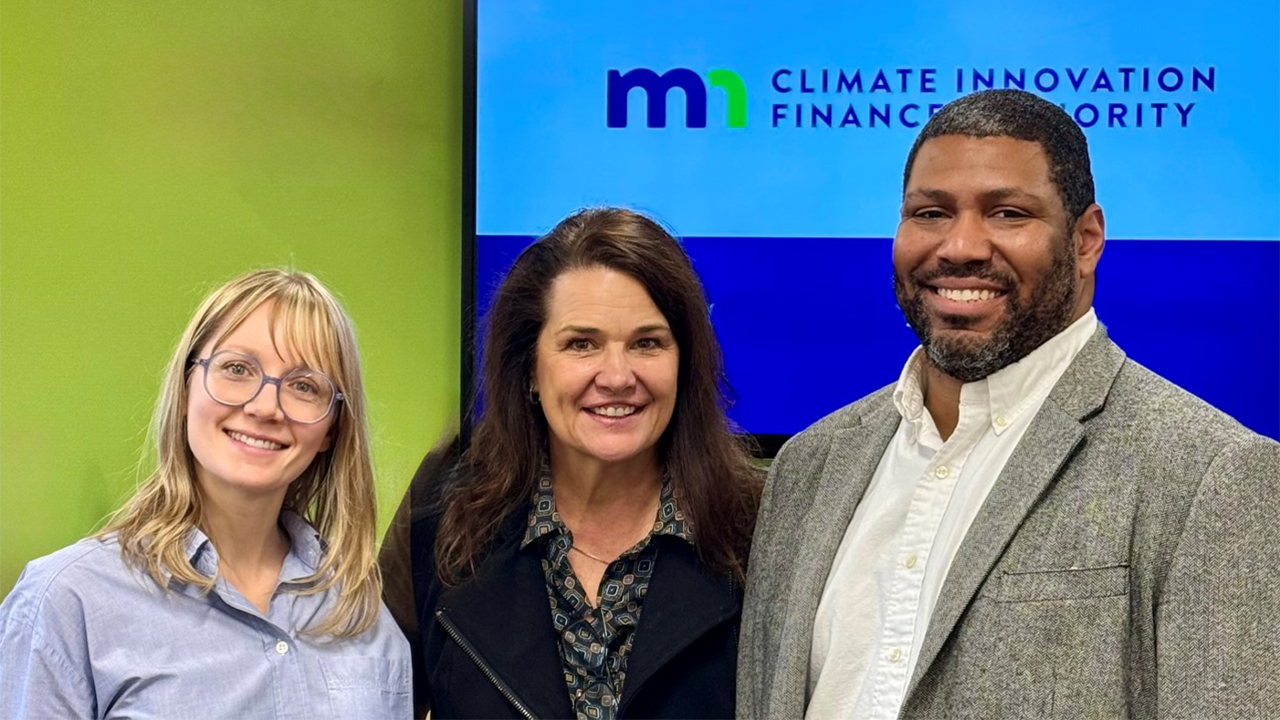
When we last checked in with the Minnesota Climate Innovation Finance Authority (MnCIFA) back in April 2024, the new state agency was just getting started. The new Board of Directors had approved MnCIFA’s first loan, and MnCIFA’s initial request for information for proposed projects had generated over $1 billion in requests.
More than a year later, MnCIFA has rapidly evolved from a skeletal staff to a fully-functioning state agency actively deploying millions of dollars in loans across Minnesota — and now navigating green financing in the face of significant federal funding uncertainty.
MnCIFA was created and passed into law during Minnesota’s historic 2023 legislative session to help speed up equitable clean energy projects across the state by providing financing to projects that might not otherwise move forward. As a green finance authority, known in other states as a “green bank,” MnCIFA funds clean energy projects through loans.
The results speak for themselves: Despite only finishing its strategic plan last December, MnCIFA has already helped to fund geothermal systems, community solar projects, energy-efficiency housing renovations, and even innovative carbon capture technology.
Watch our webinar with MnCIFA, as well as green finance experts at SunRise Bank and Community Reinvestment Fund USA, in December 2025 to learn more about innovative financing for clean energy projects in Minnesota.
Building an agency while funding clean energy projects immediately
Most new government agencies spend their first years setting up internal processes, hiring staff, and setting up an office, but MnCIFA wanted to begin improving Minnesota immediately. While the executive director did spend time in 2025 securing a temporary office (and setting up its new one) and hiring staff, the agency’s main focus was getting loans out the door. The MnCIFA Board of Directors has approved over $30 million in loans to 13 projects as of November 2025, with more loan proposals headed to the board before year’s end.
“We’re like a community bank, but with a specific purpose,” explains MnCIFA Executive Director Kari Groth Swan, who joined MnCIFA as executive director in November 2024. “We provide loans to climate projects that improve Minnesota, which would not move forward but for MnCIFA. We’re filling a gap in green financing.”
Unlike traditional grants that distribute one-time money, MnCIFA’s loans create what Groth Swan calls a “flywheel” — money gets lent out, repaid, and lent again to new climate projects.
“We’re demonstrating proof that these projects are shovel-ready, save energy costs, and are helping Minnesotans across the state,” says Groth Swan. “When we lend money, it’s paid back to us to lend again to a different project — meaning every dollar works multiple times for Minnesota’s clean energy future.”
MnCIFA’s Board of Directors — appointed by Governor Tim Walz and composed of state agency representatives, renewable energy and finance experts, and leaders from environmental justice and Tribal communities — has accomplished significant work in these early years.
They’ve developed a strategic plan, investment plans, and lending guidelines that position MnCIFA as what Groth Swan calls “a regional and national leader” among green banks, despite being brand new.
It hasn’t been easy. The authority has faced unprecedented changes at the federal level, from grants being frozen, funds clawed back, tax incentives rapidly shifting or phased out, and climate denial and antagonism affecting Minnesota’s ability to fund clean energy and infrastructure projects in the state.
“In spite of political headwinds, it’s exciting to stand up a new financing authority,” said Groth Swan. “We’re attracting projects and talent, because Minnesotans care about getting this work done.”
Despite these challenges, MnCIFA is already helping Minnesotans build climate-smart projects across the state.
Funding innovative clean energy projects across Minnesota
Over the past year, MnCIFA has invested in a variety of different climate projects, from geothermal to solar to energy efficiency to carbon capture.
The majority of projects are located in or directly benefit environmental justice communities meeting the state law requirement and purpose MnCIFA was created for, to support equity in clean energy.
Among the clean energy projects MnCIFA has funded:
For the Sandstone School Workforce Housing project, MnCIFA provided a $3.62 million loan that will invest in energy efficiency for a historic building that will provide workforce housing for a community that lacks rental housing. The Sandstone School was originally built in 1901 but has been empty and deteriorating since 2004. The building is being renovated into 32 apartments for workforce housing through federal, state and private grants and loans.
MnCIFA’s financing makes the energy efficiency components possible The loan covers upfront costs to install a high-efficiency boiler system, variable refrigerant flow technology, and improvements to the windows and roof. Loan repayment will be primarily via federal and state historic preservation tax credits the project will qualify for. The result: lower utility bills and better energy efficiencies that are estimated to reduce electricity use by 65% annually and natural gas use by 41% annually – and give residents a more comfortable living space. It’s exactly the kind of project where MnCIFA can fill a financing gap that traditional lenders can’t always provide — funding the clean energy systems that make a community project viable.
(Check out the Osprey Wilds solar project to learn about another recent climate solution being built near Sandstone, Minnesota.)
For the Community Resiliency Hub in Minneapolis, MnCIFA provided $1.2 million for solar power and battery storage across four Minneapolis area schools, providing not just clean power and reduced energy bills, but allowing the schools to become resilience hubs during emergencies.
Schools often serve as gathering places during crises like tornados, blizzards, and extended power outages. A resilience hub ensures these buildings can maintain power when the surrounding neighborhood loses it, providing a place for residents to have shelter, recharge phones and medical devices, and receive assistance when they need it most. The project, developed in partnership with the City of Minneapolis and Xcel Energy, is already in the construction phase.
At the Greater Minnesota Housing Fund, MnCIFA has provided a revolving loan of $4 million. GMHF’s first loan from MnCIFA funding is for an affordable housing project with for projects like the Native American Community Clinic on the ground floor. This new, mixed-use building will utilize geothermal energy for clean heating and cooling, plus solar and energy-efficient materials to have near-net-zero energy use. This project will provide 83 units of housing with “deeply affordable” rents, as well as the Native American Community Clinic, which will serve an additional 3,000 patients a year.
While the Native American Community Clinic Housing Project is the first project from the revolving fund, it won’t be the last. The purpose of the MnCIFA loan is to support the institutionalization of energy lending as a standard practice for the Greater Minnesota Housing Fund. Originally established in 1996, GMHF has supported communities and affordable housing with over $1 billion in investments and 21,000 affordable homes in every county in Minnesota. And thanks to MnCIFA, that work will now have funding and partnerships to be more climate-smart, too.
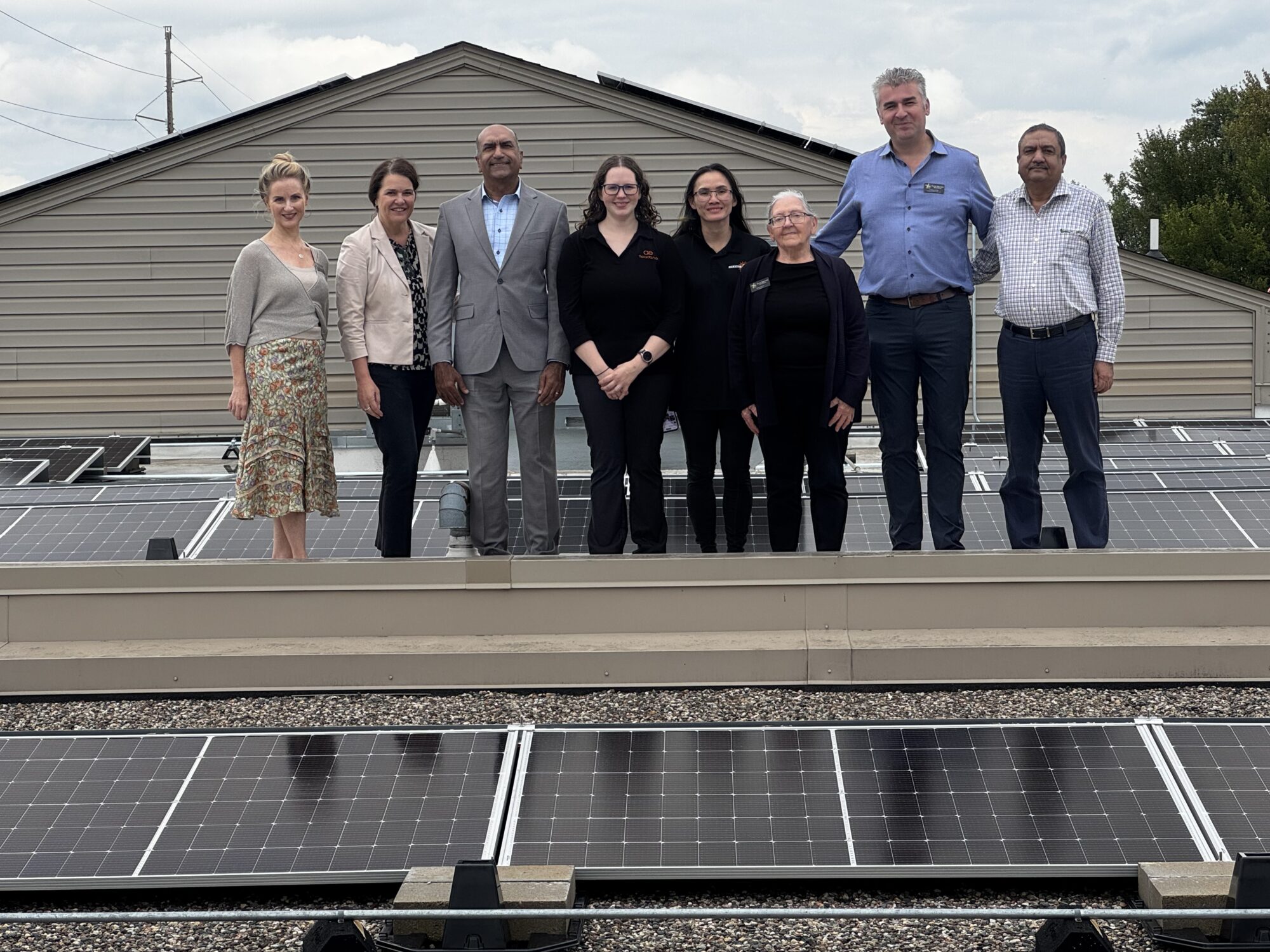
Minnesota Interfaith Power & Light developed a portfolio of projects with Lake Street Solar and Apadana Energies to install solar energy at 10 community nonprofit sites — churches, community centers, and cultural hubs — across the Twin Cities. MnCIFA financed the $1.84 million portfolio loan fund to Lake Street Solar to make it happen. A total of 579.18kW of rooftop solar is being installed on nonprofits in St. Paul, Plymouth, Minneapolis, and Golden Valley and will generate enough to meet most of the nonprofits’ energy needs, providing them with more resources to serve their communities.
How MnCIFA’s financing bridges a gap to make climate projects reality
MnCIFA can fill critical financial gaps that traditional lenders can’t, bringing important climate projects to fruition that otherwise wouldn’t have been built.
MnCIFA operates differently from traditional lenders in several important ways using what’s called “concessionary capital” — financing terms that are more flexible and affordable than market rates to bring projects to fruition. That means MnCIFA has flexibility to offer below-market interest rates, defer payments, and be flexible in other ways on loan terms — making clean energy accessible to underserved communities. In addition, by lending to innovative, clean technologies, MnCIFA proves these projects are viable investments for traditional lenders to begin financing.
Bridge loans are one key tool. These provide capital to organizations for upfront costs, such as installation of renewable energy, that can be repaid once the organization subsequently receives tax credits or revenue from other sources, such as utility savings.
Take the Sandstone School project as an example: MnCIFA’s bridge loan covered upfront costs for an energy-efficient boiler and HVAC system, as well as high-efficiency and windows and roofing. The loan will be repaid primarily via federal and state historical preservation tax credits.
“It’s a great state asset to provide lending opportunities to projects to make sure Minnesota is going to achieve our climate action goals,” says Groth Swan. “We’re trying to prove the technologies we’re funding are worthwhile projects with the hope they’ll be funded in the future from traditional lenders, too.”
The agency evaluates each project using two scorecards. One is quantitative — standard financial underwriting to ensure the loan will be repaid. The other is qualitative, considering factors like workforce development, prevailing wage standards, greenhouse gas reductions, community benefits, and whether the project represents new technology or serves a new geographic area.
Projects are first processed and reviewed by MnCIFA’s staff. Projects that qualify are then discussed by the Board of Director’s Credit Committee. Depending on the Credit Committee’s discussions and decision, a project may move forward to be discussed and voted on by the full Board of Directors in open, public meetings.
As MnCIFA’s Board has approved loans over the past year, the staff and Board have been developing a replicable, transparent process to make it easier for future projects to access MnCIFA’s lending.
“Our Board and staff have done herculean work these past couple years, developing initial investment plans, our strategic plan, and lending standards,” said Groth Swan. “We nationally punch above our weight. Even though we’re new, we’re looked at as a regional and national leader because we’re well-capitalized for a new climate financing authority.”
What’s next?
With each loan approval, MnCIFA demonstrates that Minnesota is building a clean energy economy that works for everyone.
“We’re thinking strategically about how to get more loans out in the coming year,” said Groth Swan. “We’re getting clear on our capital stack, what innovative projects are needed the most, and how we can exemplify ourselves as good stewards of money across Minnesota.”
With each project, MnCIFA is helping to fund climate-smart infrastructure, supporting good-paying jobs, reducing energy costs and emissions, and ensuring that communities historically left behind share in the prosperity of Minnesota’s energy transition.
“When I’m on calls with other finance authorities across the country and get to share the work we’re doing here in Minnesota, it gives me hope. We’re all in this together,” said Groth Swan. “Minnesota is deeply committed to building a better future that’s cleaner, more affordable, and provides a better future for us all. That’s what we’re helping to fund at MnCIFA.”
As MnCIFA continues to evolve and fund more clean energy projects across our state, one thing is clear: green financing is already making a difference in Minnesota, one project at a time.