
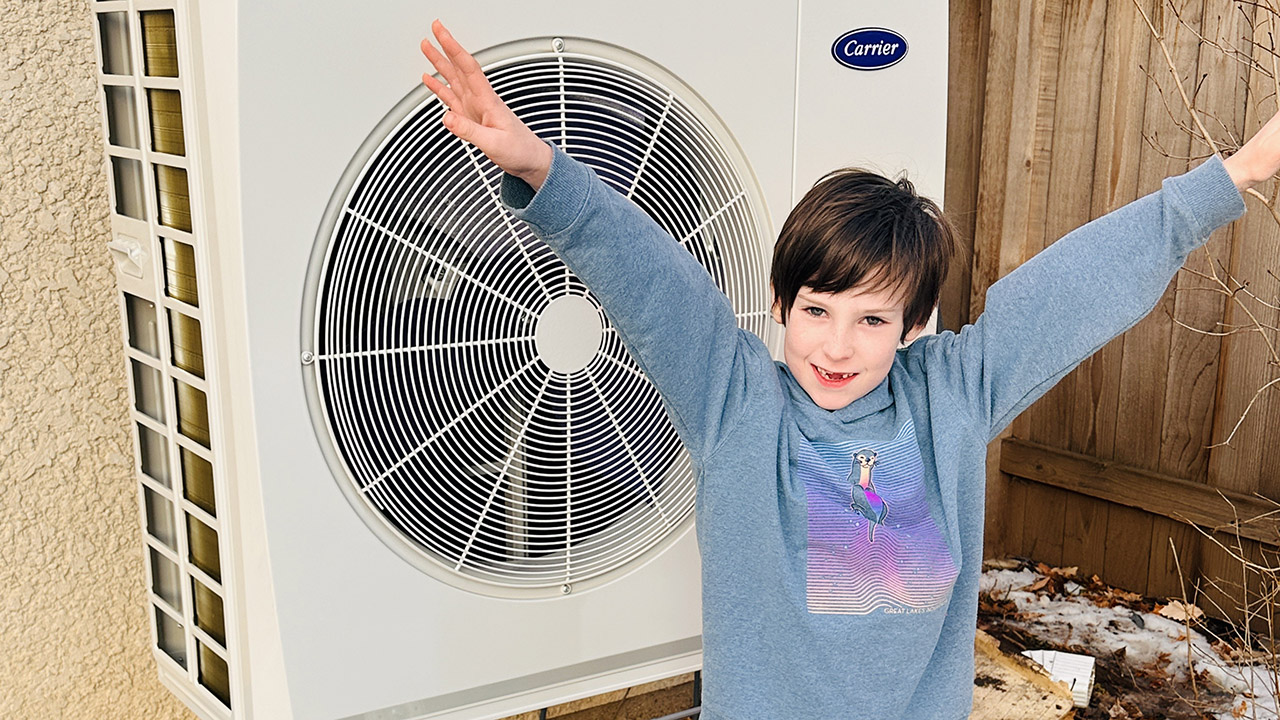
If you’ve met me, you know that I’m passionate about building construction and building decarbonization strategies — which is one of the reasons I landed at Fresh Energy! In 2025, my family relocated from Northern Minnesota to the Twin Cities and purchased a 2,300-square foot rambler built in 1958.
Now, if you know anything about construction from that period, this home had everything you’d expect, ranging from not enough insulation to old windows and an outdated furnace. And like many old homes, this one also had air tightness that is twice as leaky as a newly-built home. Old homes often have more challenges like this, so none of it was a surprise; instead, I viewed it as a challenge.
My spouse and I carefully debated whether all-electric heating in an older house like ours was the way to go, and after much consideration we decided to take the plunge, remove our old gas furnace, and install a heat pump with electric backup. We went with a cold climate heat pump that is effective to –22° F. This system was recommended by our HVAC installer and standard for them.
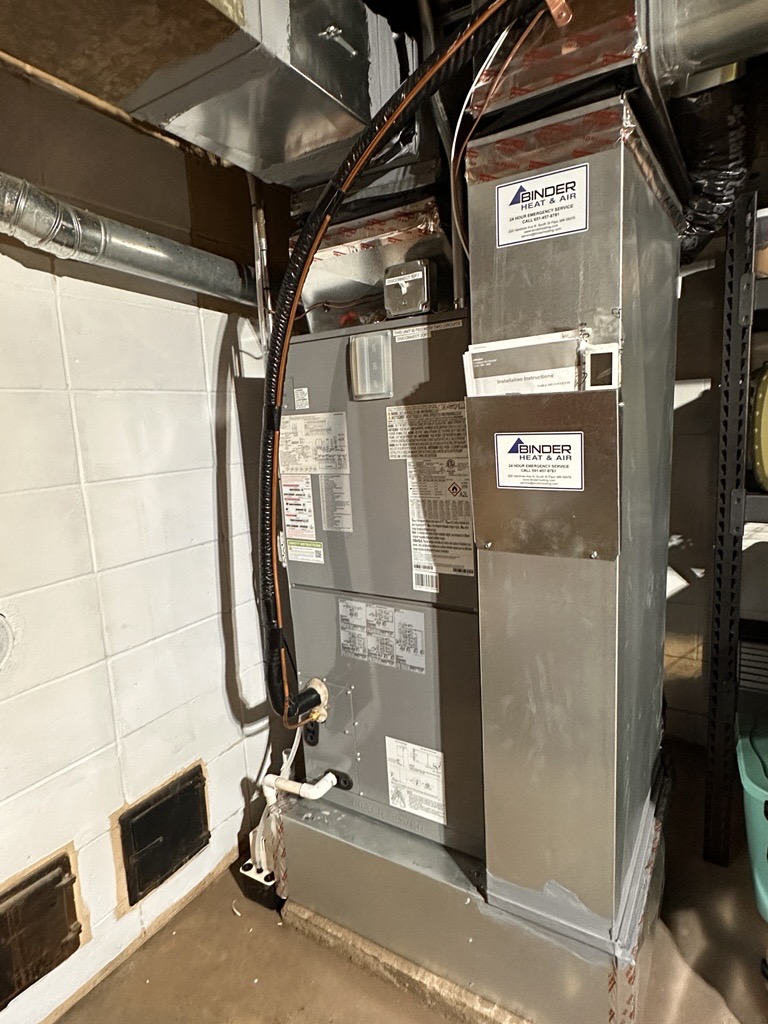
Of course, our primary concern (like many folks here in Minnesota) was that our heating would always be in “backup” mode, and the heat pump itself wouldn’t be able to keep up during the coldest weeks of Minnesota winter. To set our heat pump up for success, we air sealed and insulated the attic (low-hanging fruit!) and sealed the big gaps and cracks, but we decided to wait on adding more insulation to our R6 walls and kept, for now, our old windows. After this work, what we found out surprised us…
It turns out that our old gas heating system was oversized, and the new slow and steady heat pump heating resulted in a more comfortable, consistent temperature throughout the home when compared to the old furnace that had our home cycle between hot, cold, hot, and cold. The heat pump’s air felt warm on our feet, and best of all, it would also provide us with air conditioning in the summer heat. And bonus: with the heat pump we only needed one piece of equipment rather than two! With less maintenance, cost, and hassle, it’s nice to have less “stuff” that can break.
As an energy nerd, I couldn’t resist tracking the system’s performance. To my surprise it kept up with the full heating needs in “heat pump” mode down to -14° F. All in all, this meant we had to use our electric backup heat very little throughout the winter. In terms of a gas equivalent, we ended up using less than two grill tanks of propane ($50.00) for back up heating. We spend more on gas for our grill every summer than we would have needed to heat our house!
While finding the right HVAC company can be tricky, heat pump technology is proven, reliable, and cost-effective path for homeowners who are confronted with an aging furnace or boiler system in an existing home. More and more Minnesotans are making the same calculation and choice that my family did and choosing electric heat pumps for heating and cooling their homes.
Learn more about heat pumps from Fresh Energy’s explainer blog post and check out other staff stories about their heat pump installations.