
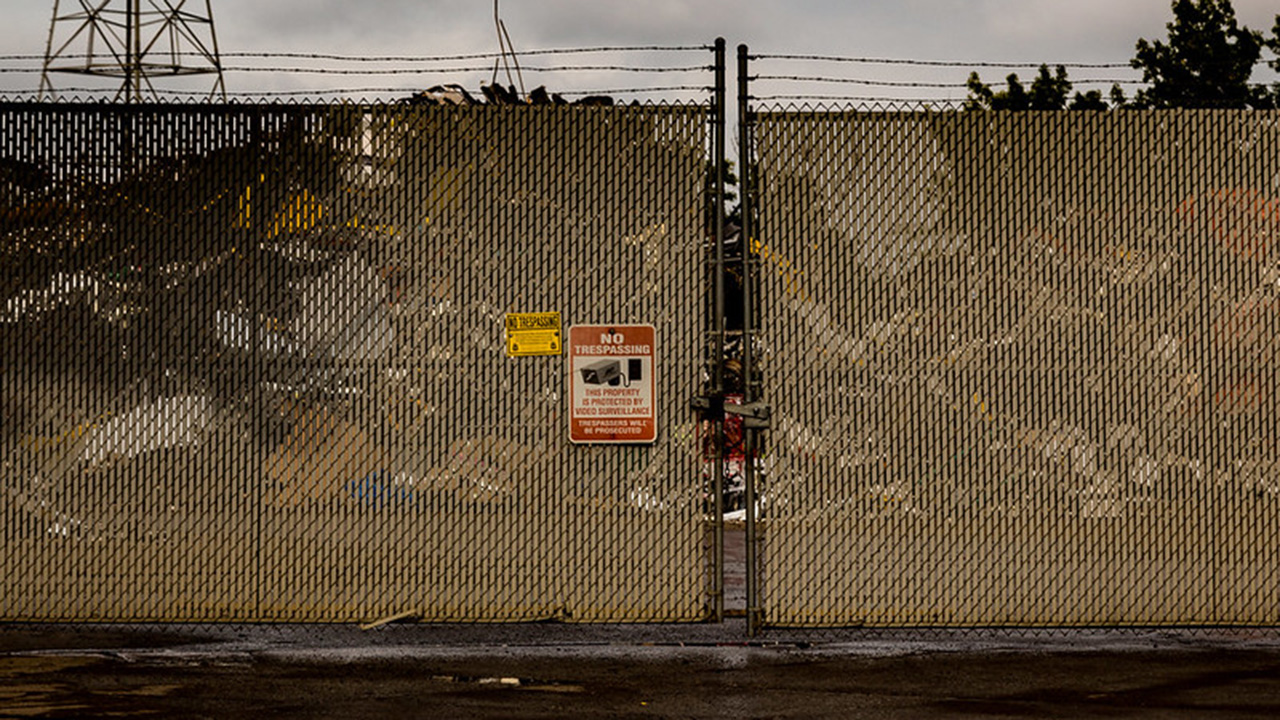
Pollution doesn’t affect everyone equally. In Minnesota, certain communities — particularly under-resourced communities of color and tribal nations — have long shouldered a disproportionate share of environmental harm. It’s not an accident of geography, it’s a result of policy decisions that have treated certain communities as sacrifice zones, from the routing of I-94 through majority-Black neighborhoods to the siting of industrial facilities along the Mississippi River in northeast and north Minneapolis.
This summer, these past policy decisions are playing out as the Minnesota Pollution Control Agency (MPCA) is tasked with drafting rules to implement Minnesota’s Frontline Communities Protection Act (FCPA), the 2023 cumulative impacts law.
On a recent episode of Fresh Energy’s “Decarbonize: The Clean Energy Podcast,” Fresh Energy’s Ethan Culver, Janiece Watts, and Isak Kvam sat down with Sasha Lewis-Norelle and Monse Perez Barrios from COPAL Minnesota to get into the details about how we got here, what the new law requires, and why the rulemaking process matters to addressing environmental racism in Minnesota.
What are “cumulative impacts?”
Before we can fully understand Minnesota’s cumulative impacts law, it first helps to understand the problems it’s attempting to solve. It starts with Dr. Robert Bullard, widely considered the father of environmental justice who said that all people and communities have a right to equal protection and equal enforcement of environmental laws and regulations. The problem is that those rights haven’t been fully realized.
Take East Phillips in South Minneapolis. As Sasha described it, the community sits near I-94, has a history of lead pollution from service lines, is known as the “arsenic triangle” due to past industrial contamination in the soil, and was home to the Smith Foundry and bituminous roadways until just a few years ago. Each of those facilities, evaluated individually, maybe have stayed within regulatory limits for human and environmental safety. But taken together, the cumulative health burden — higher rates of asthma, elevated blood lead levels, increased cancer risk — tells a very different story.
Cumulative impacts stretch further than pollution, it also includes the social and economic conditions that make it harder for communities to respond to environmental harms: lack of healthcare access, limited financial resources, and housing instability. These factors create a feedback loop where certain communities are exposed to higher levels of pollution, which makes it harder to address underlying economic challenges, and economic hardships make it harder to address the pollution. This negative feedback loop is exactly what communities have been fighting to change.
Minnesota’s cumulative impacts law is a positive step for environmental justice
Minnesota’s first attempt at a cumulative impacts law came in 2008, when residents of South Minneapolis worked with legislators to pass what’s known as the Clark-Berglin law, one of the first policies in the country to require a cumulative analysis for air-permitted facilities in the local community. It was a significant shift, but it fell short in practice: the analysis was required, but projects often proceeded anyways, no matter what the cumulative impacts analysis found. Under the 2008 law, no permits were denied.
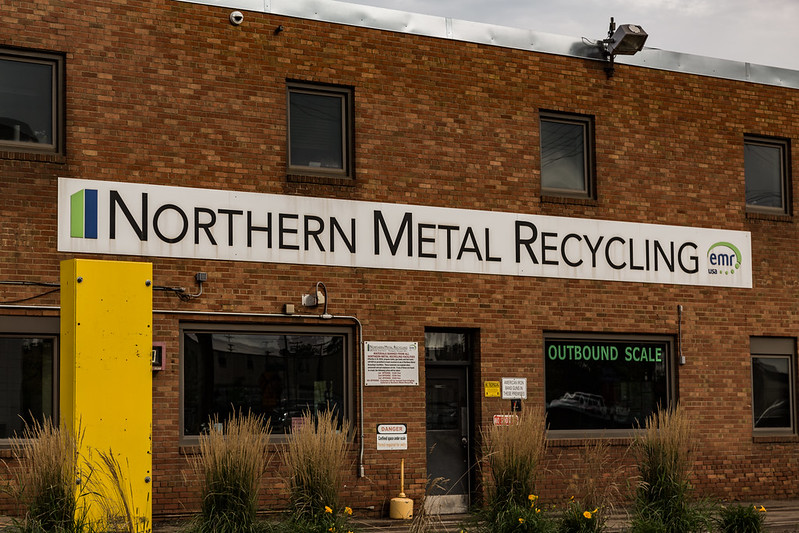
In the podcast episode, Janiece described the Northern Metals case as a turning point for North Minneapolis. Community pressure eventually led the MPCA to take legal action against the facility, which was found liable for emitting metallic shards into the air, water, and soil of north and northeast Minneapolis neighborhoods. The resulting settlement, which included financial recourse for affected residents, was the first of its kind in Minnesota.
This momentum from organizing groups like Community Members for Environmental Justice (CMEJ) brought new energy to passing Minnesota’s cumulative impacts law. The Frontline Communities Protection Coalition (FCPC) was formed around 2018 and 2019 and spent years working toward making the law a reality. The group spent years having internal meetings, attending stakeholder meetings with the MPCA, and joining negotiations during the 2023 legislative session.
When the Minnesota Legislature passed the 2023 cumulative impacts law, it came with difficult concessions: it only applied to the seven-county Twin Cities metro area, Duluth, and Rochester rather than the entire state. But as Janiece described in the podcast, this is how progress often works: the Clark-Berglin law of 2008 eventually expanded to more cities, where it will continue to protect communities from environmental harms.
What the cumulative impacts law does and does not require
The FCPA directs the MPCA to develop rules for evaluating the cumulative impacts of facilities seeking new, renewed, or expanded air permits in the covered areas. Notably, the law also defines an environmental justice area in statute – which didn’t exist before – and is based on income, race, and location.
When a facility applies for a new air permit, it must now assess whether it will have environmental or health impacts on the surrounding communities. If the MPCA determines that a cumulative impact analysis is warranted, the facility must conduct that analysis, including mandatory public outreach with the affected community. If the analysis finds that a facility will have “substantial adverse impacts,” the MPCA can either deny the permit of require a Community Benefits Agreement (CBA) between the facility and the community.
The key details, like what counts as a “substantial adverse impact,” what needs to be in a CBA, and what benchmarks determine whether an analysis is required, are not defined in the statute. They will be determined through the MPCA’s rulemaking process — and that’s exactly why advocates like COPAL are helping community members get involved.
FCPC has been advocating for a strong rulemaking process
Since the cumulative impacts law was passed in 2023, the FCPC has been organizing the people most affected by pollution to be at the center of the rulemaking process.
Over the past few years, the Coalition has hosted educational webinars in plain language and in Spanish to help ensure community members understand what the law means for their daily lives. Members have consistently attended the MPCA’s stakeholder meetings and have coordinated formal comments from community members so their lived experiences are entered into the record.
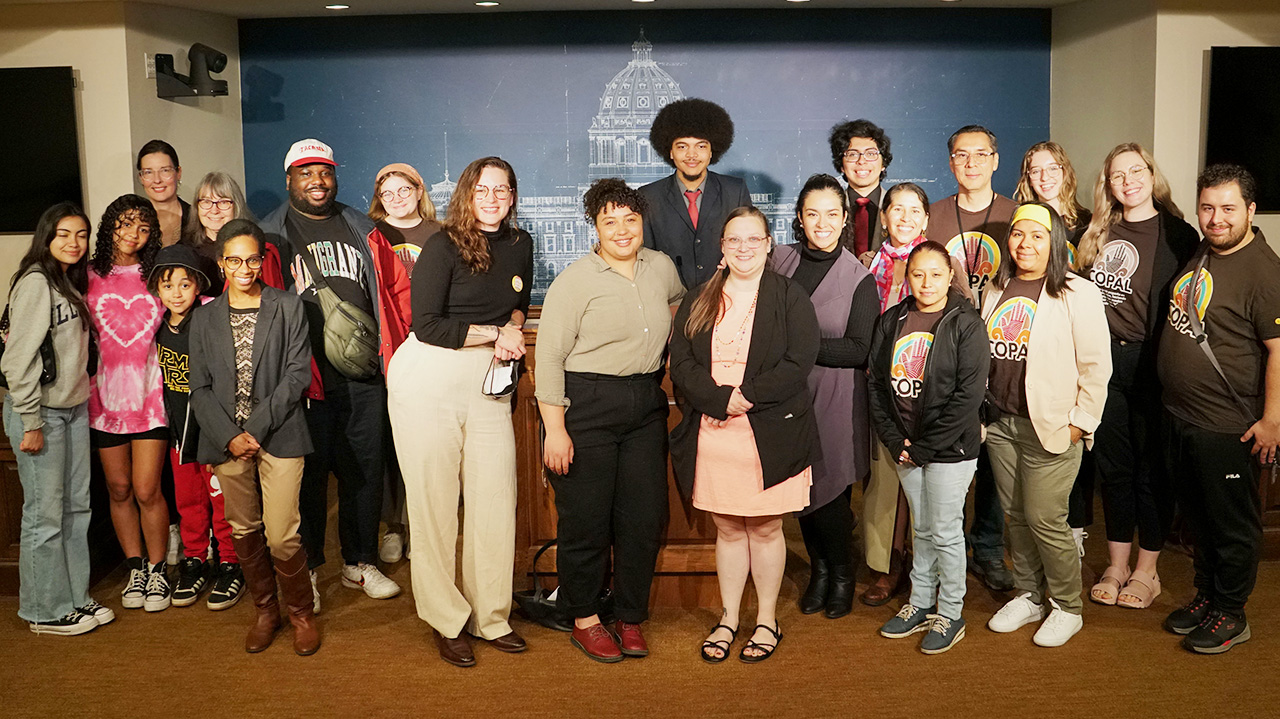
Monse shared in the podcast how a member of COPAL’s Environmental Justice Committee was selected for the MPCA’s CBA panel, which brought together residents, advocates, and other stakeholders to determine what will ensure CBAs are successful.
The Coalition has also been testing the MPCA’s mapping tool for identifying environmental justice areas, flagging places where it doesn’t fully capture the burden communities are experiencing.
Community members can comment on MPCA rulemaking now
The most important opportunity for community members to positively impact the MPCA’s rulemaking process is the public comment period, which opened on May 18, 2026, when the MPCA released its draft rules and will close on July 17, 2026.
To help people participate, the FCPC is hosting three in-person comment writing workshops with food, one-on-one support, and a physical space for the community to get involved. A few more workshops will be posted as the comment deadline nears — stay tuned!
- Twin Cities: June 17, 6-7:30 p.m. at the COPAL Work Center
- Duluth: June 30, 6-7:30 p.m. at the Duluth Public Library
- Rochester: July 7, 6-7:30 p.m. at the Rochester Area Foundation
Minnesotans can also submit their comments online to the MPCA through the FCPC’s Action Alert found on COPAL’s website here. The page provides lots of context about the coalition’s position and thinking on the rulemaking and helps people submit their own unique comments via some helpful prompts.
Janiece closed our podcast conversation with Principle 7 from the 1991 Principles of Environmental Justice created at the People of Color Environmental Leadership Summit: “Environmental justice demands the right to participate as equal partners at every level of decision-making, including needs assessment, planning, implementation, enforcement, and evaluation.”
For too long, the communities most burdened by pollution have been left out of the decision-making process, but the MPCA’s rulemaking process this summer is a clear opportunity to shift this.
You can learn more and sign up for FCPC’s comment writing workshop and stay up to date with Fresh Energy’s advocacy by joining our Action Network, where we’ll be sharing ways to submit comments.
You can check out the full episode on Fresh Energy’s “Decarbonize: The Clean Energy Podcast” by subscribing on your favorite podcasting app or streaming below.