
Misty Jarvi and her family had been living in a deteriorating mobile home in Cohasset for years. Single-paned windows and gaps in the floor let in the cold during frigid winters, while black mold crept across the ceiling. Misty’s youngest daughter, Claritie, had breathing problems, using an inhaler and medications for her cough. And energy bills were only getting higher with the home’s inadequate insulation and rising fuel costs.
The family needed help.
Meanwhile, a sustainable home designer and builder in northern Minnesota had a new idea. Sam Friesen, who’s now Fresh Energy’s Managing Director, Buildings, has spent the last 13 years refining a new way to build homes to be extremely energy efficient without added cost.
By building homes slightly differently, like using thicker walls and smarter energy systems in the home, Sam has figured out how to make homes more sustainable, more energy efficient, cheaper to operate, and built as cost-effectively as a standard, run-of-the-mill new home. He’s been sharing tips and practices with other builders, but he was on the lookout for an opportunity to bring it to people who could really benefit from this new approach. He wanted to build a new home sustainable and efficient enough to achieve near-Passive House standards without any additional cost, and he needed a partner to show it could happen.
Sam traveled to a northern Minnesota housing conference to present his holistic building approach to other builders in the region. After sharing how his building approach works, the Executive Director of Itasca County Habitat for Humanity tracked Sam down. “If I could build better, cleaner homes for less money,” Jamie Mjolsness said, “Why would I not build them for the families we serve?”
Sam and Jamie began to collaborate. The local chapter of Habitat for Humanity, which builds homes for families in need, focuses not just on building new homes, but ones that are healthy and affordable over the long term, too. Their work comes at an important time.
Minnesotans are facing three crises at once: a changing climate, a housing shortage, and an affordability squeeze. Our state needs more homes built quickly, they need to be built sustainably to meet our state’s climate targets, and they need to be affordable to build and operate over the long-term.
Jamie was curious if Sam’s building style could help her build more homes affordably, sustainably, and safely for the families they serve. Sam was hopeful his practice could become the standard, model home the chapter uses to scale this concept and help more Minnesotans. They got to work.
Minnesota needs sustainable and affordable homes
Minnesota’s buildings sector is the fifth-largest source of greenhouse gas emissions in the state, but the second-fastest growing. The transportation and electricity sectors, the state’s two largest-emitting sectors, have reduced their emissions by 5% and 50% since 2005. But Minnesota’s buildings are emitting 38% more since 2005, a number that gas utilities expect to increase in the coming decades.
Emissions in Minnesota’s building sector fall into two big buckets: those from the materials used to construct a home (the embodied carbon emissions) and those from burning fossil fuels to heat and power appliances inside the home. Sustainable buildings must decrease emissions in both areas, and Sam’s systems showed promise.
Building materials emissions come from the manufacturing of concrete, lumber, paint, and other products that go into constructing and renovating a building, called “embodied emissions” or “embodied carbon.” Most embodied emissions come from concrete and the mechanical, electrical, and plumbing (MEP) systems in the home.
To reduce these emissions, Sam opts for using natural, regenerative materials like wood, and preferably wood that’s been minimally kiln-dried. After logs are harvested, the local lumberyard shapes and dries the wood, either by using a kiln (that usually burns fossil fuels to dry out the wood) or by air-drying it naturally. For Sam’s sustainable houses, he used lumber from the local Deer River lumberyard that utilizes an air-drying technique, making his building materials carbon-negative. Additionally, because the hybrid air drying process uses substantially less fuel to dry the timber, it is also more cost effective.
The bigger source of building emissions come from operating, not building the home. Building operations emissions come from heating, cooling, and otherwise powering a building during its lifetime using fossil fuels like natural gas, propane, or other fossil fuels. Solving this issue is relatively straightforward for new homes: swap fossil fuel appliances for all-electric ones and build the home to be energy efficient.
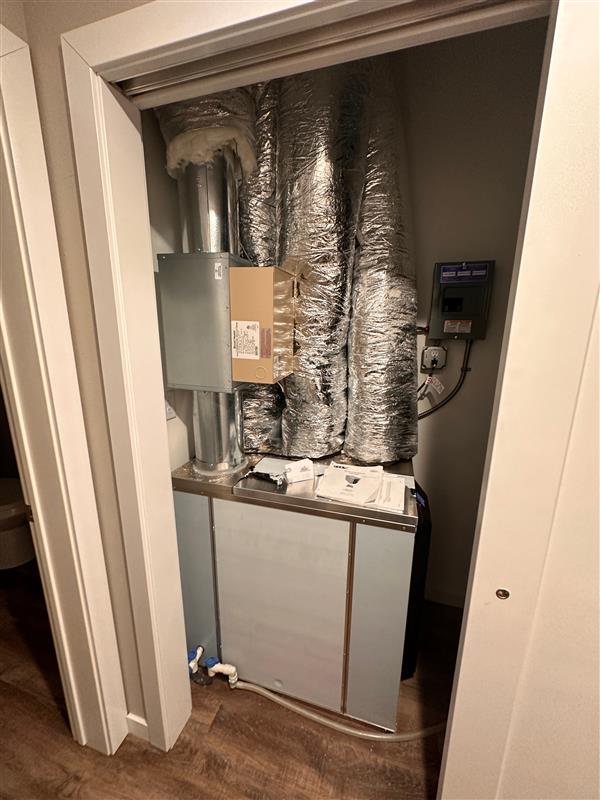
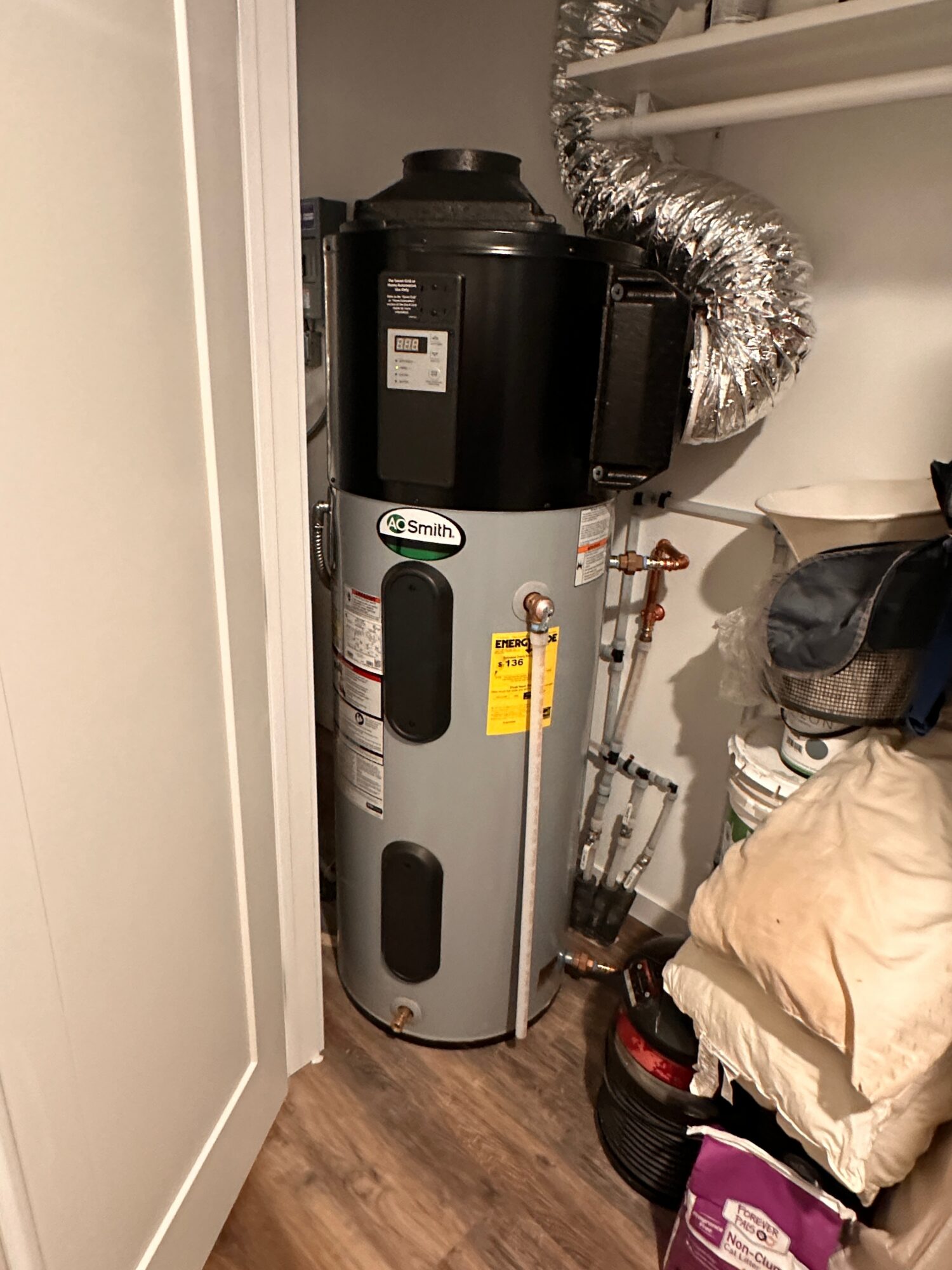
Sam knew that a low-emitting home would need a heat pump HVAC system, an electric heat pump water heater, and an electric or induction stove instead of a gas stove so that the home would run on Minnesota’s clean electricity instead of natural gas. But what makes Sam’s building technique so efficient and affordable is using thicker walls and lots of insulation so it uses very little energy, then dramatically downsize the HVAC to an energy recovery system that heats and cools. This reduces cost of the mechanical system to offset the cost of extra insulation.
Building the sustainable home in Cohasset

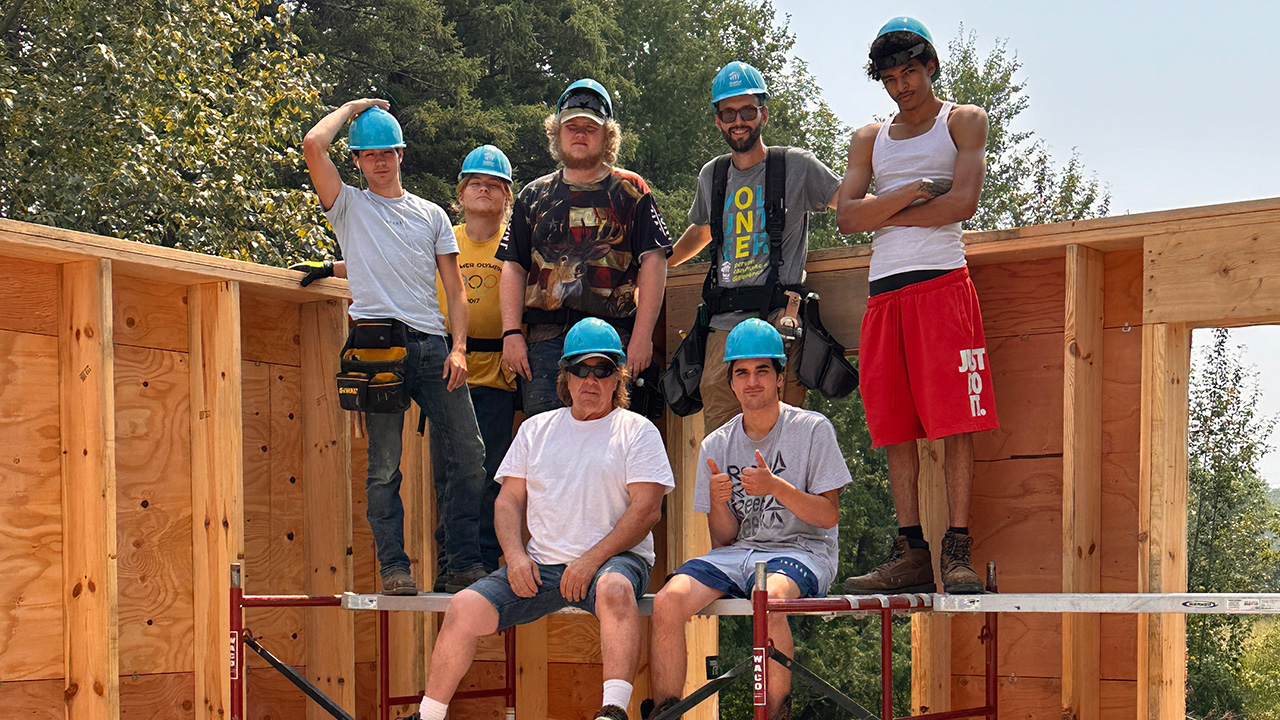
Sam and Jamie tapped Itasca’s Youth Build program, which trains at-risk young people in the trades, to construct the home. Sam supported Itasca County Habitat so they could teach the young adults how to build with thick, well-insulated walls (which he calls “Minnesota walls”) to reduce the energy needed to keep the home comfortable in Minnesota’s cold winters.
The house has 2” x 10” stud-framed walls with a thin 2 ½-inch layer of interior insulation to accomplish this, which the local lumberyard is producing now and readily had on hand and the youth builders learned to use quickly. He made sure windows on the southern exposure would let in sunlight for passive heat in the winter. Small changes like this add up to a big difference, especially when paired with properly installing a Heat Pump Energy Recovery Ventilator, the core of the building’s HVAC system that pre-conditions the air intake, and heats and cools the house to make it more efficient. Finally, Jamie worked with their local electric utility to install solar panels for the home.
The home was finished this past winter, and it’s proven what Sam and Jamie hoped it would: the final cost was Itasca Habitat’s lowest in years, the youth builders constructed it with a little extra guidance from Sam, and the monthly utilities are already coming in much lower than their previous home’s.
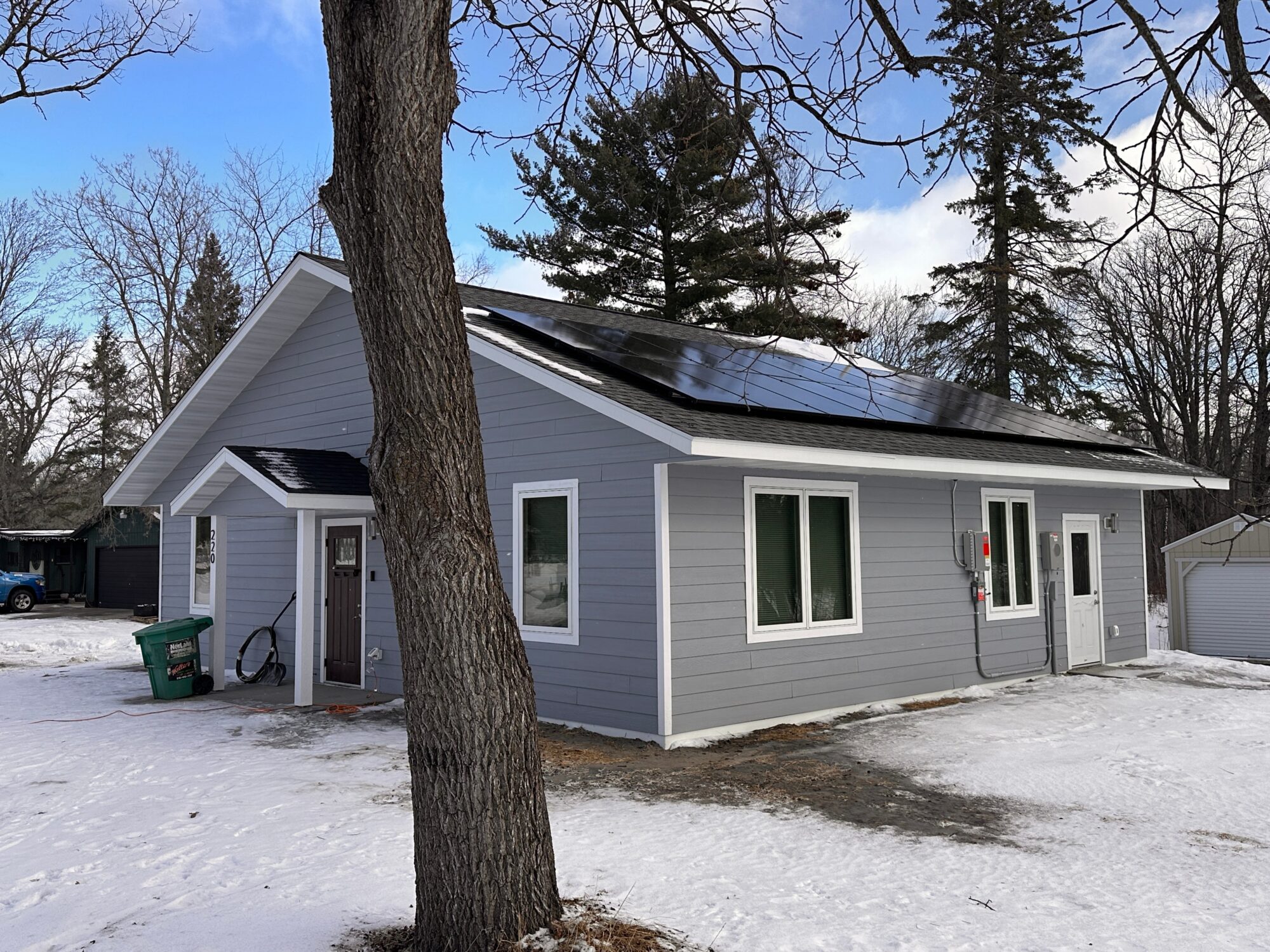
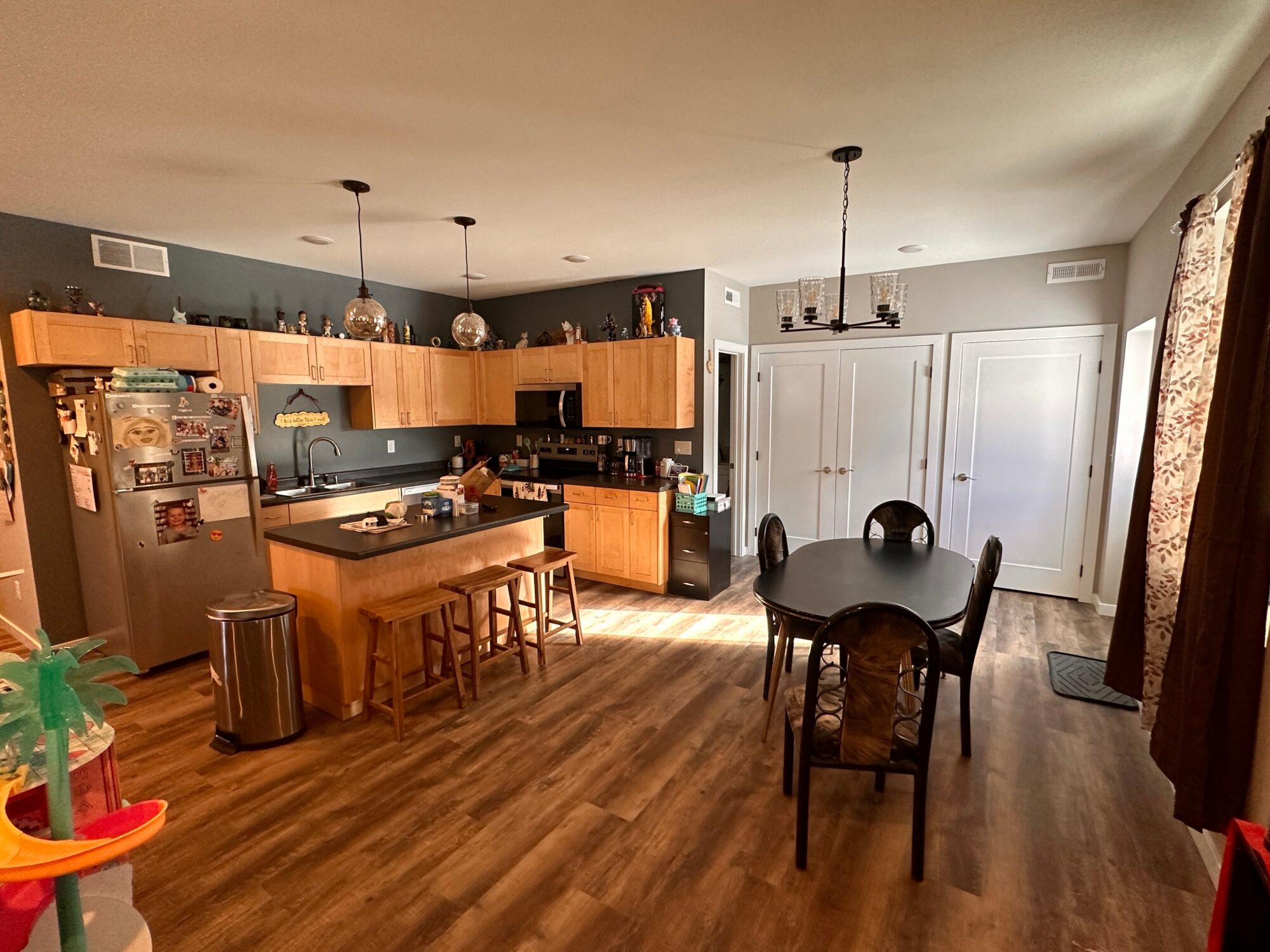
This last December, the family moved into their new, sustainable home built on the same land they love, two blocks from their girls’ school. The home weathered the –50-degree wind chill storm this January with no problems, keeping warm and comfortable with their thick Minnesota walls and efficient HVAC system.
And best of all, the home is healthy: since moving in, Claritie has hardly touched her inhaler. Her parents and teacher have noticed how much her chronic cough and breathing problems have improved since moving into their all-electric sustainable home.
Healthier homes could make a real difference for Minnesotans with asthma. The state spends an estimated $6.7 billion on health care spending on asthma each year, according to the Minnesota Department of Health. Asthma is also the leading cause of school absenteeism due to chronic illness in the U.S., and in Minnesota, one-third of children with asthma have missed school because of it. Minnesotan families will benefit from healthier, more sustainable homes.
“We’d never really go back to the old way of building,” said Jamie. “This is the foreseeable future for us, because everybody’s on board and everybody wins.”
Scaling up sustainable building practices across Minnesota
Itasca County Habitat for Humanity builds several homes a year, and Sam’s new method of building is their new model for construction. Jamie’s just begun framing their next house in Grand Rapids, will build a few more this summer, and are in talks to build three more in the summer of 2027. But Jamie and Sam have higher expectations for their new building methodology.
“I’m trying to get the word out and show others the data that this works: it was cheaper to build, the house is operating well, and it has a better longevity for the family we’re helping,” said Jamie. The Itasca Youth Build program they used has added the practices to their curriculum to help solidify it for future builders in the area. They are collaborating with lumberyards to use sustainable practices for their supply chain.
Sam and Jamie hope that other Habitat for Humanity chapters will begin using their building model, too. Molly Berg, the Sustainable Building Director at Minnesota Habitat for Humanity, works with different Habitat affiliates in Minnesota to build, permit, and fund climate resilient homes. Usually that means designing buildings to have low energy bills while being affordable to build. And scaling up a sustainable building practice has to work for lots of different builders across the state.
Sam hopes that his building design and proof of concept in the new Cohasset home will entice other builders in Minnesota to follow suit. By sharing plan sets, the final costs of construction, and where they sourced their products, Sam is ensuring other builders have the information they need to make informed decisions about their building practices. And by helping more builders, supply chain businesses, and organizations like Habitat for Humanity recognize the importance of sustainable homes, Sam hopes the idea could scale to become mainstream.
The timing is helpful: many Minnesotans are motivated to reduce their household energy costs as affordability concerns are top-of-mind this year. Insurance premiums have spiked as climate change makes natural disasters more destructive and more frequent. The Iranian War has sent oil and gas prices upward, similar to Russia’s invasion of Ukraine in 2022, making consumers once again leery of the financial impacts of fossil fuels in their lives. Minnesotans are increasingly looking at efficiency and electric appliance upgrades not to reduce emissions, but to save money.
Our homes are built to last decades, so the decisions our builders make today will have ramifications on family utility bills and Minnesota’s climate targets for the long-term. Homes built inefficiently with fossil fuel systems risk becoming a drag on family’s finances, making it more difficult and costly for Minnesotans to benefit from affordable clean energy. And as Misty Jarvi’s new family home in Cohasset has shown, sometimes building a better future just needs a few people with a bright idea to lead the way.