
In December, Fresh Energy described the newest Transportation Electrification Plans (TEPs) filed by Minnesota’s three public electric utilities. Today, we’re going to dive a little deeper into our views on Xcel’s TEP as we approach a decision from the Minnesota Public Utilities Commission (PUC, or Commission).
Fresh Energy submitted two rounds of comments on Xcel’s TEP, formalizing evidence in the public record that Xcel Energy is underinvesting in transportation electrification spending compared to peer utilities, such as those in the states of Illinois and Michigan, as well as Xcel’s other operating companies in Colorado and New Mexico. This spending is needed to help transportation electrification align with Minnesota’s climate goals.
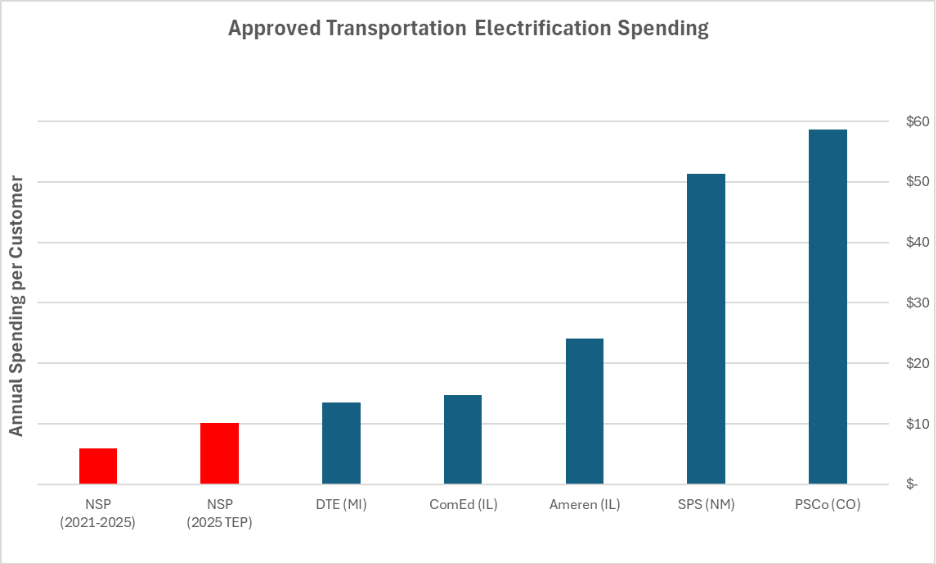
This money shouldn’t just be spent for the sake of spending money, but should be targeted investments aimed at helping folks without access to home charging, improving transit and school bus electrification, and developing programs to help optimize the use of the existing electric grid to help bring down electric rates for everyone.
Xcel’s initial proposal for its TEP was a good start, but here are three critical improvements Fresh Energy is advocating for Xcel to update:
1. Xcel Energy must focus more on affordability
Many popular electric vehicles (EVs) are more affordable to operate over time than equivalent gas cars, even after the loss of federal tax credits. However, that affordability is contingent on electricity prices remaining affordable compared to gas prices. In the short-term, that means we need to make sure Xcel doesn’t unreasonably raise prices, especially for electricity delivered off-peak overnight when vehicles are parked and charging.
Xcel’s TEP included a modification to its off-peak charging rate for some EV programs that would result in a 65% increase to the average monthly energy charge for EV owners. Fresh Energy filed a robust analysis highlighting the potential negative consequences of increasing rates so dramatically for EV charging and is requesting that Xcel refile their proposal with a more modest increase.
It isn’t all bad news on affordability, however. Even if these rate increases are approved, the 7.5 cents per kilowatt hour off-peak price is still the equivalent of fueling your gasoline powered car for less than $1.00/gallon. Xcel is also offering significant rebates for installing EV charging stations, including in multifamily buildings. These rebates should make charging more affordable and accessible to folks without a garage at home. Fresh Energy is working with other stakeholders to ensure these rebates are sized correctly to make the installation of EV charging affordable for low-income or other underserved customers.
2. Xcel should increase efforts to bring EVs to underserved communities
Xcel’s efforts to offer electric transportation options to all customers have improved in recent years, particularly through its support for the HOURCAR/Evie electric carshare program. Still, there’s a lot of room for improvement in this space.
For example, Fresh Energy is advocating to ensure that Xcel’s new “Charging Perks” program gets approved for all customers, not just for residents in neighborhoods with high existing EV adoption, which tend to be higher-income. We are also encouraging Xcel to improve its outreach strategies to reach more underserved groups by working with community organizations.
3. Xcel must keep innovating on vehicle-grid-integration.
In its last TEP, Xcel was ordered by the Commission to develop a Vehicle-to-Grid demonstration project for electric school buses. That project never materialized, and Xcel now says it doesn’t want to move forward with those plans. This is disappointing.
In our comments, Fresh Energy encourages Xcel to revamp the program and continue to develop new pilots and programs that can enhance EV adoption and benefits of further integrating EVs with the grid, such as active managed charging.
What’s next?
Fresh Energy will continue to advocate for utility investments that support transportation electrification. We’ll continue to engage in Xcel Energy’s, Minnesota Power’s, and Otter Tail Power’s TEPs over the next five months. You can count on us to call on utilities and the Commission to ensure our transportation system is increasingly clean, equitable, and affordable.