
This month, candidates across the country won (and lost) elections based on a big issue: rising electricity costs.
Americans care about rising bills. And when they go up, everyone wants something to blame.
Climate deniers have a ready-made villain: clean energy. Wind and solar are driving up costs, they say. If we just stuck with fossil fuels like coal and natural gas, bills would stay low. It’s a simple story. Overly simple. It’s also wrong.
If clean energy were behind rising prices, the data would show it.
If fossil fuel boosters were right (they’re not), states with lots of clean energy would have expensive electricity and vice versa. But that’s not what the data shows.
Just look at the Midwest.
South Dakota and Iowa generate twice as much of their in-state electricity from wind and solar than California, yet their electricity is half the price. If clean energy made electricity expensive, that wouldn’t be possible, says Distilled.
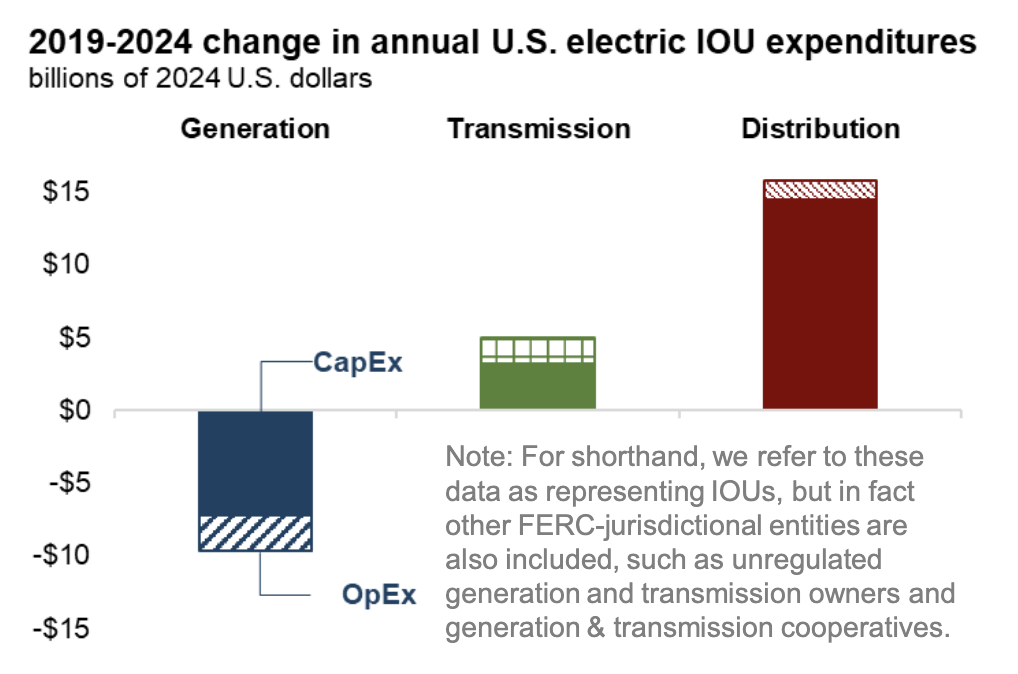
Like statistics more than anecdotes? The cost to generate electricity itself has declined nationally, according to the Lawrence Berkeley National Laboratory (LBNL), while other costs on your electric bill — like infrastructure — have increased.
If you’re trying to blame cheap or expensive bills on one energy source, you’re going to be disappointed, says Hannah Ritchie, a senior researcher at Oxford who has a great post on this. And anyone putting all the blame on renewable energy is either uninformed or deliberately lying, says Ian McAuley.
Finger-pointing aside, blaming high electric prices on one thing is oversimplifying a complex problem. And partisan blame, while tempting, will not help us actually do the hard work of slowing electric costs, reducing emissions, and addressing inequalities in our power system.
Many factors are driving electricity cost increases. Mostly grid upgrades and disasters. But supply chain issues, tariffs, and natural gas spikes, too.
Electricity prices aren’t the new eggs. They have been rising, but not faster than everything else. In fact, electricity prices have been tracking right along with inflation, according to a comprehensive summary from LBNL last month.
When you adjust for inflation, electricity actually costs the same in 2024 as it did in 2019, and 8% less than in 2010 on average across the U.S. But your electric bill doesn’t come with an inflation adjustment.
Prices have changed in 2025, though. The Bureau of Labor Statistics says nationally, electricity is up 5.1% from September 2024 to September 2025. (Natural gas prices are up 11.7% over the same period). That’s twice as fast as the overall cost of living.
Clearly electricity prices have gone up. It’s essential that we understand the real factors behind those increases.
Here are the biggest factors contributing to rising electricity costs from 2019-2024, according to LBNL, noting that different states and regions are impacted by different factors:
- Infrastructure costs have increased a lot. We’re constantly upgrading 50-year-old grid infrastructure with new poles, wires, and electrical components. Thanks to inflation and supply chain issues, that’s gotten much more expensive. The section below covers this more in-depth both nationally and in Minnesota.
- Natural disasters, extreme weather, and wildfire mitigations have increased prices in some states. Western states have had destructive wildfires. Gulf and Atlantic states have had hurricanes. Climate change from burning fossil fuels causes more intense disasters to happen more often, and we’re paying higher costs for that.
- Natural gas price fluctuations are volatile and one of the biggest factors impacting year-to-year variations in electricity prices. Prices spiked 140% in the 2022 Ukraine-Russian War. 2025’s natural gas prices for generating electricity are expected to be 37% higher than 2024, a 4% increase for the residential sector. The U.S. is building to export more of our gas overseas, which is expected to increase domestic costs.
- Utility-scale wind and solar don’t appear strongly related to recent price increases. It depends on where you build them and the market forces behind them.
What’s putting upward pressure on costs looking ahead? Here are hot factors this year:
- Tariffs. Policies that make energy costs more expensive will result in higher prices. Policies that make energy costs cheaper will result in lower prices. While solar is still the cheapest way for the U.S. to generate electricity, we’re now paying two to three times more for the panels due to tariffs.
- Natural gas prices. Remember how LBNL said natural gas prices are the biggest factor in year-to-year variation of electricity costs? Well, we’re seeing a big jump in electricity prices from 2024 to 2025, and a correlated big jump in natural gas price over the same period (5.1% and 11.2%, respectively). Natural gas isn’t entirely to blame, but it is definitely a factor.
- Inflation and tight supply chains increase costs for generation, transmission, and distribution. Generating electricity and moving it around has gotten more expensive, and that will likely be the case for a while.
Minnesota’s electricity costs: it’s the infrastructure, you guys
Remember how I said that infrastructure costs have increased a lot? Fossil fuel boosters love to blame it all on clean energy (shocker).
Here’s the claim, and I’m not buying it: clean energy is only affordable (note: they’re admitting it’s affordable) because you’re not including all the infrastructure costs of connecting renewables to the grid.
So, can we blame all this infrastructure spending on the energy transition? Not really. Most extra infrastructure spending since 2019 is because of resiliency (think wildfires, storms, and hurricanes) and replacement (replacing 50-year-old poles, wires and components), not new infrastructure.
In fact, replacing old grid infrastructure with new is one of the biggest reasons costs have gone up. In industry lingo, it’s called “deferred maintenance.”
The American Society of Civil Engineers gave our grid’s infrastructure a D+ rating in 2025. Our poles and wires are getting old.
Lots of our grid equipment is reaching the end of its useful life, and now the bill is coming due. That’s not just true for our electricity infrastructure, but our bridges (C rating), roads (D+), schools (D+), and transit (D) system, too.
Enough about national trends. What about Minnesota?
Like other states, our utilities are planning for load growth, meaning we not only need to keep our existing infrastructure up-to-date but need to be building more new infrastructure to meet future demand.
Minnesota’s electric utilities’ costs are also largely driven by infrastructure costs.
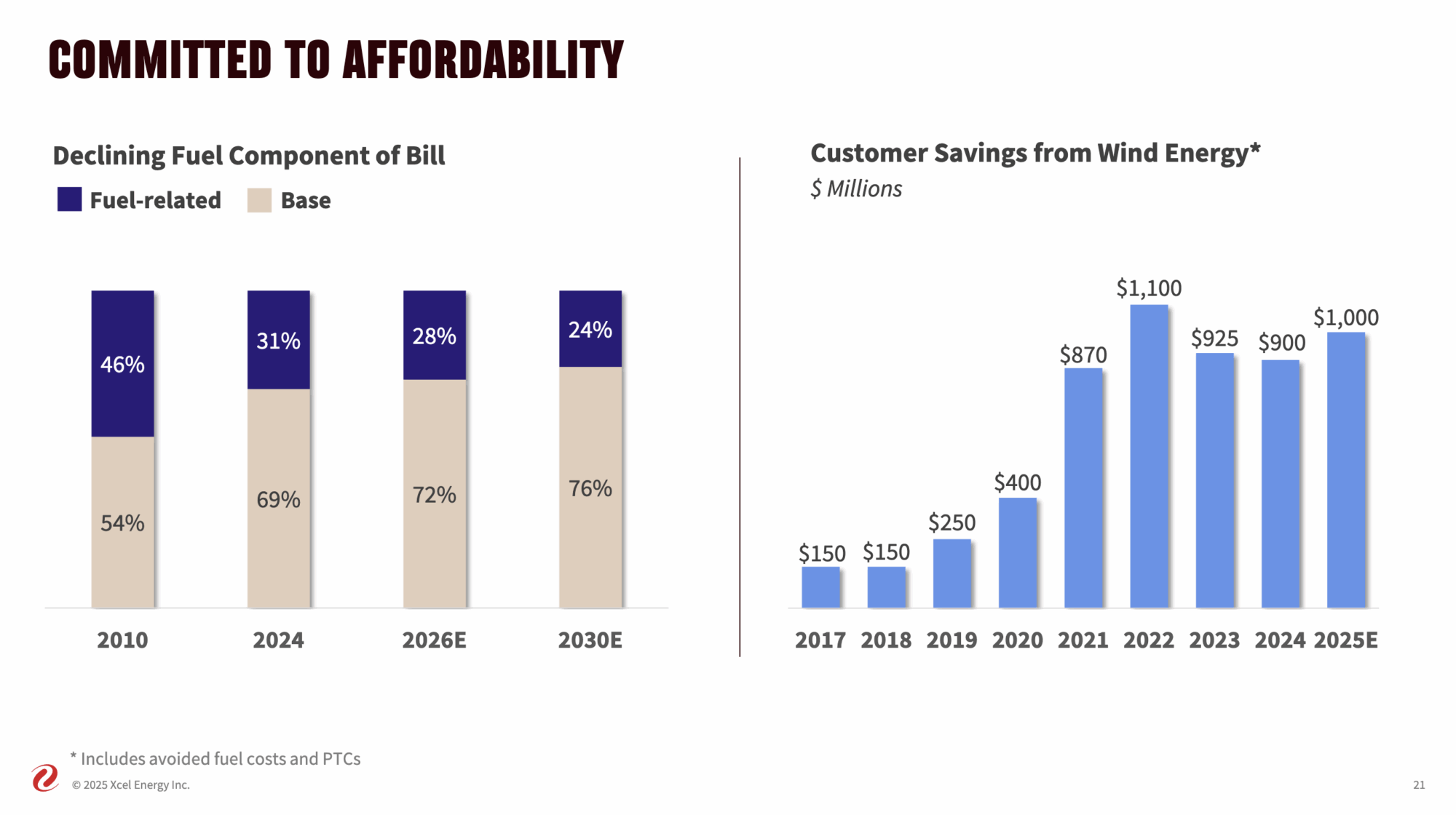
Xcel Energy’s biggest cost for the next five years is grid infrastructure. According to their most recent earnings report, Xcel’s biggest source of costs will be investing in its electric transmission and distribution infrastructure (23% and 26%, respectively) from 2026-2030.
It’s not surprising that infrastructure costs, not electricity generation, are Xcel’s largest expense. Its transition from fossil fuels to clean energy, known as its “Steel for Fuel” strategy, has meant customers pay less of their bill on fuel for electricity generation — saving customers money.
It’s not just Xcel. Otter Tail Power’s costs are also about infrastructure, which now accounts for nearly two-thirds of the utility’s electric capital expenditures. From 2026-2030, the utility plans to spend $994 million on transmission and $263 on distribution, and $510 million on clean energy.
The cost of investing in our electric grid has gotten more expensive, and that’s resulting in higher costs.
But Minnesota’s electricity costs are well below the national average. The average Xcel Energy residential bill is 28% lower than the national average. In 2024, Xcel Energy customers were only spending 1.2% of their wallet on electricity, down from 1.6% in 2014. Similarly, Otter Tail Power’s 2024 summer residential rates are 16% below the regional average and 30% below the national average.
Minnesota takes a thoughtful approach to how utilities spend money and what they can charge customers, and that’s paying off.
But I really want to blame clean energy for all my problems.
Sorry, but power prices are set by lots of things, not just how we generate electricity.
Most recent increases have been because of inflation and infrastructure. But here’s how it’s been going for our different electricity generators:
Solar is still our lowest-cost method of generating electricity, even though with Trump Administration tariffs we’re paying two to three times more for our solar panels than the rest of the world and purposefully attacking solar manufacturing here in America.
Wind energy is still an affordable source of electricity, though it has gotten more expensive since the pandemic.
Natural gas can be affordable, but the cost to construct a new gas plant and purchase gas to burn has gotten a lot more expensive, and it’s expected to get much worse in the long-term.
The cost to build gas plants has tripled since 2022. Gas plants to be completed in 2026-27 have skyrocketed to $1,116-1,427/kW, which is increasing to north of $2,000/kW for projects that won’t be completed until 2030. The natural gas itself that’s used as fuel for electricity generation has increased by 37% from 2024 to 2025. We’re exporting 25% more liquified natural gas this year than last, and we’re planning to ship more out anyways.
Worse, natural gas plants take too long to build. The gas turbine shortage has caused wait times to increase from two years to over five years. (Editor’s Note: Since this blog post was published in November 2025, the gas turbine shortage has increased from five years to seven years, as of January 2026).
Coal isn’t affordable, it’s 28% more expensive in 2024 than 2021. A coal plant in Michigan was slated to retire due to skyrocketing costs. The Trump Administration ordered it to remain open, and when Michiganders began paying $1 million a day to keep it open, the Federal Energy Regulatory Commission ruled the costs were so high they had to be shared across the regional grid’s northern and central regions — including Minnesota. A different electric utility asked Oregon regulators to cut rates after closing its expensive coal plant, which is good news.
Not a lot of nuclear has been built lately, but after Vogtle was completed in 2023 and 2024, there’s still been buzz about small modular reactors and reopening a retired nuclear plant in Michigan, and some recent buzz in Utah and Pennsylvania, too.
Data centers haven’t raised costs in our region. And Minnesota has new policies meant to ensure rate designs for new, large loads like data centers put downward pressure on electricity rates. It works like this: when a data center or other big power user comes in, they pay in toward a utility’s fixed costs, which helps lower rates for others. LBNL found that load increases have tended to depress retail electricity prices in recent years, including in Georgia, California, and Maine. It’s important that policy and rate design are used to continue this trend.
No matter what you want to build, you’ll face inflation, a higher cost for components and labor, long supply chains and permitting timelines, tariff and policy uncertainty, and a higher cost of financing.
Minnesota has good mechanisms in place to mitigate electricity cost increases.
Minnesota has affordable electricity and is already 50% carbon-free because we have a strong planning process that keep utilities accountable to the public interest.
We have one of the nation’s most stringent Integrated Resource Planning processes, thanks to advocacy from Fresh Energy. That means our state has a rigorous process and regulators that ensure utilities are acting in the public interest for affordability, decarbonization, and reliability. Seriously, ours is really good.
We’re also really good at rate design, which is how our state sets the prices a utility is allowed to charge and how it advances state goals like decarbonization, equity, affordability, and reliability. Fresh Energy has long advocated for affordable, clean, and equitable rates in this process.
Minnesota is also making it faster and less expensive to connect wind, solar, and storage to keep our electricity reliable. From advocating for smart infrastructure investments to cutting red tape for renewables, our state supports policy that benefits businesses and households with affordable, clean power.
We advocate for smart investments to the regional electric grid. Minnesota is in the Midwest Independent System Operator’s (MISO) territory. Both our state and Fresh Energy advocate for MISO to update its rules to level the playing field for clean energy. Just this year, we’ve helped prevent bad actors from adding costly, inefficient fossil fuel plants to the grid and sticking Minnesotans with the bill. We have a full-time MISO specialist reducing technical hurdles to clean energy.
Fresh Energy’s work is more critical than ever before. Amidst federal rollbacks to our clean energy transition to partisan attacks on energy affordability, we’re committed to the hard and nuanced work of ensuring our energy future meets Minnesotans’ needs.
When there’s an energy decision affecting Minnesota’s future at the Minnesota Legislature, the Public Utilities Commission, or MISO — we’ll be there to advocate for reliable, cost-effective, and clean technologies. Because Minnesotans deserve a cleaner, more equitable future.