
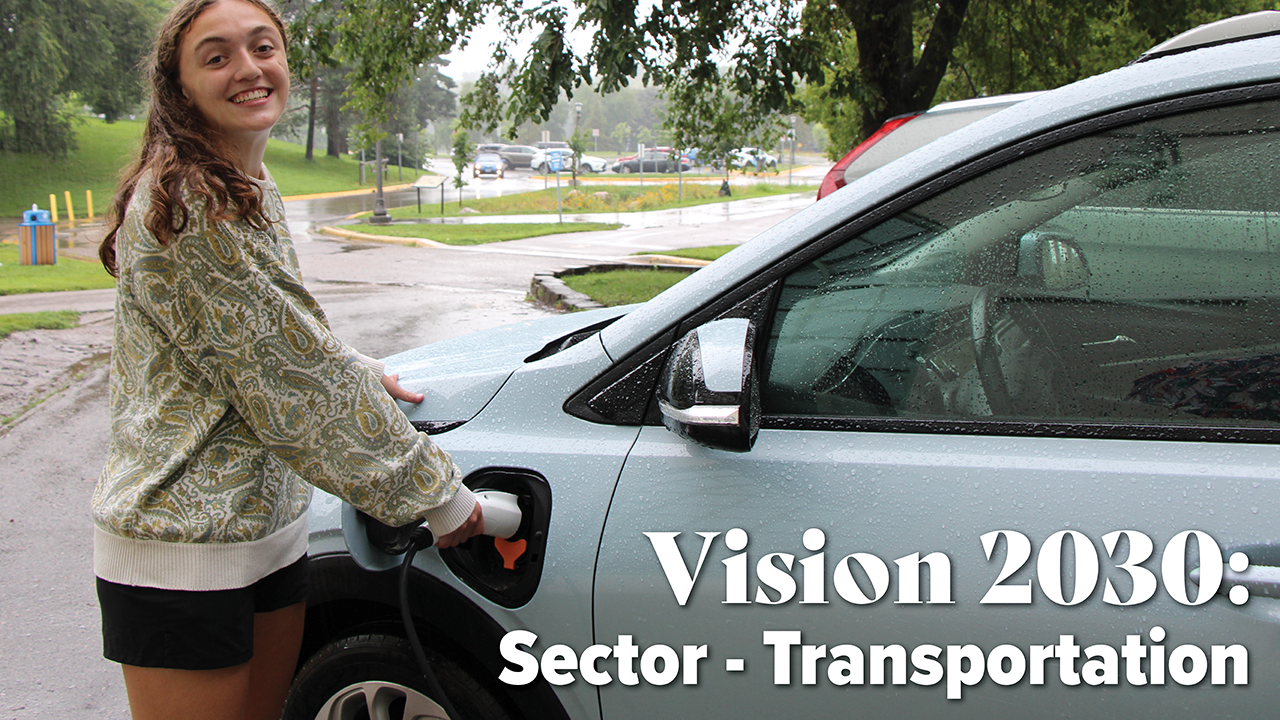
Transitioning Minnesota’s transportation sector to be cleaner, more efficient, and affordable
Fresh Energy has been working every day to equitably speed the transition to a clean energy economy for nearly 35 years. To drive the transformational change that we need to take on the climate crisis, Fresh Energy created “Vision 2030,” our strategic framework that focuses on driving down emissions in crucial sectors.
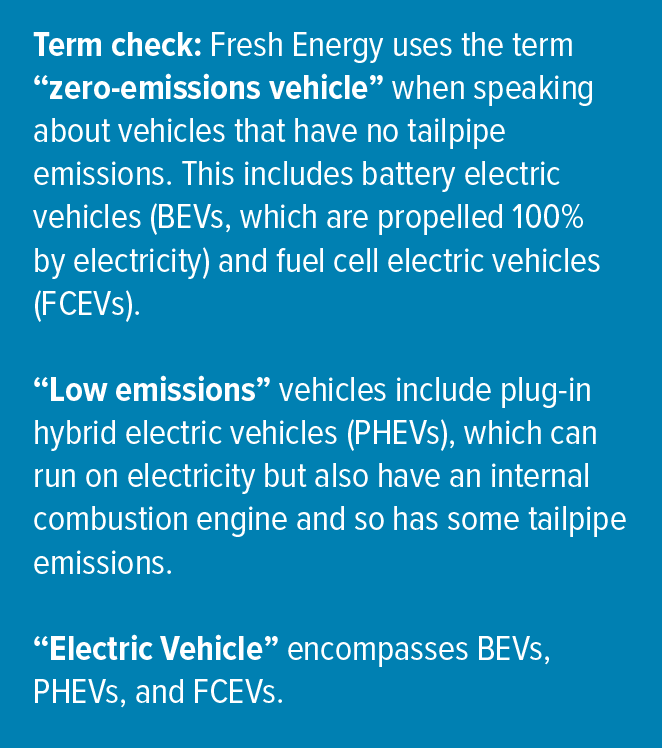
A key aspect of our work is in the transportation sector. It’s through the policy work of our Transportation team that we strive to ensure more zero-emissions vehicles are adopted and a robust, reliable charging network is built through effective, innovative, and data-driven policy solutions.
While the Transportation team became a standalone department with the launch of Vision 2030 in 2025, Fresh Energy has worked on clean transportation for many years. Along with partner organizations, decision-makers, and businesses, Fresh Energy is helping Minnesota reduce its greenhouse gas (GHG) emissions by decarbonizing the movement of people and goods, prioritizing affordable, accessible zero-emissions technologies and infrastructure, and precisely deploying low-carbon fuels where electrification won’t work.
Transportation is the number one source of emissions in Minnesota
Despite progress at reducing emissions from transportation by 6% between 2005 and 2022 (thanks largely to regulations like federal vehicle emissions standards), transportation remains the top source of sectoral emissions in both Minnesota and in the U.S. as a whole.
About half of our state’s transportation GHG emissions come from passenger cars, SUVs, pick-ups, and vans, with another 20% coming from the heavy-duty trucks used to transport goods. Aviation contributes roughly 8% of GHG emissions, with the rest being split between buses, boats, trains, and off-road vehicles.
The burning of fossil fuels like gasoline and diesel to move our vehicles is the main source of climate emissions and air pollution in transportation. Vehicle fuel efficiency and how far a vehicle travels are two parts of what drives emissions — i.e. the less efficient a vehicle, the more fuel it uses, the more it pollutes, and the further a vehicle goes, the more fuel it uses, and the more it pollutes.
Being able to move ourselves and goods to where we and they need to go is at the core of a functioning transportation system and society. But the way our transportation system is designed can lessen or increase other quality-of-life impacts, like community connectivity and local air pollution.
In Minnesota and the U.S., a history of discriminatory and car-centric transportation planning and housing development led to many highways being built through under-resourced neighborhoods and communities of color. The most infamous example in Minnesota was the destruction of the thriving, primarily Black Rondo neighborhood in Saint Paul to construct I-94. These types of decisions led to communities being unfairly exposed day-in and day-out to traffic pollution, a major contributor to air pollution and reason under-resourced communities and communities of color experience worse air quality than the average Minnesotan. Prioritizing on-road vehicles as the primary means to move people and goods around has also meant a high proportion of Minnesota’s GHG emissions come from cars, vans, and trucks, while also making climate-friendly and more affordable alternatives like walking, biking, and transit harder to use from under-investment.
It is with this history and reality in mind that Fresh Energy aims to put the pieces in place to not only achieve a net-zero and equitable transportation future but also one with healthier and more connected communities.
Solutions to decarbonize transportation in Minnesota
The coin of reducing climate emissions from our transportation sector has two sides: making the vehicles we use cleaner and reducing the number of trips the overall fleet of vehicles need to make (also called “vehicle miles traveled” or “VMT”). The first relies on adoption of the cleanest technology, while the latter requires fundamental changes in how federal, state, and local transportation planning decisions are made and where funding flows.
In other words — while we can switch out the vehicles on the roads, rails, waterways, and airspace to be zero- or low-emissions, we also need to make sure the underlying system that influences how many of those vehicles are needed to get people and goods from point A to point B is designed to promote efficiency and other co-benefits like safety and connectivity. To say it clearly: we will not reach an equitable, net-zero transportation system by 2050 by simply replacing our current vehicle fleet with zero- or low-emissions technology.
Fresh Energy supports the efforts of other advocacy groups, coalitions, and nonprofit organizations to reduce vehicle miles traveled through increased investment in public transit, active transportation like walking and biking, carshare, and improvements in land-use planning. Providing alternatives to personal vehicle usage and ownership can also reduce how much households spend on transportation costs, which is higher on average in the U.S. than in places like Europe.
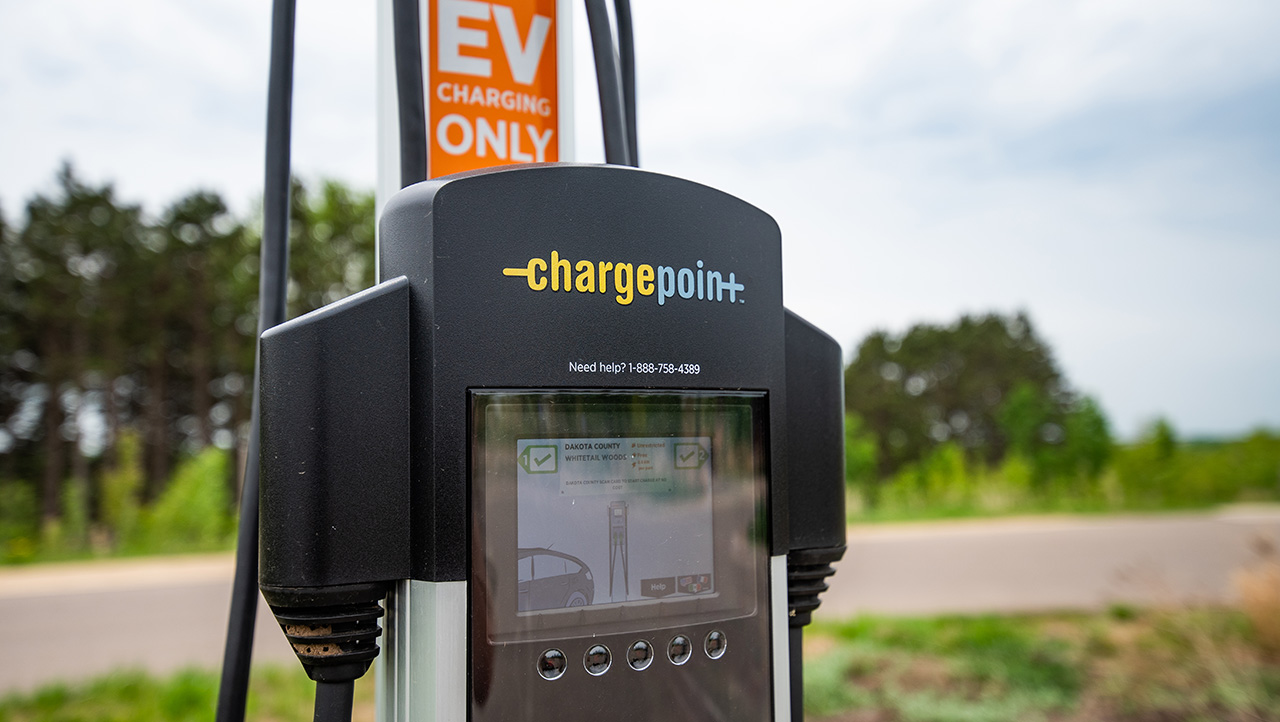
In parallel, Fresh Energy’s Transportation team leverages our experience and expertise to focus on making our vehicles cleaner. Doing so requires two things: increasing adoption and use of zero- and low-emissions vehicles, and expanding the state’s reliable, clean fueling infrastructure.
_Charging_Station,_Dakota_County,_Minnesota_(41490006075).jpg)
First, we need to build-out electric vehicle charging and other clean fueling infrastructure quickly, making sure it is statewide and accessible to all. In the race to making our vehicles cleaner fast enough to meet climate goals, ensuring those vehicles can be powered easily at home and on-the-go is critical. For electric vehicles (EVs), this means accessible and affordable at- or near-home charging that optimizes use of the electric grid, coupled with on-the-go charging that is fast, reliable, and available all over the state. For heavier vehicles like planes or ships where battery technology will not be a near-term option, it means a truly sustainable and climate-friendly supply chain of low-carbon fuels from a variety of sources that can be dropped into existing or new engine technology.
Second, we need to increase adoption and use of clean vehicles, prioritizing zero-emissions vehicles where possible and deploying low-carbon options where electrification is not feasible. Almost three-fourths of our transportation sector’s emissions come from on-road vehicles, which can be electrified. That means we need to increase sales of new electric vehicles (which will help shift the used vehicle market towards cleaner models over time, too) and find ways to replace existing on-road vehicles — especially older and less efficient ones, or ones that drive long distances — with cleaner, zero-emission versions.
For heavier, off-road vehicles like planes and boats, some electric options are possible, such as for shorter flights or specific end-uses like recreation or transit. For long-haul flights or shipping, progress will focus primarily on ensuring the fuels powering these planes and ships are as climate-friendly as possible, though there will be other smaller but significant actions that can add up to near-term emissions reductions too.
How Fresh Energy makes change: Working where decisions get made
Transportation planning and funding decisions happen in a variety of venues, from state agencies to electric utilities to the state legislature. Fresh Energy’s Transportation team, along with its many partners and coalitions, works across these policy and regulatory spaces to set the path for rapid and equitable progress on transportation decarbonization. The team also works with industry partners and other organizations to build the market for EVs in the state. Across all these areas, our priority is clean, efficient, and affordable transportation solutions that work for all Minnesotans.
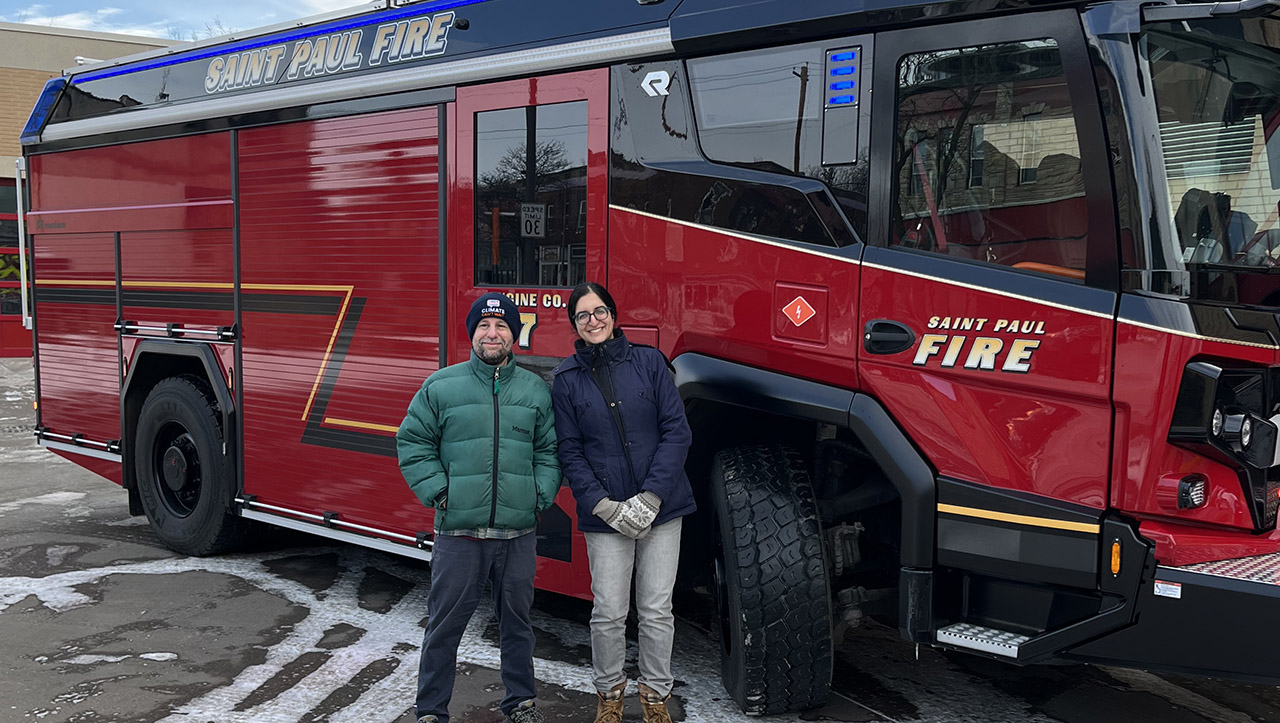
At the Minnesota Legislature, Fresh Energy works with many partners to advocate for dedicated funding to support the shift from our status quo, oil-based transportation system toward a cleaner and more electrified one. Alongside general education and defending against anti-EV bills, we have a history of advocating and securing funds for everything from electric school buses to EV rebates to electric lawncare and snow removal equipment (an idea that was brought to us by Community Stabilization Project, who worked diligently with us to get it passed).
There have also been other smaller but important policy wins, just as codifying a regulatory decision that investor-owned utilities must file Transportation Electrification Plans regularly and directing Metro Transit to plan for an entirely zero-emissions fleet. There have also been decisions that we disagree with, such as almost tripling electric vehicle registration fees, that we are now working to modify with lawmakers and other entities through a legislative working group so a truly sustainable solution for transportation infrastructure funding is found that doesn’t unduly burden EVs, especially the more affordable options entering the market.
Finally, we recognize not all transportation end-uses will be electrified. The legislature is a crucial venue to ensuring the alternative, low-carbon fuels that will be necessary to reach our 2050 climate goals for hard-to-electrify end-uses like planes and ships are truly sustainable and evolve into the most climate-friendly versions possible. To that end, Fresh Energy has been supporting changes to Minnesota’s current Sustainable Aviation Fuel tax credit to ensure the cleanest pathways are eligible and advocating for a clean transportation standard, coordinating with our Heavy Industry and Agriculture team as well.
At the Minnesota Public Utilities Commission (PUC, or Commission), Fresh Energy has worked with regulators, utilities, and partner organizations to make the case that electric utilities not only have a role in supporting transportation electrification, they play a vital part in increasing adoption of EVs and making sure Minnesotans can charge in a manner that benefits the grid and keeps electricity rates affordable for all customers.
As the only Minnesota-based nonprofit that has consistently and persistently engaged at the PUC on this issue for 10 years, Fresh Energy brings a deep bench of experience and expertise on what electric utilities should be doing and what programs their customers — residential and commercial – need now and in the future to make a successful transition to electric transportation.
Our team is also laser-focused on removing barriers to at-home charging for customers for whom doing so is challenging — whether that’s multifamily residents or renters — and encouraging utilities to support other, non-personal vehicle modes of clean transportation like electric carshare and electric buses.
We work in close collaboration with the Electricity team to make sure the grid of the future supports rapid growth in EVs, and with them to make sure rates remain affordable for current and future EV drivers.
At multiple state agencies such as the Minnesota Department of Transportation (MnDOT), Department of Commerce (Commerce), and Pollution Control Agency (MPCA). Over the years, clean transportation programs and decisions have cut across multiple state agencies. With the MPCA, we pushed to adopt first-in-the-Midwest clean cars standards and advocated for more spending on charging and zero-emissions trucks and buses in the Volkswagen Settlement Fund. With MnDOT, we have served on its Sustainable Transportation Advisory Council to provide recommendations on actions the agency could take to support zero-emissions transportation and provided a clean energy and climate perspective on plans like the Statewide Multimodal Transportation Plan and Minnesota GO Vision.
Along with Fresh Energy’s Buildings team, our team is also working with Commerce on ensuring utilities’ Energy Conservation and Optimization (ECO) Triennial Plans advance transportation electrification through legislatively-allowed efficient fuel switching provisions.

We also collaborate in coalition spaces and with partners to advance progress on equitable, clean transportation. This includes advocating at the Met Council and state legislature for electric buses — both transit and school — with the Coalition for Clean Transportation, made up of other nonprofit organizations committed to increasing equitable access to electric transportation. It also includes working with Drive Electric Minnesota, a coalition facilitated by the Great Plains Institute and comprised of private, public, and nonprofit groups focused on policy and market improvements to make it easier to buy and operate an EV in Minnesota. In both these spaces, Fresh Energy is a steering member, underscoring our understanding of and commitment to making change with others.
What’s next?
Much of transportation funding is public, coming from either federal sources or state funds and flowing onward to regional entities and local governments. With so much public funding available, our engagement at the legislature and with state agencies like MnDOT is a cornerstone of achieving rapid reductions in climate emissions and building a safer, healthier and more connected system.
We will continue to work with partners like the Coalition for Clean Transportation to educate these decision makers on why a net-zero and equitable transportation system focused on electric vehicles of all sizes and with many transportation options is critical to Minnesotan’s health, wellbeing, and pocketbooks. We will also collaborate to find a sustained and sufficient source of funding to transform our fossil fuel-based transportation system into an equitable and electrified one, while finding and clearing pathways for low-carbon fuel develop to power hard-to-electrify vehicles.
Our Transportation team will also continue its long history of progress at the PUC – coupled with newer engagement in other utility planning like ECO – to encourage utilities both big and small to invest in building the backbone of public and at-home charging needed to accelerate EV adoption of all types — cars, pick-ups, vans, buses, and trucks — while also ensuring that rapid EV adoption benefits the grid and reaches under-served customers such as under-resourced households, renters, multifamily residents, communities of color, and rural residents.
Beyond public venues, we will also dig deep into private market development to make charging and EV ownership an easier switch for more Minnesotans through our engagement with Drive Electric Minnesota and other avenues.
The choices we make today about how Minnesota moves its people and goods will determine whether or not future generations inherit a stable climate and thriving economy. Fresh Energy is working every day to ensure that the transportation system we build is clean, efficient, and affordable for all Minnesotans.