
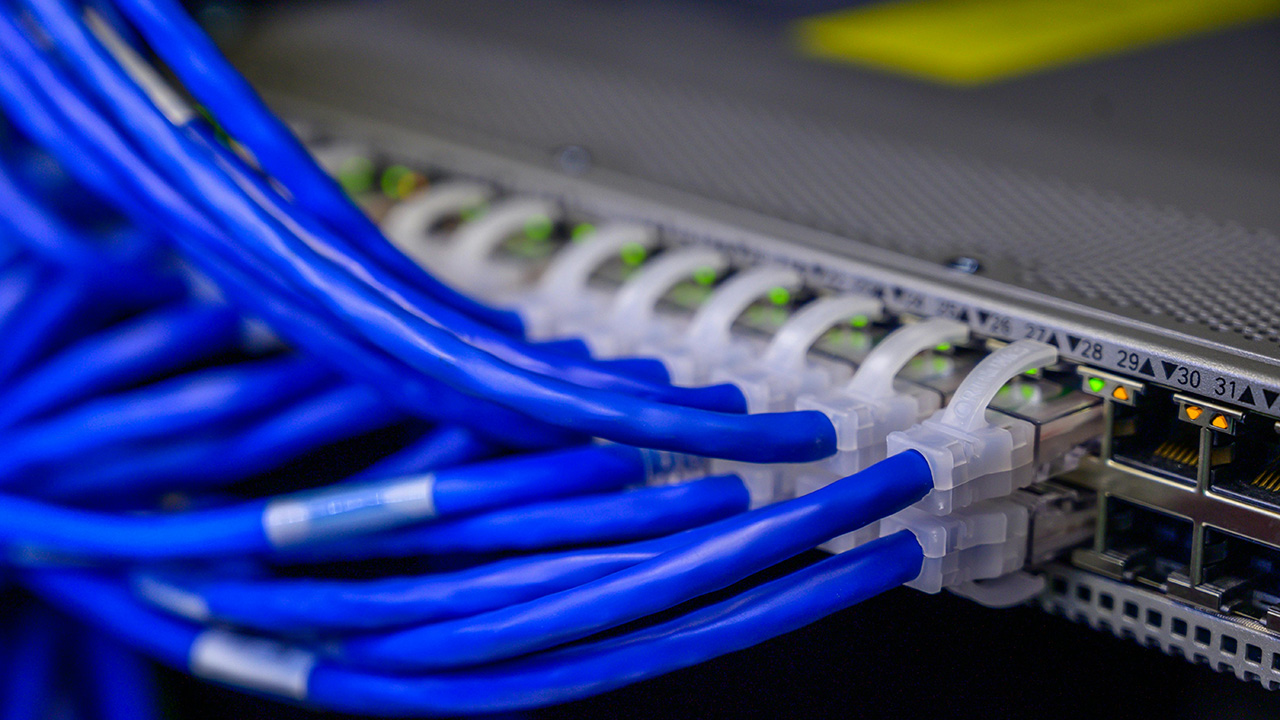
Artificial Intelligence (AI) tools have gone mainstream in the last several years, and tech companies are spending huge sums to build data centers across America to run them. In just three years, data center investments have jumped from $13.8 billion to $41.2 billion per year.
These aren’t the same data centers of the 2010s. New data centers called “hyperscalers” are capable of complex computing for AI, automation, and data processing. And more complex processing requires more electricity and water.
One data center in Indiana already consumes 525 megawatts (MW) of electricity and plans to reach 2,200 MW. Another in Wisconsin planned for 1,500 MW of electricity, enough electricity to power roughly 1,125,000 homes. That’s a substantial amount of electricity demand – especially after years of slow-yet-steady electricity supply growth.
The data center build-out has come to Minnesota. Minnesota currently has 13 operating data centers with 43 MW of capacity — the old guard of data centers and electricity use. As of January 2026, there are currently 12 planned projects that are public, which would add a total of 1,120 MW of capacity — much, much larger than existing facilities in the state.
Since data centers use a lot of electricity, they’re of keen interest to Fresh Energy and Minnesotans. We need to ensure data center development doesn’t make our electricity system more expensive or jeopardize our ability to meet Minnesota’s 100% clean electricity by 2040 law.
If built, data centers must help Minnesotans’ transition to clean, affordable, and reliable electricity. We can and must set policies and regulations to accomplish this.
Data centers are already increasing carbon emissions — a trend that must be reversed. In 2025, U.S. power sector emissions rose 3.8% from 2024, mostly from growing electricity demand from data centers (up 2.4%) that caused us to burn more coal to generate electricity. Data centers must be powered with clean power, not fossil fuels like coal or natural gas, in order to meet our climate targets.
Policies can and should ensure Minnesotans aren’t paying more for electricity because of data centers. Data centers have helped to lower commercial and residential electricity rates in some areas. When there is higher electricity demand, or more electrons sold, utilities have more units across which they can split fixed costs. In North Dakota, electricity prices have been depressed by growing electricity loads like data centers in recent years that help pay down fixed costs for all customers. That’s not always expected, of course: data centers are driving up electricity rates in other places.
The policies Minnesota adopts will determine whether data centers benefit or harm our state. Data centers provide opportunities — they could help speed the clean energy transition, lower electricity rates, and provide waste heat and tax revenue to Minnesota communities. But they could also increase emissions, increase rates, and utilize too much of our water reservoirs.
Fresh Energy’s role in the energy system is unchanging: we ensure that our energy systems and the clean energy transition are not harmed, but instead enhanced, by new technologies. We approach innovative technologies with a long-term perspective, planning how it will impact Minnesota’s energy transition in 10, 20, and 50 years.
This post outlines the most important policies and regulations that Minnesota can adopt to ensure data centers benefit our state and all Minnesotans.
Minnesota’s regulators can ensure data centers benefit the state
Minnesota’s Public Utilities Commission (PUC, or Commission) regulates electric utilities to ensure Minnesotans have clean, affordable, reliable electricity. They’ve done a good job: Minnesota’s electricity emissions are over halfway decarbonized, and our average residential electric bills were the 8th lowest in the U.S. in 2024.
The Commission can and should ensure data centers benefit Minnesotans by adopting better load forecasting processes, utilizing flexibility practices to reduce demand spikes, and setting good rates and tariffs.
Better load forecasting is essential. Minnesota’s Integrated Resource Planning (IRP) process requires electric utilities to forecast how much electricity they will need in the future and how best to build it reliably, cleanly, and affordably. This process has generally worked well as Minnesota has experienced relatively slow, predictable load growth over the past several decades.
Utilities must update their load forecasting practices to ensure they can reliably, cost-effectively meet data center demand.
Data centers are overestimating how much electricity they will need. Developers are proposing projects in multiple states at once, resulting in double- or triple-counting their electricity needs. Without more accurate load forecasts, this could lead electric utilities to overbuild infrastructure and skyrocket costs. Other states have updated their load forecasting processes to get more accurate numbers. Minnesota should too.
More transparency from electric utilities and data centers will allow the Commission and stakeholders like Fresh Energy to receive more accurate load forecasts. The Commission could accomplish this through its existing IRP process or by requiring an additional “large load forecast” process. This could use some level of stochastic modeling based on the likelihood of individual projects materializing.
Utilities have large load interconnection queues with various stages and increasing financial commitments. They should use these stages to better forecast so Minnesota can accurately build its electricity system.
A recent report offers some helpful ideas: use scenario-based or stochastic load forecasting methods, integrate end-use forecasting with econometric forecasting, and ensure load forecasts are used consistently across different planning processes.
Minnesota could learn from other states’ load forecasting. Virginia has had Dominion Energy use an econometric approach to forecast sales, energy, and peak demand. North Carolina had Duke Energy develop a long-term load forecast. Georgia Power had a short- and long-term forecast for both energy sales and peak load.
By requiring data center developers to provide accurate predictions for how much electricity they’ll need, Minnesota can accurately (and cost-effectively) invest in infrastructure to meet data center demand without overbuilding or overspending.
Rate design can protect Minnesota customers from high electricity bills. In 2025 Fresh Energy advocated at the Minnesota Legislature to help pass a nation-leading law requiring data centers to pay for all incremental costs attributable to them, including necessary electricity infrastructure upgrades. This is good; it means data centers pay their fair share and can’t push those costs onto Minnesotans.
We already have a way to ensure that data centers help, not hinder, electricity costs in Minnesota. By law, the Commission can require electric utilities to put data center costs in their own “category” separate from other ratepayers.
In technical terms, this means the Commission should use its rate design process to ensure electric utilities are properly tracking and charging data centers for their needs, not shifting costs to residential and commercial ratepayers.
The Commission sets energy tariffs for electric utilities and customers. A tariff is a detailed pricing structure that determines exactly how much a customer will pay and when they pay it. The Commission oversees how a utility charges its commercial customers, its residential customers (like you and me), and its large load customers (like data centers).
The Commission has already started the discussion — beginning with Xcel Energy — on how to place data centers into its “very large customer” bucket, called a large load, to make it easier to identify the costs of serving data centers. This would isolate data centers from the costs of providing electricity to homes, businesses, and other industries in Minnesota. It would also ensure data centers pay for all costs attributable to them.
The idea is: If a data center comes to town and requires new electricity generation to be built, the data center should and would pay for the updated infrastructure — not residential or commercial ratepayers.
By using tariffs, the Commission could and should ensure data centers pay their fair share and Minnesota customers don’t have rising electricity bills as a result of data centers.
Minnesota’s electric utilities must place data centers in their own rate class to more accurately allocate costs incurred by these facilities. Xcel Energy has already filed a tariff proposal with the Commission, seeking to establish a “large load tariff.” Minnesota Power and Otter Tail Power will have similar dockets in the future, too.
Xcel Energy filed an initial proposal to the Commission seeking to create a new tariff for large data centers. This proposal requires data centers to commit to a minimum contract length and requires an exit fee payment if the facility goes offline before the contract ends. This helps ensure other ratepayers are not stuck paying for stranded assets if the data center leaves town.
This proposal is currently part of an open docket at the Commission. Fresh Energy and our partners are engaging in the regulatory process to ensure the protections Xcel Energy puts in place are sufficient to protect ratepayers and deliver Minnesota’s clean energy targets.
In December 2025, the Commission required Dakota Electric to file an additional tariff to address the ongoing costs associated with serving data centers. Xcel Energy filed a tariff for very large customers in July 2025 to set the amount that data centers would pay for electricity.
Data centers will comply with Minnesota’s clean electricity law
Data centers are subject to Minnesota’s 100% clean electricity by 2040 law and are regulated by our Commission. Proper policy and regulations are essential to ensure data centers help, not hinder, our transition to a clean and affordable energy system.
100% clean electricity is our guiding star in Minnesota. In other states, data center growth has invigorated natural gas development. Minnesota’s data centers must use wind, solar, battery systems, and other carbon-free sources to meet their electricity needs. Data centers can and should pilot new clean energy technologies to meet their electricity needs in Minnesota.
More recently, data centers have proposed generating their own electricity behind-the-meter to meet their needs. Here’s the idea: they could build and operate their own solar field or natural gas power plant. Since it wouldn’t connect to the electricity grid, it wouldn’t have any financial effects on others. It could also avoid the grid’s interconnection queue, which has a notoriously-slow timeline. Sounds fine, but such a proposal would still have to meet Minnesota’s environmental and climate laws – and roughly three-quarters of these proposals are for natural gas plants, not clean energy.
Building behind-the-meter gas plants poses a risk to Minnesota’s decarbonization goals. Nearly 100 gigawatts (GW) of behind-the-meter gas plants are being proposed across the U.S. to power data centers, up from 4 GW in 2023. Fortunately for Minnesotans, the Commission still has the authority to permit or deny a behind-the-meter gas plant that would power a data center. While Minnesota’s 100% clean electricity by 2040 law only applies to electric utilities – and not behind-the-meter electricity generators – the data center would still have to prove to the Commission that it’s in the public interest to build a polluting power plant, a tough sell given the state’s decarbonization targets.
Flexibility practices can minimize grid impacts
Data centers use a lot of electricity. But by shifting when they use that electricity — using less electricity during times of day when Minnesotans are using more — we can minimize the amount of new electricity generators we need to build to meet data center demand.
Put simply, we won’t have to build as many new wind and solar farms or transmission lines if data centers are flexible about when they use electricity.
According to a Duke University report from February 2025, much of the electricity demand from data centers can be met with our existing power system if data centers are flexible about when they use the electricity.
The report estimates about 100 GW of data centers could be added nationwide to the grid with minimal impact if data centers are curtailed or wound down when the grid experiences high demand. Put in context, the entire U.S. electric grid had about 1,189 GW of electricity-generation capacity in 2023.
Essentially, 76 GW of new load — 10% of the nation’s current aggregate peak demand — could be integrated with an average annual load curtailment of 0.25%. That means data centers wouldn’t even have to power down that often. The same is true for 98 GW at a rate of 0.5%, and 126 GW at a rate of 1.0%.
Here in MISO, the Midwest’s electric grid, we could add 15 GW of data centers at 0.5% annual curtailment.
What do all these numbers mean? The U.S. and Midwest power system has existing headroom to add a lot of data centers as long as data centers can ramp down when needed. Data centers can and should do this to avoid building costly, polluting electricity generators and utilize clean, affordable, reliable electricity instead.
Water usage and siting requires proper oversight, transparency
Minnesota is the Land of 10,000 Lakes. Taking care of our water will always be an essential part of our state identity.
Data centers use a vast amount of water. One proposed data center in Minnesota would consume roughly double the water consumption of the nearby community.
While carbon emissions are straightforward (we need to stop emitting carbon as soon as possible to avoid the worst impacts of climate change), water usage varies by geographic location. Some areas have healthy water reservoirs that can sustainably meet commercial needs — like golf courses or data centers — as long as they are responsibly managed. Some areas do not.
It is of the highest importance that Minnesota continues to protect its water resources. And to protect our water, we need accurate transparency from data centers about how much water they plan to use.
Data centers use water to cool their processors, which get hot when they’re running. Water circulates through their infrastructure, which absorbs the heat, and is transferred to a cooling tower, where some of it evaporates. How much water a specific data center will use varies by its size, type, and location.
Many developers use non-disclosure agreements (NDAs) that avoid disclosing their trade secrets, including how much water a data center will use.
Minnesota regulators must ensure accurate estimates and transparency for how much water data centers plan to utilize. Minnesota takes care of our water resources, and our environmental review process is important for a reason: we must be able to properly assess the environmental impacts of data centers.
Utilities and developers must work with regulators and stakeholders and be transparent about water usage. Transparency, though, can be challenging to balance: Minnesotans must be able to protect our water supplies and an affordable clean energy transition. Yet preliminary data center plans can skyrocket local real estate values, creating difficult challenges for both local communities and projects aiming to site in Minnesota. Increased transparency and community engagement around data center siting is essential to building public trust and mitigating harm as data centers continue to scale.
We need regulators and decision-makers to work with developers, utilities, and stakeholders to ensure these projects benefit Minnesotans.
Data center legislation must maximize benefits for Minnesotans
Fresh Energy has already been advocating at the Minnesota Legislature for smart, forward-thinking policy to ensure data centers benefit Minnesotans.
We supported a nation-leading data center policy package adopted in the 2025 legislative session that included consumer, grid reliability, and environmental protections. The package also included a partial extension of existing tax exemptions for data centers.
Looking forward, Minnesota’s 2025 data center legislation should be viewed as a floor for how data centers are regulated in the public interest, rather than a ceiling. For example, more work needs to be done to ensure adequate public disclosure and transparency for proposed data centers, in addition to considering rules around siting and continuing to ensure that Minnesotans are benefiting economically from data centers built in the state.
Building an inclusive workforce and supply chain
Data centers represent a potential economic opportunity for Minnesota. As companies invest in large-scale computing infrastructure across the state, they bring capital investment, construction activity, local tax revenue, and new jobs, helping position Minnesota as a leader in the growing digital and clean energy economy. Ensuring that these benefits reach communities across the state should be central as data center development continues.
However, realizing this opportunity requires intentional planning. Workforce diversity should be part of Minnesota’s approach, ensuring that people from historically underrepresented communities have pathways into construction, electrical, and clean energy careers. Inclusive hiring practices, training programs, apprenticeships, and partnerships with community colleges and technical schools can help make these opportunities accessible.
Equitable economic impact also depends on supplier diversity — proactively including businesses owned by diverse entrepreneurs in the supply chains that support construction, operations, and energy services.
Companies that take clear, intentional action on workforce and supplier diversity not only strengthen the local economy but also ensure that the benefits of data center growth are broadly shared, supporting Minnesota’s clean energy and economic goals.
What’s next?
As data centers are proposed in Minnesota, the policies and regulations our state decision-makers adopt will determine if they’re beneficial or harmful to Minnesota.
There are real opportunities: Data centers could help reduce emissions, lower electricity rates, and provide clean heat and tax revenue to surrounding Minnesota communities. But only with the right regulatory framework.
Our Commission has a good track record. They’ve guided Minnesota’s electric utilities to be halfway decarbonized while keeping rates affordable. Their regulatory process, which includes stakeholders and public input, is the correct process to guide responsible data center development.
Minnesota is different than other states. We have strict standards for our natural resources, we have forward-looking climate policy to lead the Midwest in decarbonization, and we have a strong Commission that seeks to safeguard Minnesotans’ way of life.
Fresh Energy will continue to engage in Xcel Energy’s rate design regulatory filings at the Public Utilities Commission, as well as other electric utilities’ rate design proceedings, to ensure data centers don’t hinder Minnesota’s clean energy transition or burden Minnesotans with higher electricity costs.
Stay tuned as Fresh Energy works at the Minnesota Legislature and Public Utilities Commission to ensure Minnesota has an affordable, reliable, and clean energy system, despite data center development, so that Minnesota is a place where all can thrive.