
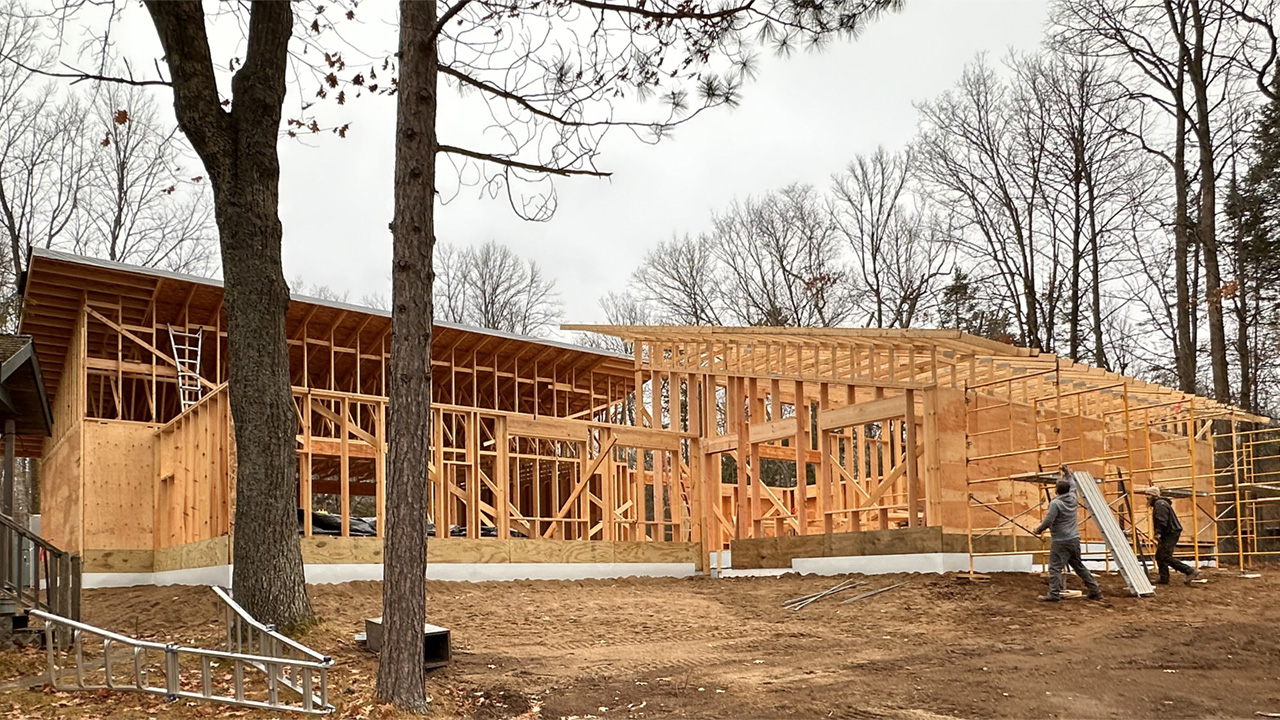
Fresh Energy knows that establishing smart building codes — which set the minimum standards for a building’s quality, safety, energy use, and construction — are critical to improving energy efficiency, reducing greenhouse gas (GHG) emissions, and accelerating the transition to a clean energy economy that works for all Minnesotans.
That’s why we’ve been deeply engaged in Minnesota’s latest residential energy code update process since it began in 2022 — and why we’re celebrating a major milestone: on August 18, 2025, the residential energy Technical Advisory Group (TAG) finished its review of the 2024 International Energy Conservation Code (IECC) for adoption in Minnesota. While there will still be over a year of negotiating — we don’t expect the energy code update to be finished until 2027 — the TAG’s code recommendation makes substantial improvements to how Minnesota’s buildings are constructed.
Fresh Energy will be advocating for the energy-efficient and climate-friendly measures within TAG’s recommendation over the coming years as their code recommendation inches closer to becoming law. Setting a stronger residential energy code helps Minnesota decrease emissions in its buildings sector, the fastest-growing source of GHG emissions in our state. In this post, we’ll explain the 7 best things in the TAG’s code recommendation, how the energy code update process works in Minnesota, and the next steps in the code adoption process.
7 best things that TAG recommended to update Minnesota’s energy code
Energy efficiency and how we build our buildings is incredibly important not just to meet Minnesota’s climate targets, but also to limit household energy costs.
This is particularly important because current federal policies are making energy more expensive by raising taxes on renewables and undercutting energy efficiency across the country. Fortunately, Minnesota’s state code can step in and safeguard Minnesotans, providing a minimum efficiency standard that lowers emissions, improves comfort and resilience, and saves Minnesotans money on their home energy bills. Energy efficiency is one of our state’s best tools to protect energy affordability for its residents.
While there will be over a year of negotiating before this energy code becomes final — and certain things are added and removed from the recommendation — we’re celebrating that the TAG’s energy code recommendations will deliver more efficiency and affordability thanks to the model 2024 IECC code, as well as Minnesota-specific amendments. This updated code represents major progress from the current residential energy code in Minnesota, which hasn’t been updated since the 2012 IECC was adopted with weakening amendments in 2014.
1. Improved air tightness standards
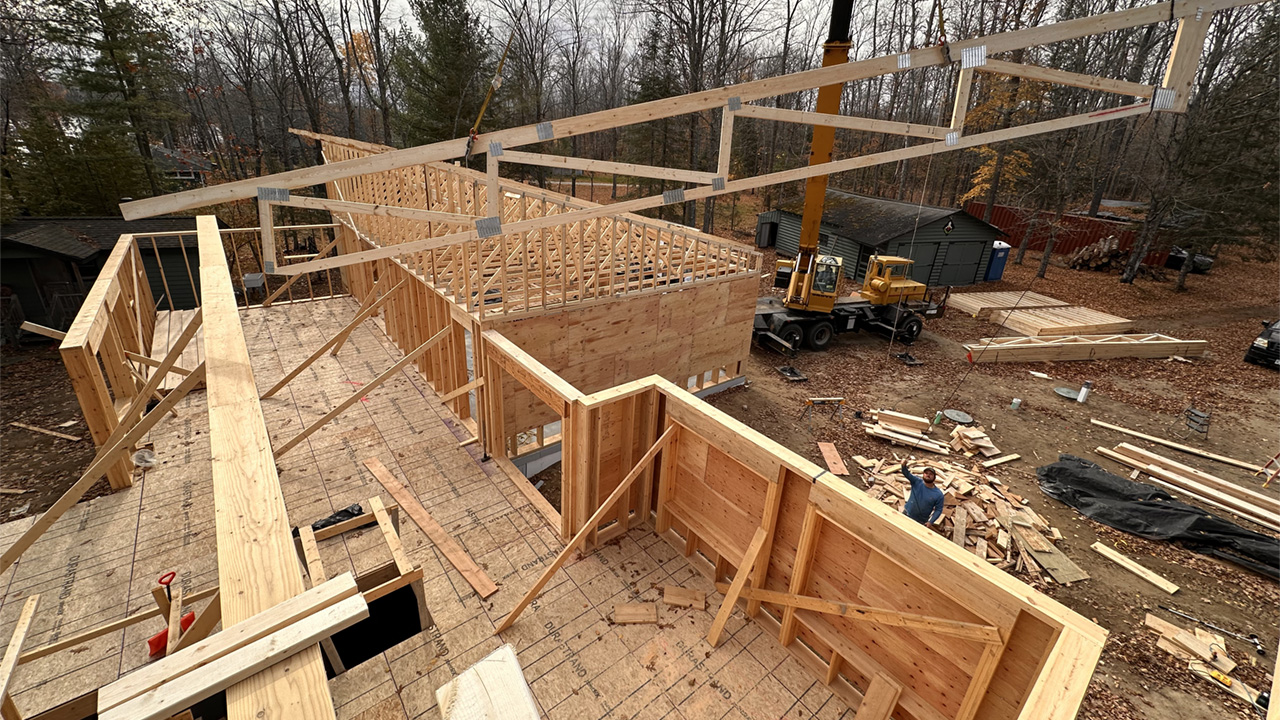
Reducing air leakage in our buildings’ envelope — the parts of a house that separate inside from outside, like windows, exterior walls, doors, and the roof — is one of the most important things to get right with a new building. While the importance of insulation is better understood by many people, an air-tight envelope is what lets the insulation do its job effectively (just think about how ineffective a knit sweater would be outside in January without anything to block the wind!).
The next update will do two things: increase the stringency of air tightness in new homes, and change the metric used to measure it so different sized homes are all on equal footing. Minnesota’s current code allows three air changes per hour (in other words, how many times does the total indoor volume of air turn over) at 50 pascals of pressure (or three ACH50 for short).
The new code will limit air leakage to 0.18 cubic feet per minute per square foot of enclosure area (cfm/ft2). On average, this will translate to between 2.5 and 3 ACH50 — however, that is a rough estimate. The whole reason for the change is because these are fundamentally different measurements.
Fresh Energy supported this change because, simply put, cfm/ft2 measures the thing we care about: the amount of air leakage through the total surface area of the building envelope, rather than the volume of a home and how frequently that volume is 100% replaced. Under the old system, larger homes with the same volume of air leakage got an unfair advantage because their large interior volume made them appear less leaky. Curious to learn more? Our friends at The Energy Conservatory explain in more depth here.
This new update will ensure all homes meet the same high standard regardless of size.
2. Duct leakage will be tested
For homes with central HVAC systems, ducts are the arteries that deliver conditioned air evenly throughout our home. Current code already requires sealing joints and seams of our ducts, but the next code update adds a requirement to test the duct system for leakage, limiting how much air can escape. If you’ve ever lived in a room that was the last stop on a branch of the duct system, maybe you’ve experienced lackluster delivery of comfortable air. Ensuring a tight duct system spreads comfort evenly throughout the home—no matter how far you are from the air handler at the heart of it.
3. Stronger insulation requirements
The updated code improves insulation minimums, which means we spend less money wasting heat and energy while reducing emissions. That’s especially important in a state like Minnesota, with our bitterly cold winters and hot-and-humid summers. One area staying the same: R-49 ceiling insulation, which is already a decent minimum.
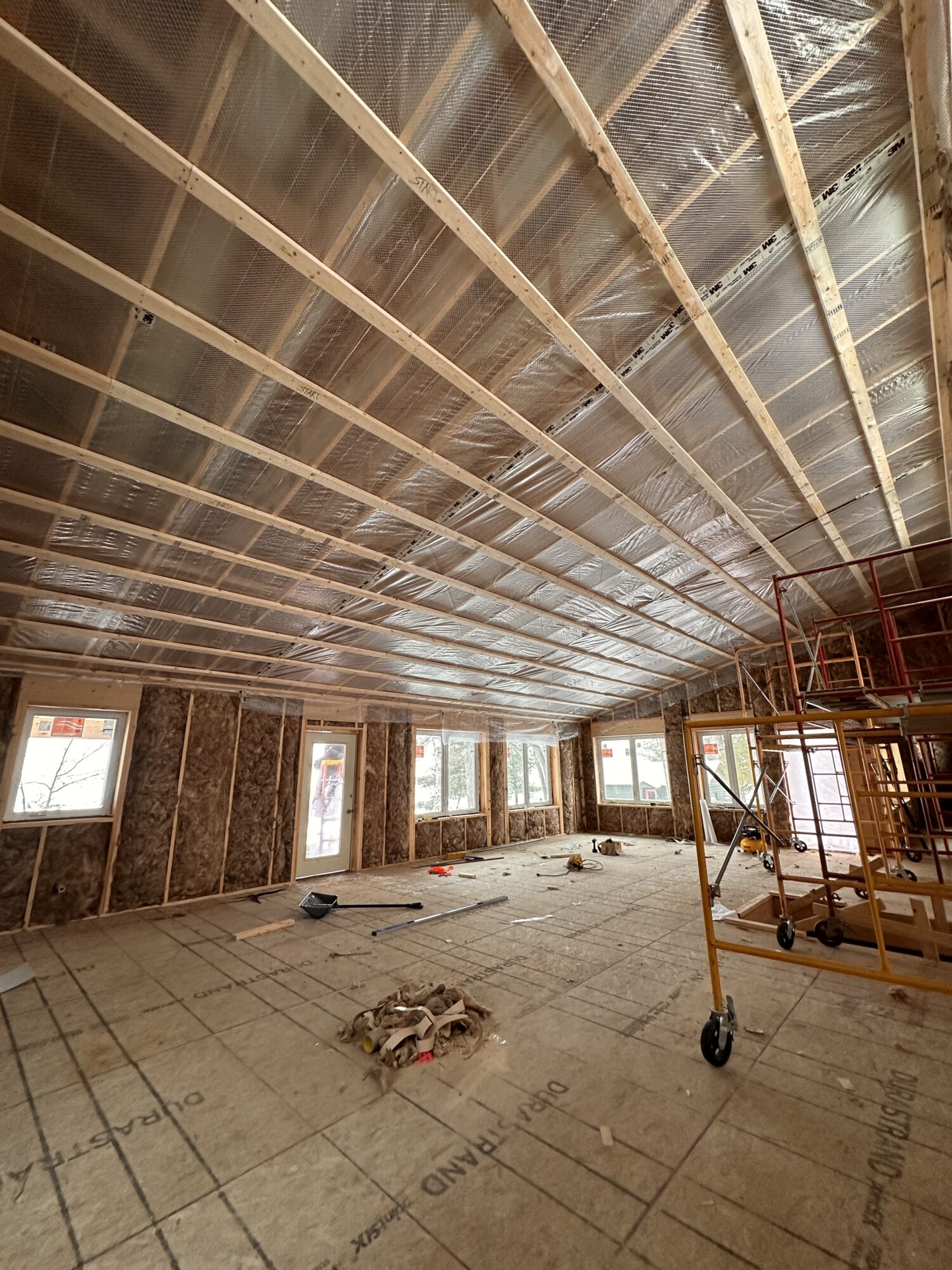
Wall insulation sees major improvements: Continuous insulation will become more common under the next code. In wood framed houses, current code only requires “cavity” insulation in the open spaces between studs. But studs are not insulation—so when a builder stuffs R-20 insulation in between all the studs in exterior walls, that leaves weak spots known as thermal bridges for heat to travel easily every 16 inches (typically), resulting in a wall that’s much less than R-20 in total.
Now, future construction will require a layer of at least R-5 insulation around the entire wall, along with another R-20 in the cavities. Alternatively, a builder could use a different framing approach with wider studs (like a 2×10 instead of a 2×6) and R-30 cavity insulation. Because these studs are stronger, fewer are needed, reducing the number of thermal bridges and still resulting in a better insulated wall than current code at an even lower cost and without a layer of continuous insulation.
| Current MN Residential Energy Code | Recommended Next MN Residential Energy Code |
| R-20 (cavity) or 13+5 (cavity + continuous) in Climate Zone 6 and R-21 in Climate Zone 7 | R-30 or 20+5ci or 13+10ci or 0+20ci in both Climate Zones |
4. Better windows and doors
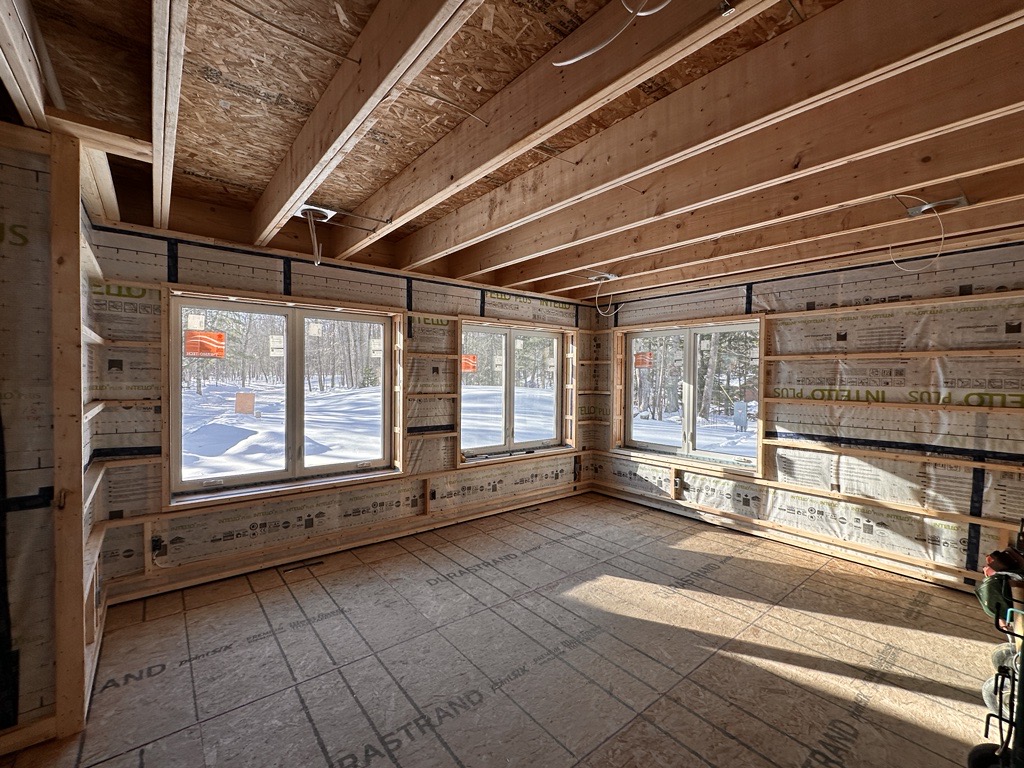
The updated energy code improves standards for windows and doors, which are critical components of energy efficiency in any home. The current code allows U-factors (another measure of heat transfer like R value, but the opposite since lower U-factors are more insulating) of 0.32 in both climate zones. The 2024 code tightens this to 0.28 in Climate Zone 6 and 0.27 in Climate Zone 7. The TAG went even further, recommending 0.27 for both climate zones — which is simpler and still leaves plenty of options thanks to the wide availability of ENERGY STAR windows and doors.
| Current MN Residential Energy Code | Recommended Next MN Residential Energy Code |
| 0.32 in both Climate Zones | 0.27 in both Climate Zones |
5. Enhanced ventilation requirements
The updated code will usher in a new era of efficient ventilation in Minnesota. While Minnesota’s current code requires balanced ventilation, it does not require any energy recovery. The new code will require energy recovery ventilation (ERV) or heat recovery ventilation (HRV) systems, which capture energy from outgoing air to pre-condition incoming fresh air. An ERV or HRV maintains a supply of fresh air in the home without the significant energy waste that would result from bringing un-tempered cold winter air or hot and humid summer air into the conditioned space.
6. Strong efficiency across compliance pathways
The code gives builders multiple pathways to comply with the spirit of the requirements. For example, the code offers a Total UA Alternative, called the Component performance alternative in the next code, as an alternative to the prescriptive minimums we listed above, such as 0.27 U factor for windows. This alternative allows individual components of the building envelope to fall below the prescriptive requirements as long as the overall envelope still meets minimum requirements.
Another alternative is the ERI pathway (Energy Rating Index). ERI is a generic term describing what most of us know as a HERS score. This is a new pathway for Minnesota from the model 2024 IECC, and the TAG recommended slightly strengthening the numbers to a maximum allowed score of 47 (model 2024 IECC requires 53 in Climate Zone 6 and 52 in Climate Zone 7). For context, 47 is already the average HERS score of tested homes in Minnesota.
Finally, the TAG also limited how much the envelope can be weakened in the ERI pathway. While the flexibility offered by alternative compliance pathways is important, the envelope is the longest lasting (and hardest to change later) component of the building.

7. The R408 Table: additional efficiency requirements
Finally, the latest code brings a new menu of options to achieve the last bit of efficiency however a builder or developer chooses. A number of credits are required, but no specific option is mandatory. The R408 table assigns credit values to optional improvements, such as even better air tightness, certain heat pump installations, adding a ground source heat pump, designing hot water distribution to be compact, and many more. This is a great way to add flexibility for builders, and future-proof the code since this table is a great place to give credit for new and innovative improvements in future updates.
How the energy code update process works in Minnesota
The Minnesota Department of Labor and Industry (DLI) has been working to update Minnesota’s residential energy code since 2022. DLI staff revise national model code language with Minnesota-specific changes, working with the Construction Codes Advisory Council (CCAC) to review the code.
The CCAC creates subcommittees of technical advisors called Technical Advisory Groups (TAGs) to conduct detailed, line-by-line reviews and edits of specific model codes. Fresh Energy has been making sure the energy code for residential buildings is smart and climate-informed so our buildings have lower emissions, are energy efficient, and help Minnesotans’ health and wallets.
Fresh Energy has provided written and oral testimony to advocate for a climate-friendly code for the last three years, including two years with Eric Fowler, Director of Building Performance, serving on the residential energy TAG. The process was extended some by the CCAC’s decision to pivot mid-point from the 2021 to the 2024 model code after that newer text was released.
While we’ve spent years advocating for climate and energy efficiency improvements in Minnesota’s code, over a year of negotiations still remain before the residential energy code is adopted and finalized. This month, we’re celebrating that the TAG recommendation has significant climate and energy improvements — and we’ll be advocating for these suggested changes to be included in the final energy code, which likely won’t occur until 2027.
What’s next?
The TAG’s recommended energy code update will help Minnesotans save money, live in healthier and more comfortable homes, and help us meet our climate targets. However, multiple steps remain before the TAG’s recommendations become part of the published building codes in Minnesota, which we expect in 2027.
First, DLI staff must conduct a moisture and durability analysis and prepare Statements of Need and Reasonableness (SONARs), which assist the administrative law judge in evaluating the legality and appropriateness of the final, recommended language. The CCAC will then discuss and vote whether to advance the TAG’s recommendations in an open public meeting, and they may make changes to the recommended language at this time.
Following CCAC approval, the DLI Commissioner must approve the language and open a formal public comment process. An administrative law judge will hold a hearing if 25 or more requests occur during the public comment period, and use the record established to determine what is lawful and appropriate, potentially making additional changes. The Legislative Coordinating Commission may also review the proposed rule. The final stage is the Governor’s Office, which may approve, partially veto, or wholly veto the proposed rule.
Fresh Energy is deeply committed to this work and will continue advocating every step of the way to ensure our building codes are strong, climate-friendly, and work for all Minnesotans to build a healthier, better future for us all. While this update represents significant progress from our current weakened 2012 code, we know that achieving Minnesota’s ambitious climate goals will require continued advancement in building efficiency and electrification standards.
Stay tuned as Fresh Energy continues to advocate for an efficient, climate-friendly energy code that serves as a model for other states in the Midwest working to reduce building sector emissions and create more resilient, efficient homes for their residents.