
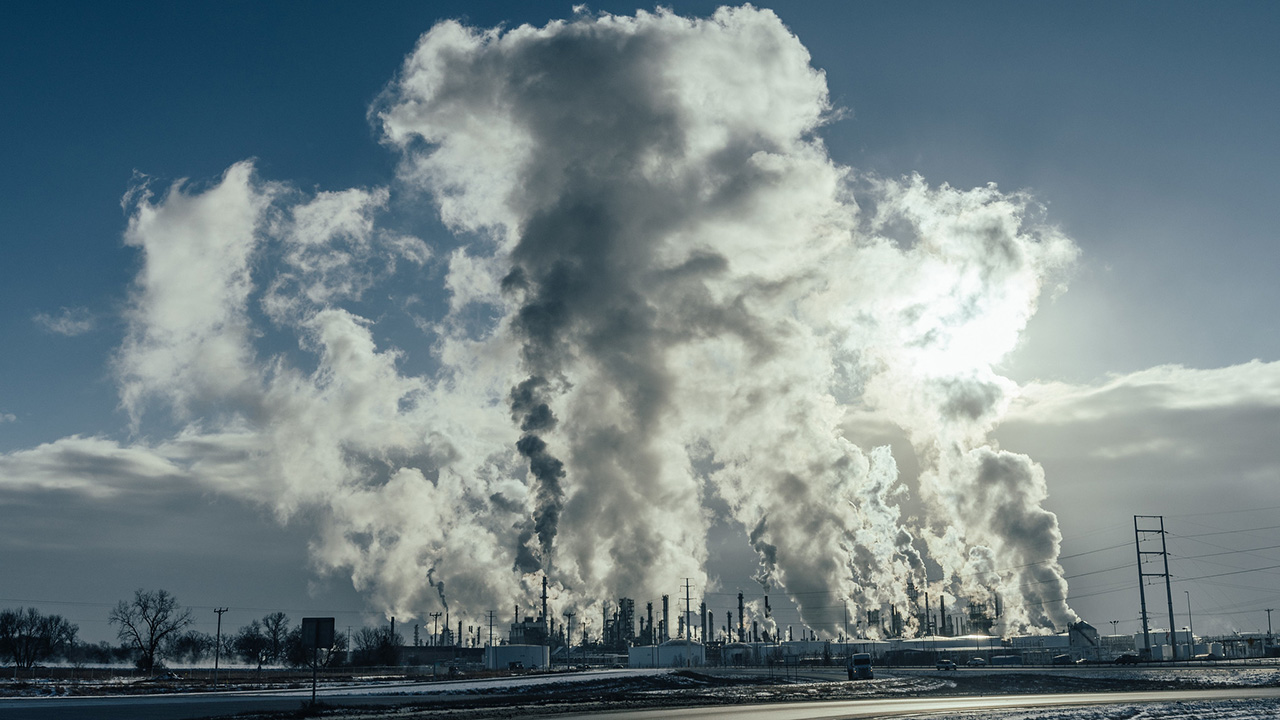
Oil. The stuff of award-winning movies, American myth-making past and present, global geopolitical conflicts — and a primary contributor to climate emissions and rapidly rising transportation costs at home and abroad.
Here at Fresh Energy, we recognize the need to transition away from an oil-combustion based economy to a zero-emissions one in order to achieve the greenhouse gas emissions reductions needed to avoid the worst impacts of climate change, as well as cleaner and healthier air for ourselves and future generations.
Decarbonizing the U.S. transportation sector is especially critical for reducing our dependence on oil, since transportation accounts for two-thirds of our country’s petroleum consumption. While progress has been made on making our vehicles more efficient and electric, our state and country still have a long way to go. Given oil’s decades-long energy dominance, making this shift will require major investments in zero-emissions technology and energy, from both private and public funding sources, and policy solutions to level the playing field and clear the path forward towards a zero-and-low-emissions based transportation.
We need to look at the oil industry closely to understand what’s really been happening, so we can remove obstacles to progress and truly move beyond fossil fuels. Our reliance on oil has been shaped carefully and intentionally through policy decisions, federal and state subsidies, and public campaigns against electric vehicles, transit, and climate science – and all of it has come with a hefty price tag for people and our planet. Read on to learn more about the true cost of oil.
Basics of the oil industry and its climate impacts
Petroleum, commonly referred to as oil, is a fossil fuel — meaning it was formed over millennia from the remains of prehistoric organisms that become liquid and trapped under rock or in sand. Drilling or mining are the primary ways to excavate oil, which is then processed and refined into a plethora of commonly-used products such as gasoline, diesel, jet fuel, plastics, and asphalt.
Oil used for transportation — gasoline, diesel, jet fuel — needs to be combusted to produce power to drive a motor engine. However, it is this combustion that releases greenhouse gas emissions and other air pollutants. Add in the climate emissions produced by the extraction, processing, and shipping of oil, and you get a highly climate-polluting fuel source.
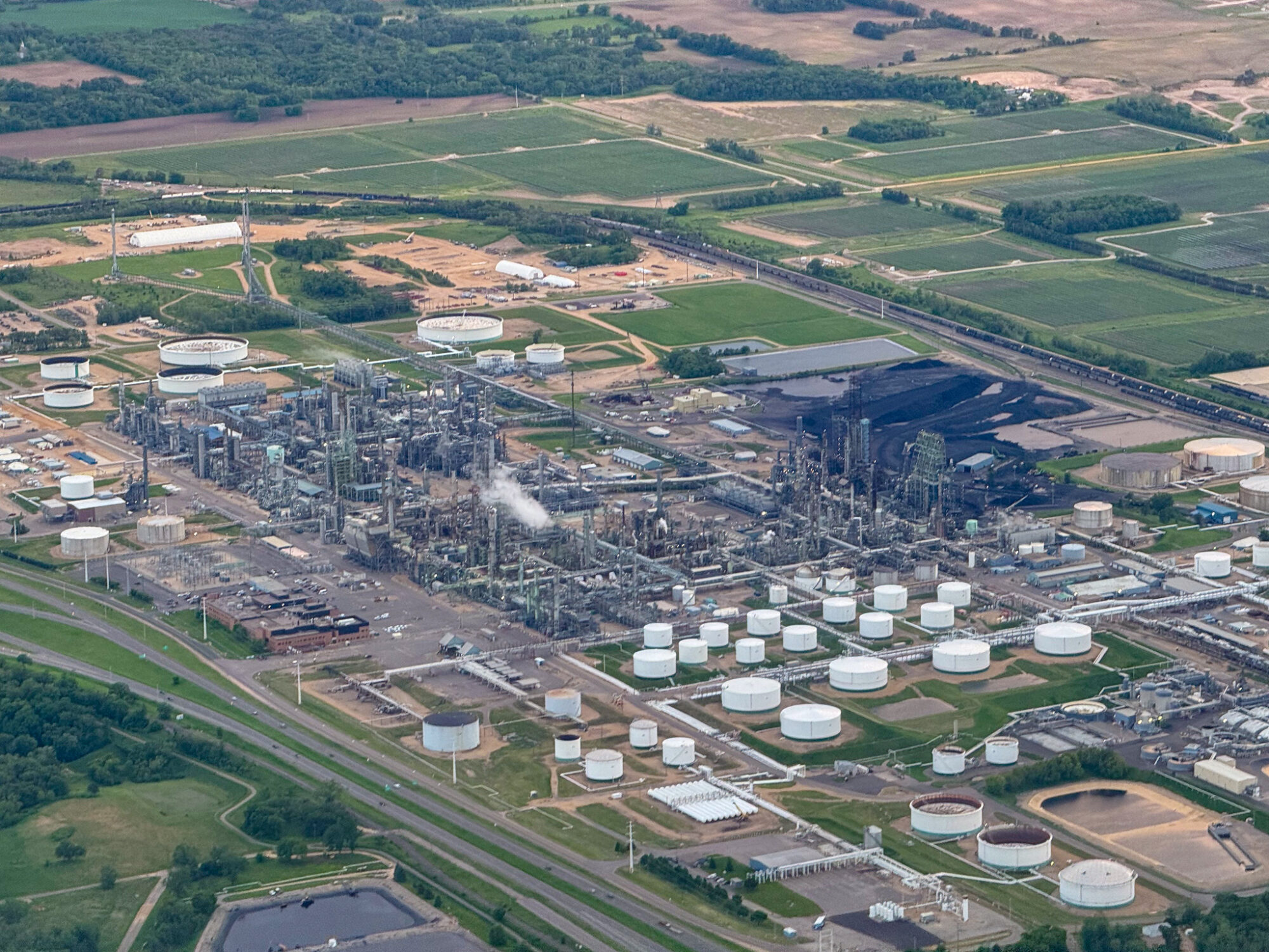
Here in Minnesota, we refine oil we receive primarily from Canada and North Dakota. The Canadian oil we get is mostly from Alberta’s tar sands — a particularly viscous source that requires more energy and water to refine than other sources, thereby driving up its climate emissions up by 30% over conventional oil (alongside other health and pollution concerns).
Amazingly, the climate impacts from burning oil was known by oil companies and automakers over 50 years ago – more than twice the number of years we have left to reverse course and reach net-zero climate emissions. Unfortunately, rather than recognize this risk and start plotting a path away from oil, automakers and oil companies buried the research and opted for a long-running and well-funded public disinformation campaign to divert attention away from possible regulations and undercut investments in alternatives like electric vehicles (EVs) and public transit. These tactics are still ongoing both federally and in Minnesota, as can be seen with recent lobbying by automakers to repeal climate emissions standards for new cars and trucks.
But with information comes an ability to act. States like Minnesota are leading the effort to hold oil companies accountable for their actions, actions which have left us with increasing costs from worsening climate impacts and fewer public and private investments to fight climate change. In order to begin transitioning away from oil products toward a carbon-free energy system, we first have to understand the direct and indirect subsidies the fossil fuel industry receives from the federal government.
Fossil fuels get preferential treatment on public lands leasing, production, and environmental cleanup
The oil and gas industry is one of the most heavily subsidized industries in American history, and it has been for over a century. U.S. fossil fuel companies receive $29.4 billion in direct subsidies every year, mostly through tax laws written more than 100 years ago that let companies underreport their profits and overstate their expenses. Unlike clean energy, these subsidies aren’t temporary incentives to help a nascent industry get off the ground. While wind and solar have lost most of their direct subsidies, fossil fuels’ subsidies are permanent and codified, and sometimes even expanded. A recent example can be found in the “One Big Beautiful Bill” that became law last summer, which cut incentives for clean energy and alternative clean fuels like Sustainable Aviation Fuels while boosting subsidies for fossil fuels, a move one organization who analyzed the bill called the “largest single-year increase in subsidies we’ve seen in many years.” And unfortunately, most of these subsidies go not toward lowering our energy bills or increasing local energy supplies, but straight to company profits.
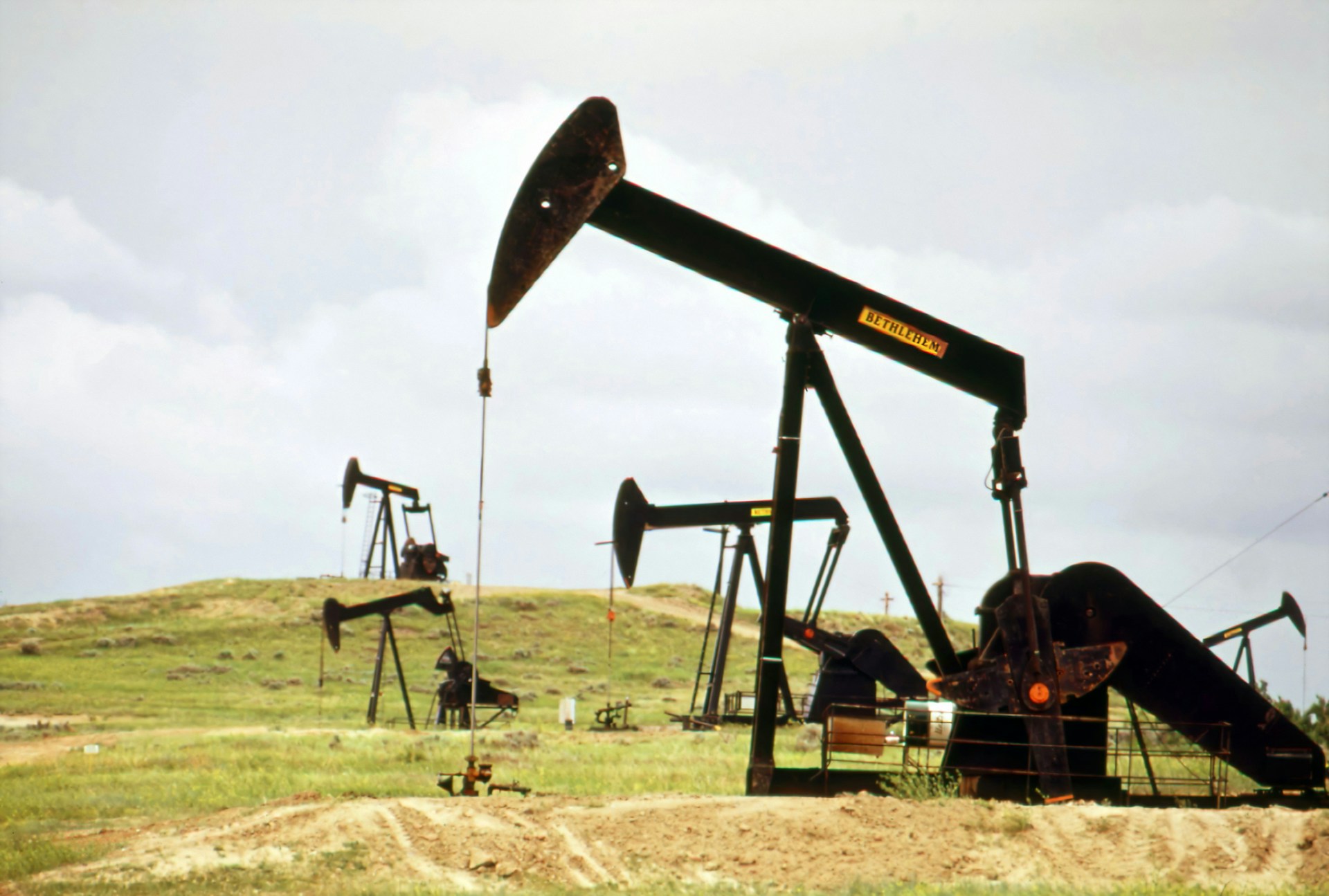
Oil and gas companies get a special discount on federal lease payments. Lots of energy production happens on federal lands. Energy companies bid on public land auctions from the federal government and pay leases to use the land. But oil and gas companies get preferential treatment compared to renewables. Oil, gas, and coal all get frequent, predictable land auctions through noncompetitive leasing, allowing them to pay three to five times less for land than a solar company would. Once the energy itself is produced, oil and gas companies pay 20 times less than solar companies in production fees. At every step of the way, the federal government lets oil and gas companies get special financial deals clean energy doesn’t.
Taxpayers often pay for cleaning up the environmental damage and abandoned infrastructure left behind from oil and gas drilling. While they’re required to pay bonds to pay for cleanup, they only cover 6.5% percent of the actual cost, leaving taxpayers to pay the rest. Since an oil well can cost between $2.9 billion to $17.6 billion to clean, they’re often left abandoned across the country, leaving the problem for future generations to deal with.
Oil subsidies: negative externalities
Oil prices have gone up a lot lately, but globally fossil fuels are actually priced well below what they should cost. In December, the IMF released a report that details how fossil fuel subsidies totaled $725 billion in 2025 alone. Even that staggering number is an understatement. That same report then details that including implicit subsidies, such as not counting the harm done to the climate and public health, fossil fuels enjoyed a $6.5 trillion subsidy in 2024.
Some folks might say these subsidies are the cost of doing business. The alternative, high prices for gasoline and energy, is not only politically infeasible, but also harms people who are most vulnerable to high energy costs. Although it is true that energy costs represent a higher percentage of income for lower-income groups, studies show that higher income folks capture more of the benefit from fossil fuel subsidies.
Fossil fuel subsidies are an inefficient way to make energy affordable for lower-income consumers. Removing subsidies from fossil fuels and charging polluters for the harm they cause to our climate and health would generate revenue which could be reinvested into our communities and clean energy economy to make everyone better off.
Oil subsidies, fuel volatility, and military actions
The U.S. expends a tremendous amount of military resources — and taxpayer dollars — in conflicts connected to global oil supplies. Recent examples are not hard to find. Earlier this year, the U.S. launched Operation Southern Spear in Venezuela, a military campaign that cost more than $600 million and that was stated by President Trump to be tied to oil extraction. U.S. forces remain deployed in the Caribbean today, and costs continue to rise.
Separately, the war in Iran is affecting the price of oil and has already cost taxpayers $25 billion as of late April, according to the Pentagon. Harvard war budgeting expert Linda Bilmes estimates it’s costing Americans two billion dollars a day. The conflict contributed to the closing of the Strait of Hormuz, through which roughly 20% of the world’s oil supply flows, disrupting global energy markets and weakening supply chains that will take years to recover.
Americans are feeling those disruptions at the gas pump, in the grocery aisle, and on their monthly bills — even while much of the rest of the world speeds ahead toward electrification, thereby protecting themselves from this volatility and providing cleaner air for their citizens.
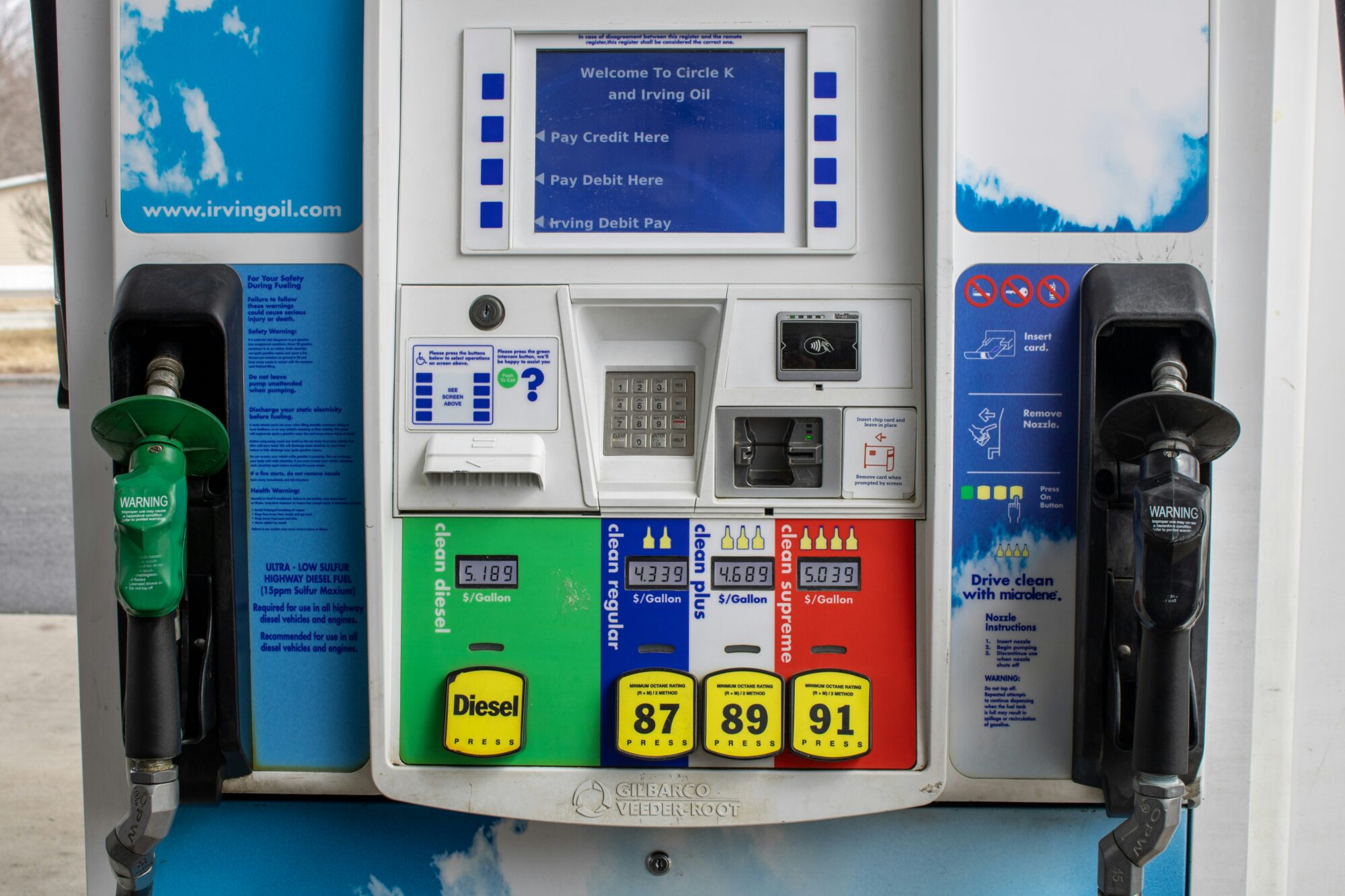
Gas prices had their biggest one-month spike ever in March, and the International Oil Agency has called this the most severe oil shock in history. Gas is up 52% since February 27 before the war began, an extra $26 per week for rural households and $21 per week for urban households. This burden falls hardest on lower-income families who spend a larger share of their income on fuel. For farmers in the middle of planting season, diesel prices up 51% from prewar levels mean $350 more per day to run a planter and fertilizer costs (a fossil fuel-intensive product) spiking 27% make it difficult for farmers who hadn’t locked-in prices last fall. Economists at Purdue University project these pressures could add 3 to 6 percentage points to grocery inflation over the coming year.

In total, Americans have paid roughly $40 billion in extra fuel costs since the start of the war — nearly half a billion dollars a day. Over that same period, oil companies have posted billions of dollars in profits. This is a fundamental problem with an energy system built on a globally traded commodity: when conflict, weather, or market forces cause a fuel price spike anywhere in the world, American families pay the price immediately.
Minnesotans deserve an affordable, reliable energy system that isn’t subject to the whims of global oil markets and foreign conflicts. Leveling the playing field — ending the century-old direct and indirect subsides to the fossil fuel industry and investing in homegrown clean energy — is how we get there. We have both the technology and the policy tools to help keep energy affordable without subsidizing fossil fuels.
At Fresh Energy, we celebrate climate-friendly energy solutions like deploying renewable energy to power electric vehicles and heat pumps. Doing so provides significant cost-savings over time by harnessing the innate efficiency of electricity generated from free wind and solar power. To make these technologies work right, we need to overcome the barrier imposed by higher upfront costs by providing purchase incentives. We also need to invest in improvements to supporting infrastructure, such as electric vehicle charging stations, distributed energy resources, and transmission lines which make these technologies work for everyone, regardless of where they live.
Interested in learning more? Tune in to our July 2026 episode of Decarbonize: The Clean Energy Podcast Fresh Energy’s Isak Kvam, Anjali Bains, and Nick Haeg to dig into the true cost of oil and why our dependence on it extends far beyond what we pay at the pump.
Decarbonize is also available on your favorite podcasting platform, including Apple Podcasts, Spotify, YouTube, and more.