
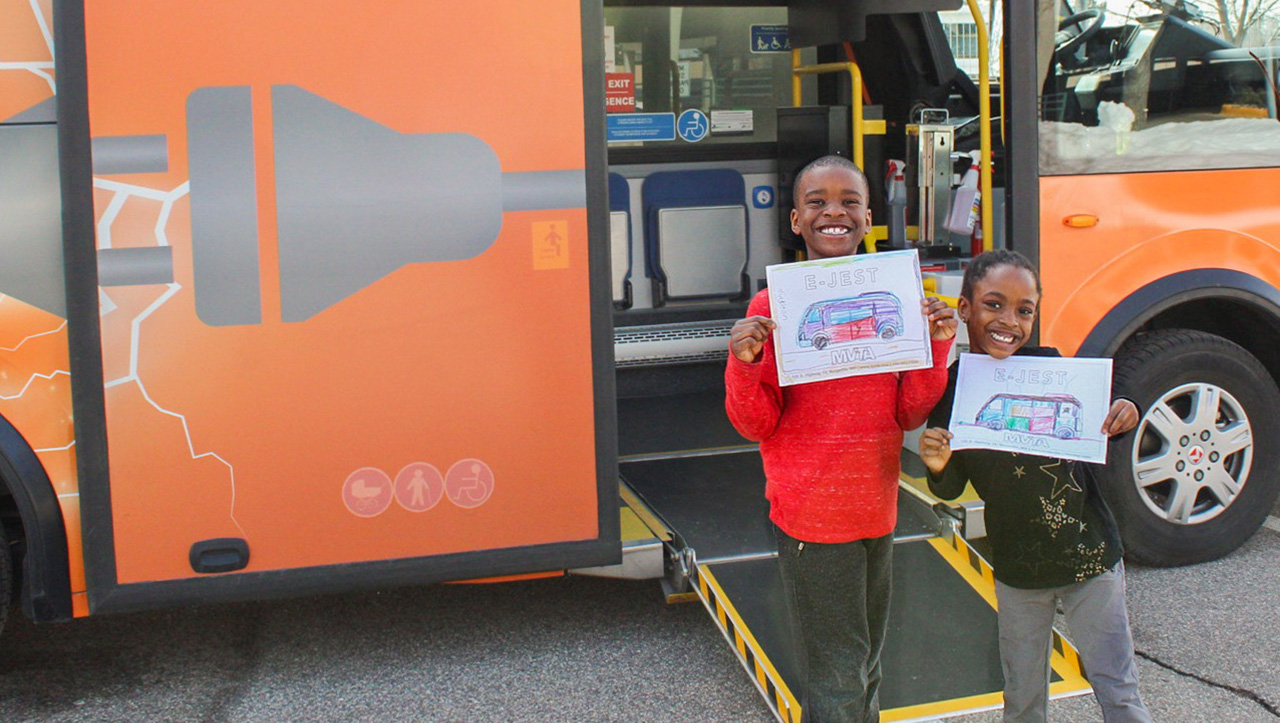
Taking the bus will no longer emit carbon pollution — if Minnesota Valley Transit Authority has anything to say about it.
The transit agency, the second-largest in the Minneapolis–St. Paul metropolitan area serving seven southern suburbs since 1990, has been driving five fully-electric mini-buses since December 2024, the only ones of their kind in the Midwest. But their plan isn’t just about swapping a few diesel engines for electric motors. Minnesota Valley Transit Authority (MVTA) is treating their compact, 19-foot buses as a sophisticated pilot program before transitioning all 170+ vehicles in their bus fleet to be net zero.
The transportation sector is Minnesota’s largest source of greenhouse gas emissions, accounting for approximately 25% of the state’s total emissions. Converting vehicles big and small to electric and charging them with increasingly clean energy is our roadmap to decarbonizing the sector.
At Fresh Energy, we’re advocating to meet state and international climate goals by electrifying the way we move and enabling more Minnesotans to forgo personal vehicles in favor of other mobility options like public transit. Electrifying transit buses is a core part of our equitable, carbon-free future, and MVTA’s bold step into fleet electrification shows how public transit can lead the charge to Minnesota’s mid-century decarbonization targets.
Buying electric mini-buses is the first step in a long process. MVTA’s real challenge is building the charging infrastructure, training drivers, optimizing routes, and figuring out all the operational details that make the transit agency successful as it scales electrification across its entire fleet. But it all starts with a handful of clean and nimble electric mini-buses, building chargers, and gathering data — lots of data — as MVTA drives toward a cleaner future in Minnesota.
Electric buses are reducing emissions and saving money
The economic and climate benefits of switching to electric are compelling, says Scott Poppenhagen, fleet manager at MVTA. While MVTA’s five E-JEST mini-buses cost slightly more upfront than comparable diesel mini-buses, the buses are approaching saving MVTA about $14,000 per bus in fuel costs since using electricity to charge the bus is far cheaper than diesel. The agency’s main priority is to connect customers to their destination — and that will increasingly become cleaner as MVTA gains experience with electric vehicles and has the data to perform well.
Just as importantly, each bus prevents approximately 52 tons of carbon dioxide (CO2) emissions a year — a significant contribution to Minnesota’s climate goals and a huge help to securing clean air and water in Minnesota.
MVTA’s five electric mini-buses currently serve riders using their MVTA Connect program, the transit agency’s on-demand rideshare service. Each mini-bus can carry up to 19 passengers, operates with a 130-mile range, and features amenities like wheelchair accessibility and front bike racks. Since the mini-buses have a low center of gravity and an electric motor, passengers enjoy a smooth, quiet, and clean ride as they commute to work, run errands, or meet their friends for a night out.

To meet a big decarbonization goal, start by excelling at the small details
What makes MVTA’s approach particularly smart is their four-phase rollout plan, starting with perfecting how they charge their electric bus fleet. Right now, MVTA charges the buses at their depot using five ABB Terra Direct Current (DC) chargers capable of charging the bus from 25% to 100% in just four hours. They also have a mobile 50-kilowatt (kW) fast charger, which can charge a bus from 25% to 80% in just an hour, helping each bus spend more time on the road cost-effectively serving their customers.
Poppenhagen explains that they’re gaining experience with depot charging quickly. “We’re gathering data and building our confidence with charging our electric fleet,” he said.
Once their charging infrastructure and logistics are ironed out, MVTA will focus on installing telematics modules on the vehicles to log real-time data on how they’re operating on the road. Then, they’ll build out more charging infrastructure at their area transit centers so the buses can charge up while drivers are taking a break. Finally, MVTA will begin replacing their internal-combustion engine (ICE) buses at the end of their life with electric buses instead.
MVTA plans to electrify their entire bus fleet as part of its 2023 Sustainability Plan to achieve carbon neutrality by 2050 and halve its annual energy portfolio consumption by 2030. By dipping their toe into electrification with five mini-buses, they can gather all the data they need to operate their entire fleet to go electric.
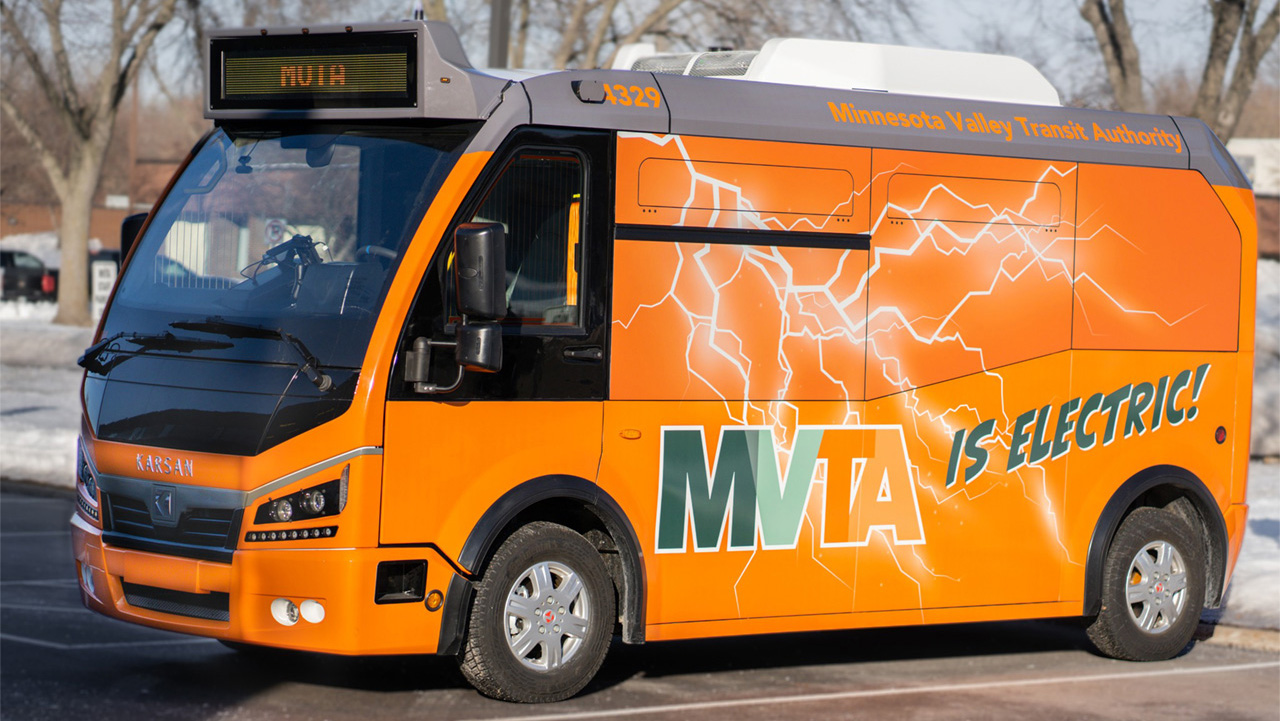
Electric buses are working well — even in Minnesota’s cold winters
Minnesota’s cold winters can present a unique challenge for electric vehicles, which have a reduced range in the winter. But it hasn’t proved an issue for MVTA’s electric mini-bus fleet, in part thanks to rapid improvements in battery technology.
“Operating our electric mini-buses in winter has been no problem, honestly,” said Poppenhagen. “We’ve been operating these buses in four-hour shifts, and they’re returning to the shop with around 45% charge left on them in winter.”
The mini-buses performed reliably through their first Minnesota winter, proving that electric transit can work year-round with proper planning and equipment, which MVTA plans to double down on as it electrifies the rest of its fleet.
Looking ahead
MVTA isn’t just electrifying its transit buses, but other vehicles in their fleet as well — including Ford F-150 Lightning trucks for facilities work and electric Chevy Equinoxes for administration employees. And while there are only five electric mini-buses on the road now, that won’t be the case for long.
“Small transit electrification is going to grow into the future, especially with how rapidly battery technology is evolving,” said Poppenhagen. “You can’t stop this ball from rolling. This is the wave of the future, especially in the bus market.”
By starting with a manageable electric pilot program, gathering real-world data, and systematically scaling it across their entire fleet, MVTA is building the knowledge base needed for broader electrification.
Transit electrification is a shining example of how we can build an equitable, carbon-free future that brings healthy clean energy solutions to all Minnesotans. Fresh Energy is working hard to make sure the transition to electric buses and transport is as easy as possible for transit agencies through our regulatory advocacy at the Minnesota Public Utilities Commission for beneficial rate design and grid integration. Fresh Energy is also continuing to seek legislative and administrative solutions for electric buses through our combined efforts with other advocacy partners, including the Coalition for Clean Transportation.
As Minnesota transitions to a decarbonized economy, MVTA’s careful, data-driven transit electrification program offers a thoughtful template for how transit agencies can navigate electrification successfully. And that’s something all Minnesotans can get on board with.