
This is Part II in a blog post series on energy affordability, building codes, energy efficiency, and a healthy climate. Catch up by reading Part I.
Updating Minnesota’s energy code to make our buildings more efficient is one of the best tools we have to make them more affordable. It will make them safer, healthier, and emit fewer greenhouse gas emissions, too — helping Minnesota meet its decarbonization targets by midcentury by guaranteeing super-efficient homes no later than the 2038 residential energy code.
Efficient homes are affordable homes, and Minnesotans deserve to have a home that doesn’t drain their bank account in energy bills every month, cause health and safety problems for their family-members, or worsen the impacts of the climate crisis on our wellbeing.
Last month, I wrote how strengthening our energy code would make our buildings more affordable and reduce emissions in Minnesota. In this post, I’d like to share more about how a stronger energy code can reduce costs and improve Minnesota’s housing stock, what we need to truly reduce housing costs, and how efficient homes protect our lives and health in addition to saving Minnesotans money.
There are thousands of ways to build. Some are both cheaper and more efficient.
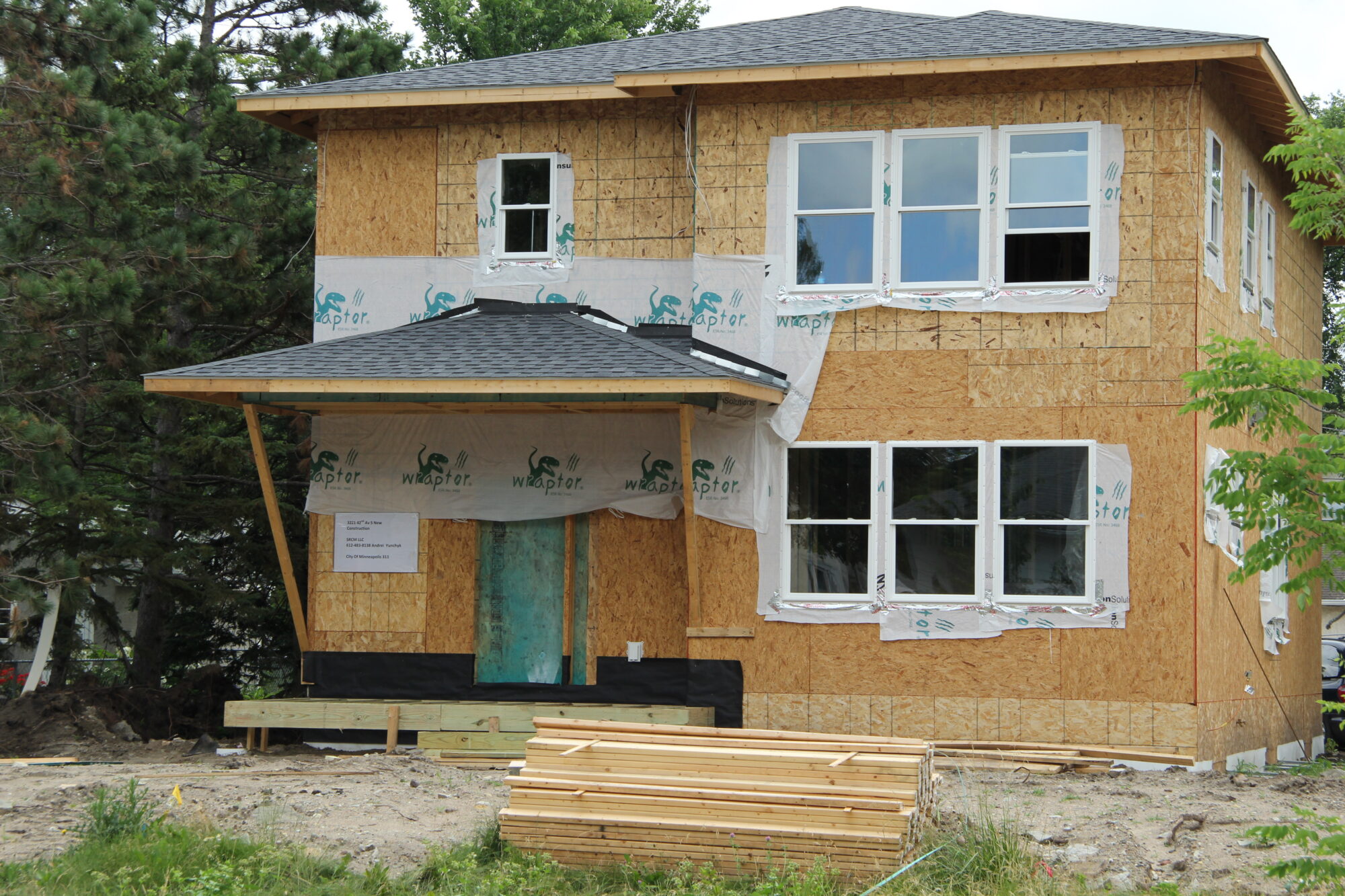
Constructing buildings to be more efficient does not make them less affordable. There are thousands of ways to build a wall, roof, or other building assembly. Some of those ways are both more energy efficient AND more cost effective!
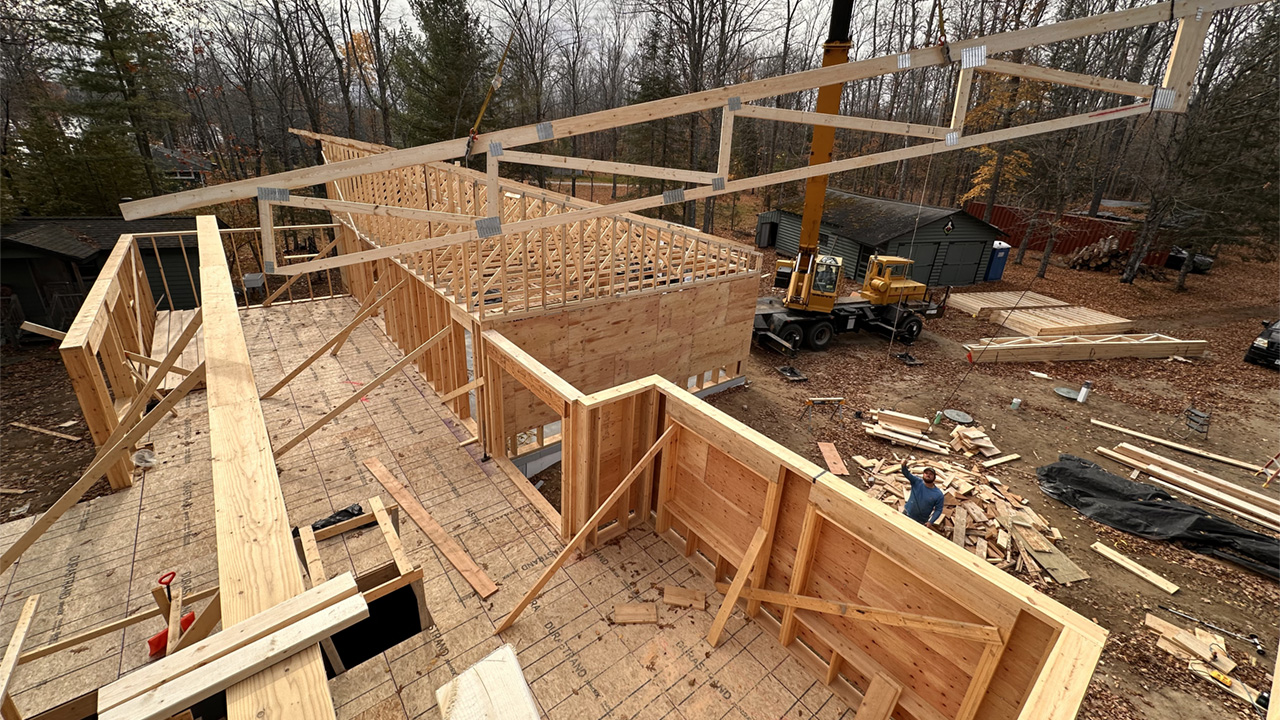
How could that be? Fresh Energy’s Managing Director of Buildings, Sam Friesen, recently worked with Habitat for Humanity of Itasca County to build a 2038 home for similar costs to their previous builds.
Here are some ways going more efficient saves money:
- Smaller equipment: Better insulation and air sealing means a substantially smaller heat pump or furnace can maintain the same or better comfort, reducing the size and cost of HVAC equipment needed.
- Less framing labor and material: By building with 2×8 or 2×10 studs, builders can space them 24 inches apart, using less labor and less lumber while providing much bigger cavities to fill with more insulation. Fewer studs also reduce thermal bridges or insulation weak points.
- Fewer hookups: With a good building envelope and cold-climate heat pump, many new homes in Minnesota don’t need a gas connection. Eliminating that connection cuts both construction costs and operating costs. These savings can vary widely but are significant. One study estimated average national savings of 5% for all-electric new construction, with a range of $1,800- $10,000 saved per home. Another estimated $4,980.
The cost of constructing homes to be more efficient will continue to drop as building practices scale. Even when there is a cost premium on a higher-performance building, it often goes away after the first few projects. Like the codes themselves, companies and contractors get more efficient over time.
Efficient homes become cheaper to build as builders gain more experience constructing them. According to the Pennsylvania Public Housing Finance Authority, their Passive construction projects went from 5.8% more expensive than code minimum the first year to 3.3% less expensive than code minimum in year three of encouraging Passive certification, all the while following requirements that are even more strict than Minnesota’s 2038 code will be.
Economy wide, stronger codes can also bring down the cost of some efficiency upgrades thanks to economies of scale. Pacific Northwest National Laboratory (PNNL) performs detailed cost-benefit analysis of model codes. They regularly find efficiency upgrades more than pay for themselves through reduced utility bills, but this is still likely underestimating the benefits. Their reports compare individual component upgrades based on current market data. But when codes get updated, it’s not just one contractor ordering better windows for one project. It’s all of them.
PNNL’s snapshots in time don’t take into consideration the economic benefits of bringing high-performance building products and approaches into the mainstream, where higher volume lowers component costs. Stronger codes reduce the potential premium on efficiency upgrades, which makes efficient buildings more affordable.
Minnesotans want affordable homes that are safe and healthy to live in. Constructing our buildings to be more efficient will help deliver that future to all Minnesotans.
What’s really making housing unaffordable?
There is something everyone in this discussion agrees on: housing is too expensive. To make housing more affordable, decision makers must focus on the real problems that are affecting affordability, like:
- Energy costs — high utility bills make housing unaffordable
- Labor shortages — whether from lack of investment in workforce development, or policies pushing workers out of the labor force or country
- Interest rates
- Land value
- Insurance rates — which are ballooning as climate change makes extreme weather events more frequent
- Tariffs on building materials
- Zoning restrictions
- Luxury finishes
- Complex or oversized designs
- Surprises — typically, businesses like predictability, which is exactly what the 2038 requirement provides
- Other macro-economic trends
In 2023, Fannie Mae found that non-mortgage-related housing costs comprise roughly half of the total cost of homeownership for mortgage borrowers, with utilities edging out both insurance and taxes as number one among them.
Today, protecting affordability through efficiency is more important than ever, as current federal policy makes energy more expensive and scarcer by slowing renewable deployment and exposing natural gas to much higher global prices. The Consumer Price Index from February (when my household got the eye popping $820 energy bill I mentioned in Part 1) showed nearly a 5% increase in electricity prices and an almost 11% increase in natural gas prices over the previous 12 months nationally. Reducing energy consumption in our homes is one of the only ways to protect energy affordability from these rising costs.
To make housing more affordable, decisionmakers should focus on the real issues that are driving up housing costs. Strengthening the energy code and constructing buildings to be more efficient will help lower the cost of housing, along with addressing rising energy costs, labor shortages, and the other variables listed above.
Efficient homes are more affordable, safe, and comfortable
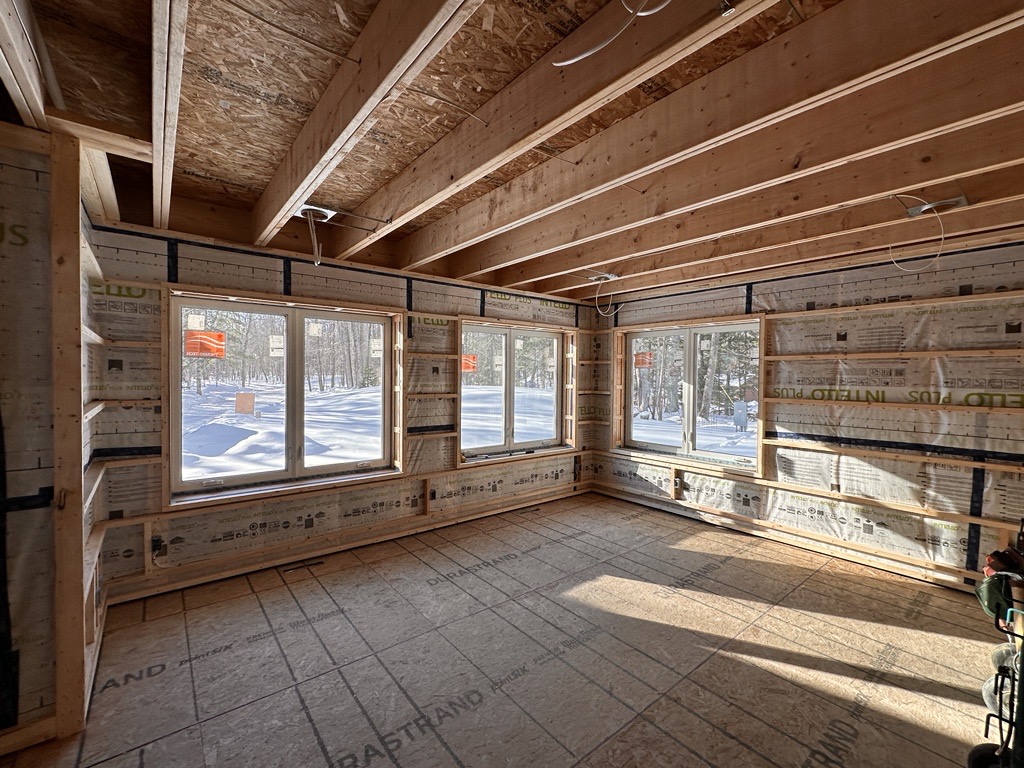
One of the most important ways strong energy codes improve efficiency is through better building envelopes: in other words, the walls, roof, windows, doors, insulation, and water, air, and vapor control layers that keep the indoors in and the outdoors out. And a better building envelope has many benefits beyond making your home more affordable.
In simplified terms, one of the most obvious changes people will see in future homes is thicker walls.
This is neither a sacrifice nor a narrow victory for efficiency alone. When a building separates the outdoors and indoors more effectively, almost everything about it gets better:
Comfort is better, and temperatures are more consistent. No more space heaters for that cold, drafty room that is never as warm as other parts of the house. And because our bodies are hyper sensitive to the radiant temperatures of surfaces around us, high performance windows have a big impact on comfort by (in winter) keeping the interior glass surface much warmer and sucking less heat away from our skin.
Noise is reduced. The Venn diagram for thermal insulation and sound insulation materials and techniques is almost a circle. In a high-performance building, highway noise, planes overhead, and loud music across the street become optional listening if you choose to open a window.
Airtight is smoke tight. A better envelope keeps outdoor pollution out, which is increasingly important as climate change drives more wildfires, which negatively impact the indoor air quality in Minnesota’s homes. And if, like me, you’re part of the 25% of Americans who suffer from seasonal allergies, you’ll also be glad to keep the allergens out as warming temperatures increase pollen season and severity.
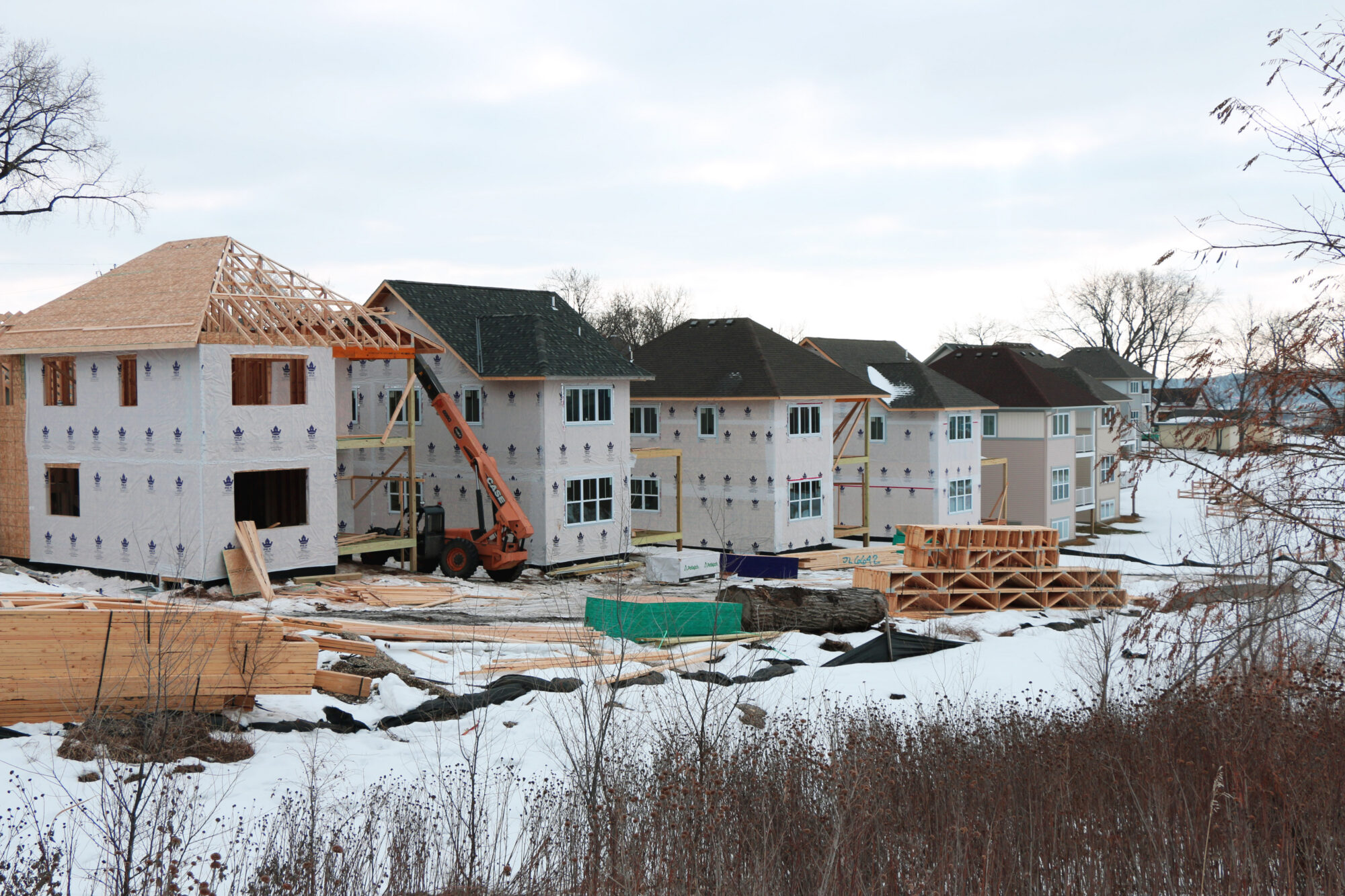
Airtight walls are less prone to moisture and mold issues. Air leakage is the most significant pathway for moisture into a wall. If someone tells you that a house needs to breathe, they might be trying to sell you a sub-standard wall.
A high-performance envelope can even turn your whole house into a battery. Sort of. With such slow heat loss (or gain in summer), it becomes less important for your heating or cooling to run at exactly the same time the temperature dips or spikes outdoors. That opens up possibilities for pre-cooling or heating with off-peak power, which may also come with a discount depending on your utility.
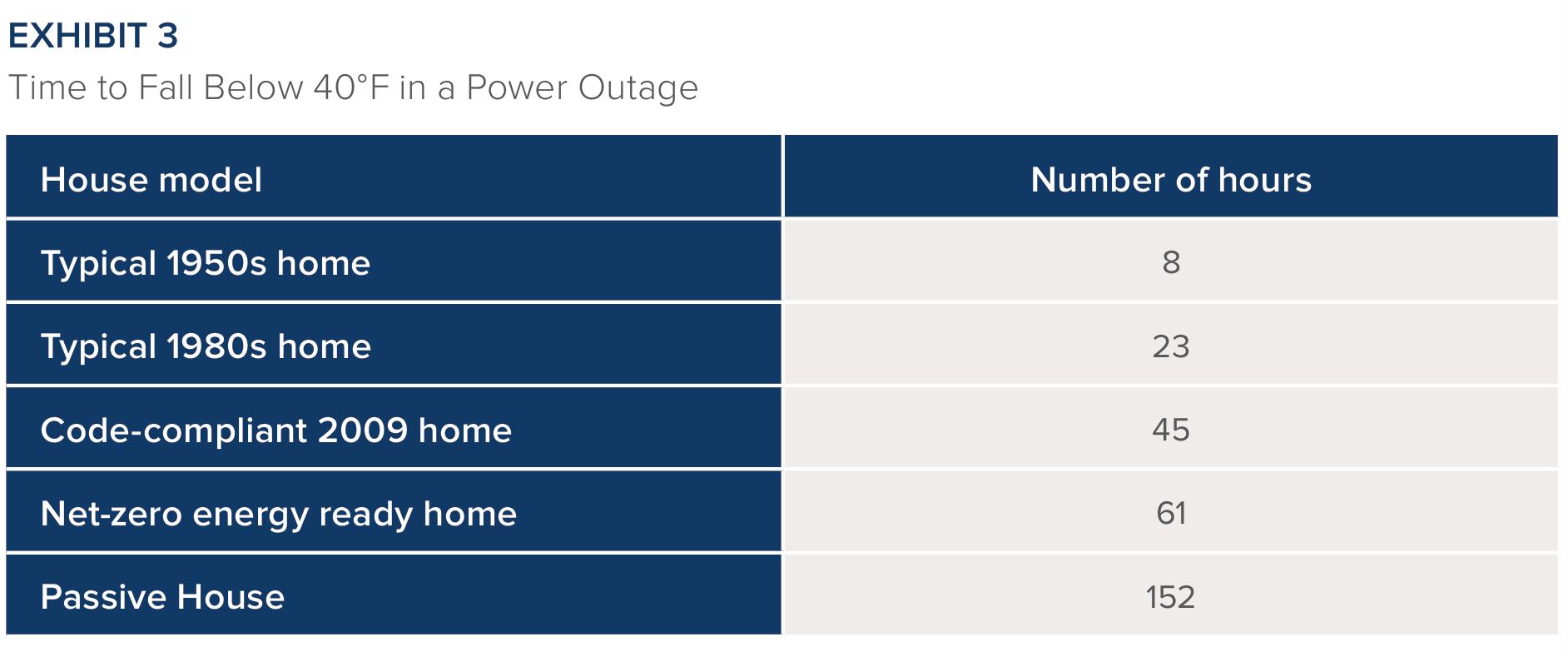
Thicker-walled homes are safer. “Hours of safety” is a framework for comparing different buildings based on how long they maintain safe indoor temperatures under extreme conditions during a power outage — a real issue for Minnesota’s cold winters. In a simulated December power outage in Duluth, a code-compliant 2009 home (similar to current code) maintains indoor temperatures above 40 degrees for 45 hours. A certified Passive House, a little more efficient than what will be required in 2038, offers more than triple the hours of safety: 152. Making our buildings more efficient isn’t just making them more affordable — they’re making our homes safer, too.
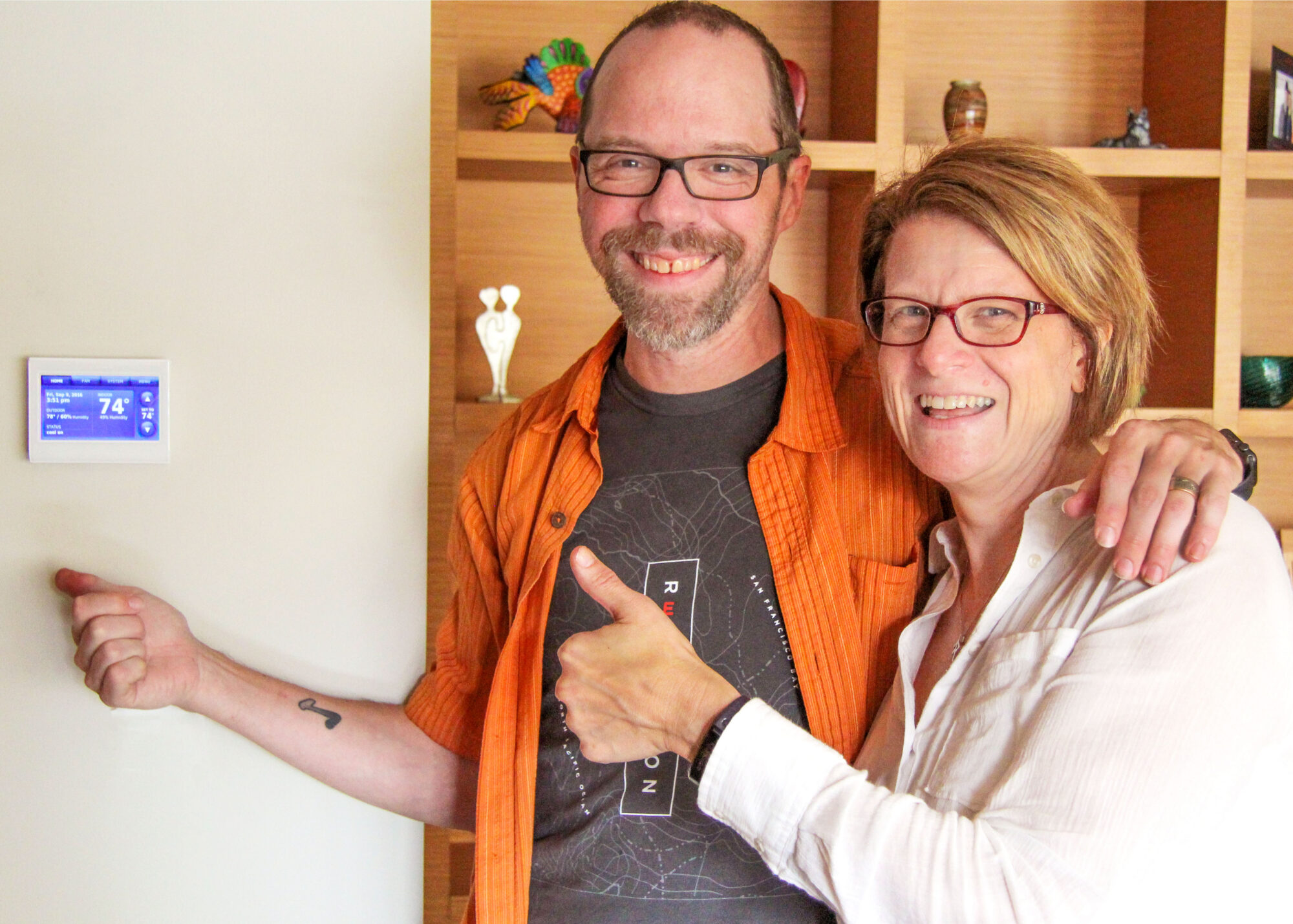
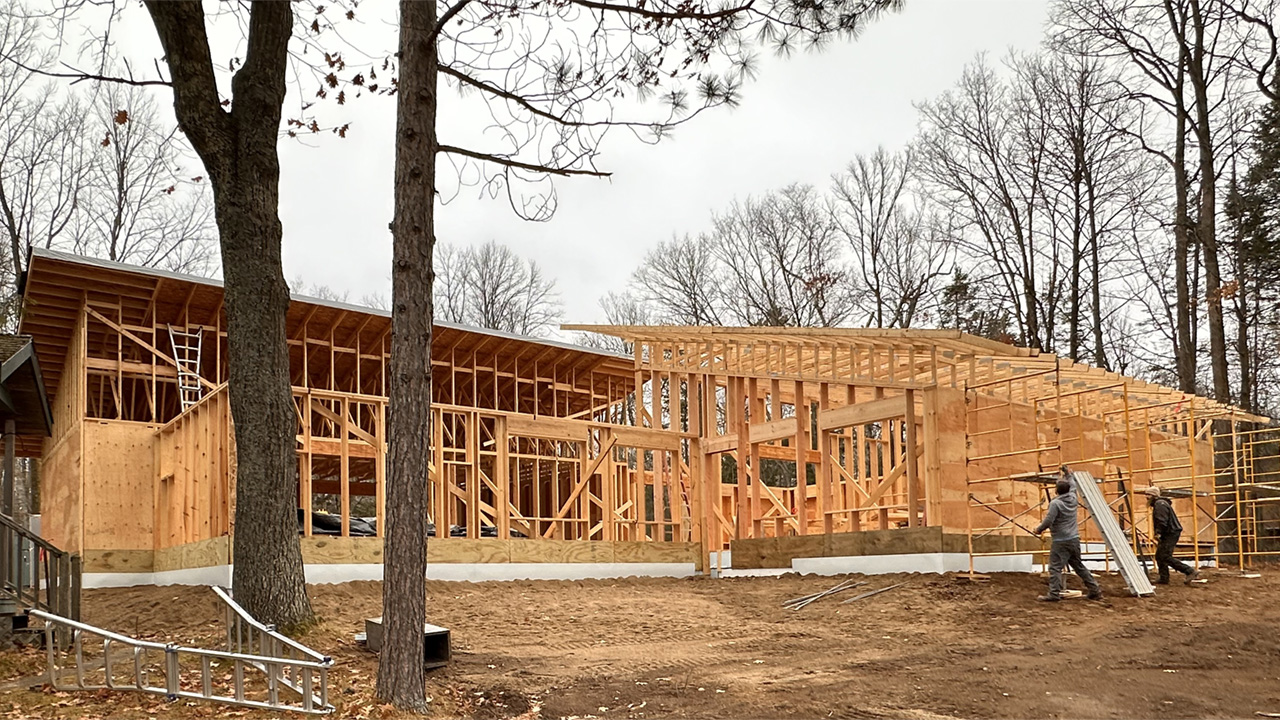
Thicker-walled homes are healthier. Improving efficiency and indoor environmental quality also keeps people healthier outside of outages and emergencies. The Jarvi family that moved into Itasca Habitat’s 2038 Home has a child with asthma. Since moving in to the updated, all-electric home, their child’s asthma symptoms have improved, quality of life is better, and speaking of affordability, their healthcare expenses have fallen. Constructing homes to be more efficient works better for all Minnesotans.
Stronger energy codes don’t tighten the housing supply
Strengthening energy codes will not reduce construction or tighten the housing supply. ACEEE compared single-family home construction permits in five states that recently adopted the 2021 IECC. After updating their codes, construction permits continued to follow national trends in these five states — meaning strengthening the codes didn’t slow down housing construction.
Related, the Midwest Energy Efficiency Alliance compared permit data between counties in Illinois with an updated code and border counties in neighboring states without an updated code. They did not find any clear evidence that Illinois’ energy code update pushed development across the borders into Indiana, Iowa, Kentucky, Missouri, or Wisconsin.
Stronger energy codes don’t reduce our housing supply. They just reduce energy waste.

Stronger energy codes reduce utility infrastructure upgrades, improve safety and health
More efficient homes use fewer therms (a unit of measurement for heat) of gas and kilowatt-hours of electricity — which not only lowers a homeowner’s utility bill but also reduces the grid infrastructure spending costs that are passed onto ratepayers, too.
Instead of guzzling energy, efficient homes sip energy. That benefits everyone, because when it gets really hot or cold outside and every home in the neighborhood cranks on their heating or cooling units to stay comfortable, efficient homes contribute way less to energy demand spikes.
Our entire energy system is built to provide energy during that peak demand spike; in other words, for power to be available when people need it most, like during extreme temperatures. That makes sense — everyone needs a safe place to live. But by building our homes to be more efficient and use far less energy, our entire energy system (and all the distribution and transmission infrastructure we pay for) would require far less investment. High-efficiency homes like our energy code guarantees don’t just reduce peak energy needs, they can also move them — which is helpful for making an affordable, efficient grid.
By decoupling the immediate energy need for heating and cooling during peak outdoor temperature, this “load shifting” reduces electric grid strain, creating a more affordable, reliable energy system for Minnesota. On a system level, when paired with Demand Side Management (DSM) programs, this leads to lower utility bills for Minnesotans in the long-term.
What’s next?
Minnesotans deserve efficient, affordable, and safe homes. The decisions we make about how we construct our buildings will impact our wallets and wellbeing for decades and even centuries. It’s crucial that the buildings we construct today improve the lives of Minnesotans far into the future.
Fresh Energy will continue to advocate for a stronger energy code in Minnesota to ensure homes are built to be cleaner, more affordable, and resilient to the impacts of climate change. We advocate at the Minnesota Legislature for policies that will improve the energy code, as well as the Minnesota Department of Labor and Industry to ensure technical recommendations will help Minnesota advance affordable, efficient codes for decades to come, alongside coalitions like the Minnesota Efficient Builders Coalition. Stay tuned as we build a future where all Minnesotans can thrive in affordable, clean homes.