
Editor’s Note: Over the past year, Fresh Energy has partnered with Change Narrative founder Jothsna Harris to help our staff explore and articulate their personal climate stories through guided workshops and reflective writing exercises. The following post is the sixth in a series in which Fresh Energy staff share their individual climate stories, providing an intimate, personal look into our staff’s diverse experiences, passions, and connections to place that shape our dedication to building a carbon-free economy that works for all Minnesotans. Climate stories are representative of the staff member, not necessarily the organization. –Isak Kvam
My encounter and experience with climate change started less with studies on the scientific proof of the dangers of greenhouse gases or learning about the melting of icebergs or the characteristics of forest fires viewed in documentary shows. My encounter with climate change was subtle and sprinkled with life lessons from my childhood all the way to my working life. My climate experience lessons opened doorways in my journey to knowing grief. And my climate grief story surfaced and was brought together by water.
When I was growing up in the late 70s, my family lived in a two-story apartment complex in a densely-populated city in southern India, Bangalore. There was one season where it was so hot, temperatures were sweltering, and one day we turned on the tap to get water to boil and were greeted by the sound of air coughing through those pipes. As a child it felt thrilling. “Now what?”
Every family in that apartment complex took turns going to the community well. My brother and I took buckets of water and set them down on the ground floor by our veranda, dropped a rope down from the second floor, and hoisted the pails of water one by one until our second-story veranda was filled with buckets of water. It was fun at that time; how little did I know that Bangalore was already a burgeoning city with a population reliant on drinking water sources drawn outside the city and from distant places.
Fast forward to adulthood, I remember driving in rural Jamaica meeting subsistence farmers and talking to them about developing good business plans. That somehow a business plan will turn around their fortunes. On paper the business plans showed who we could sell the produce to and how the planting of yams and mint tea would produce good returns with fewer inputs. In my young “savior” mind my business plans were great, ignoring the fact however, that rural Jamaica lacked reliable piped water or water in general. Water catchments were scattered across my drive in rural Jamaica, for those who could afford it. The water catchments in homes or institutions that I worked for, however, were not for agricultural use; it was enough for daily consumption such as for drinking, cooking, and washing. How naive was Ito expect farmers to make do with my business plan without reliable water?
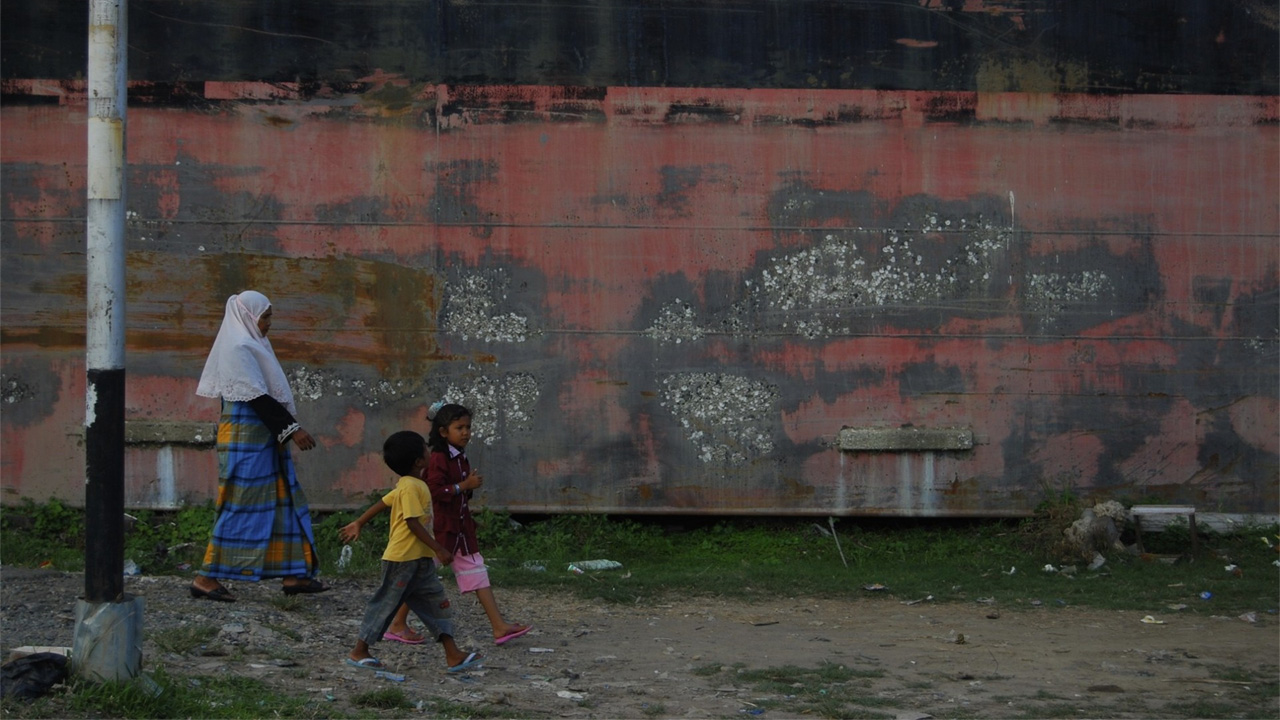
“A 7.5-meter (approximately 24 feet) wall of water is coming right at you,” was the repeating statement coming from resident survivors in Tacloban, Philippines. Small coastal villages were swept away by the sheer force of the water brought up by the typhoon. Filipinos have a saying that they can expect a typhoon every month to hit the country; though factually on average they are impacted by 20 typhoons a year. When Typhoon Haiyan was barreling along the Pacific, the public warnings of its magnitude were there. And having typhoons land in your country seemed a “normal” occurrence. How we were mistaken, because its destruction was total. The typhoon and the 24-foot wave it lifted from the sea destroyed the coastal areas in its path. It was devastating to witness. More than 6,000 lives were lost, 1.1 million homes damaged, and the trauma coloring every other word shared by residents was heart-breaking.
Through snippets of my climate stories, I felt that beneath all these tangled and complex relationships and events lay a shadow. With every encounter, I noticed that shadow. That shadow is of my experiencing the grief over losses. The loss of water, loss of belongings, loss of loved ones, and loss of place. And my grief of remembering these events lingers on and was brought forward with my work in post-disaster zones.
Though in remembering these events I acknowledge how a strong community was brought together by this loss. In remembering painful events, I am slowly finding my own healing. In remembering or telling my story I hope other climate stories bring hope where new stories are discovered and new chapters opened bring joy. I hope as more people open their climate stories to others, more people will join in solidarity, in remembrance that telling climate stories opens new chapters. New chapters reveal how our individual climate story of loss, or grief, or healing will bring new understanding, are intertwined, and a thoughtful reflection for others and our next generation to discover that we did care.