
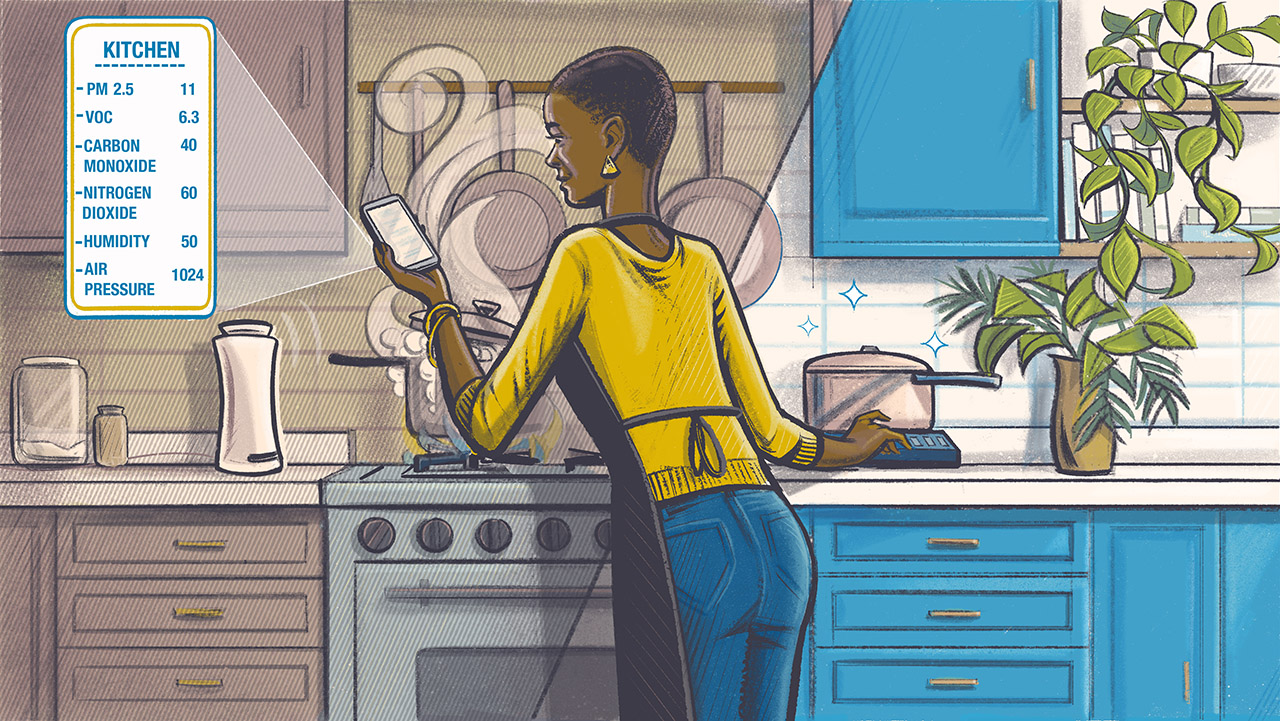
Gas stoves are an appliance many Minnesotans use every day. But what most of us don’t know is that they’re a major contributor to indoor air pollution, releasing harmful pollutants into our homes that are bad our for health.
As Clean Heat Minnesota works to transition Minnesotan communities onto clean, affordable energy to power our heating, cooking, and appliances, a key aspect of our work is connecting with communities to help them understand and see first-hand how our energy systems can better serve our lives.
In the summer of 2025, Ayada Leads — a Clean Heat Minnesota coalition member empowering women from the African diaspora in Minnesota — led an interactive project with their community to help them understand how gas stoves can affect their health.
By partnering with Fresh Energy and building off a similar project with COPAL, Ayada Leads invited four families to place an air quality monitor in their kitchens to reveal the invisible air pollutants released into their homes from cooking with gas stoves.
The outcome: Ayada Leads’ community left informed, inspired, and ready to take action on reducing the harmful impacts of gas stoves — proving that when communities can see the problem, they find solutions that work for them.
Air pollution monitors make invisible pollution visible
“Lots of people hadn’t heard that gas stoves cause indoor air pollution,” explains Ayan Derie, Ayada Leads’ policy coordinator who led this summer’s project to help their community members visualize indoor air pollution.
The U.S. Environmental Protection Agency (EPA) doesn’t set an indoor air pollution standard for our homes. Many participants were surprised to learn about the extent of pollutants that enter and linger in our homes after using appliances like a gas stove.
For 11 to 12 weeks, four families — some in houses and others in apartments, some with children and others living alone — monitored the air quality in their kitchens using an air pollution monitor that tracked pollutants like nitrogen dioxide, volatile organic compounds (VOCs), carbon monoxide, fine particulate matter, and carbon dioxide. Participants could see their pollution levels rise in real-time while they cooked. They could also view historic trends for their home that showed the correlation between cooking with a gas stove and pollutant levels rising.
The project made it easy for participants to visualize how gas stoves affect the air quality in their homes. At the beginning of the project, participants cooked normally with their gas stove to develop a baseline of the air pollutants in their home. Then they began following tips for reducing pollution from their gas stoves — using the hood for ventilation, opening windows while cooking, or trying out a portable induction cooktop — to see the difference. Sure enough, participants could see air pollution decrease in real-time when increasing ventilation to remove pollutants or cooking without the gas stove altogether.
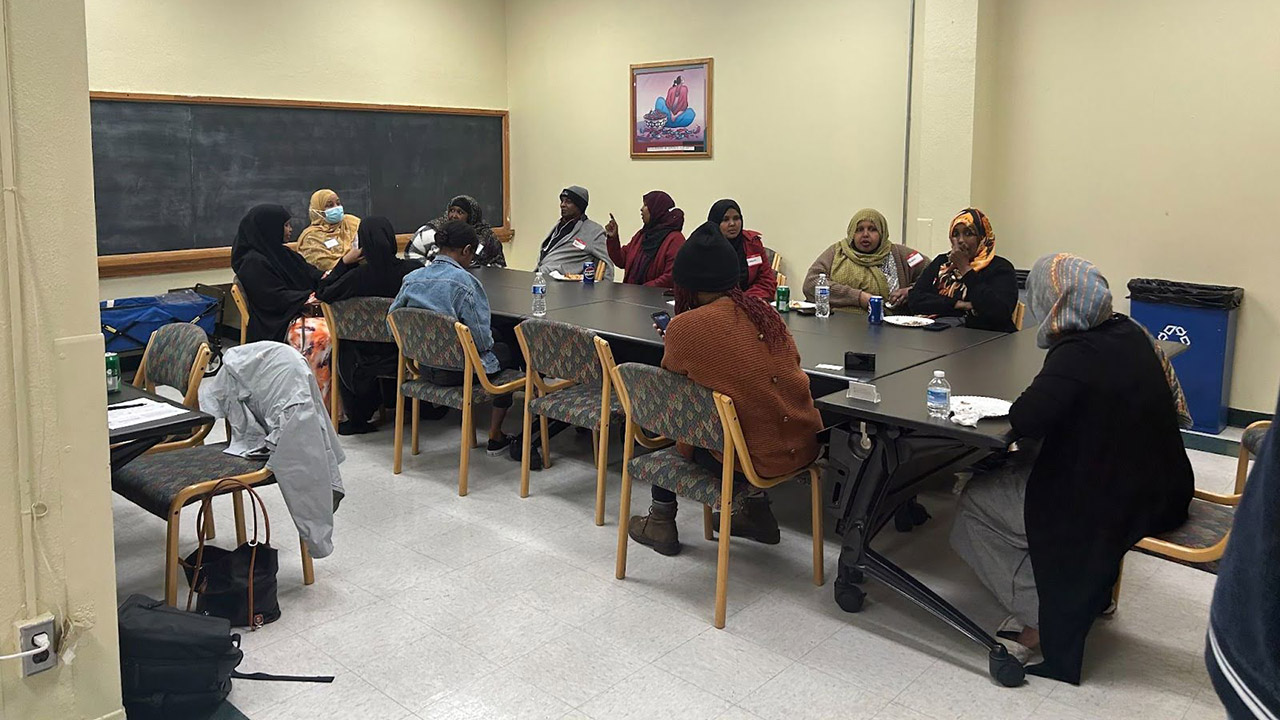
The project included both homeowners and renters, who face the challenge of not being able to simply replace their gas stove if they’d like to. “We wanted to show that renters and low-income families aren’t left out of the conversation,” says Ayan. “They can be a part of the clean heat conversation with limited resources by following our best practices for reducing air pollution, even if you have to use a gas stove.”
While using the hood or opening a window while cooking aren’t perfect fixes, they’re actionable steps people can take right away to reduce their exposure to gas pollution. And by helping to visualize the problem, Ayada Leads empowered their community to take action.
The “aha!” moment
What happened next was exactly what the project had hoped for: participants didn’t just see the data, they felt it.
One participant in Ayada Leads’ project had asthma, which can be worsened by air pollution from gas stove use. She decided to switch from her gas stove to an induction cooktop after seeing her results. “She followed our guidelines to open the window when cooking, and because she has asthma, she noticed a difference in how she felt from that alone,” says Christina Ojo, Ayada Leads’ communications manager. By switching to induction, she won’t have to worry about the pollutants while cooking.
Another participant was so surprised at the amount of air pollution from her gas stove, she’s also decided to ditch it altogether. “She cooks for her family multiple times a day, spending a lot of time in the kitchen with her gas stove,” Ayan recalls. “In July, she was shocked because she had one of the most extreme amounts of air pollution in her house from the stove. She’s looking to buy a new home, and she said she’s looking for one without a gas stove — all because of this project that helped her visualize the pollution from them.”
While this project scope was small — just four households — it shows the power of helping Minnesotans connect the dots between their gas stove use and their health for the first time. And after Ayada Leads helped participants see their data, they had a health professional come to their homes to speak firsthand about what it meant.
Dr. Curt Nordgaard, the pediatrician and public health consultant who met with participants to review their data, witnessed their lightbulb moments firsthand. The questions came quickly: What do these numbers mean for my children? What can I do individually to reduce air pollution? What should we do as a society?
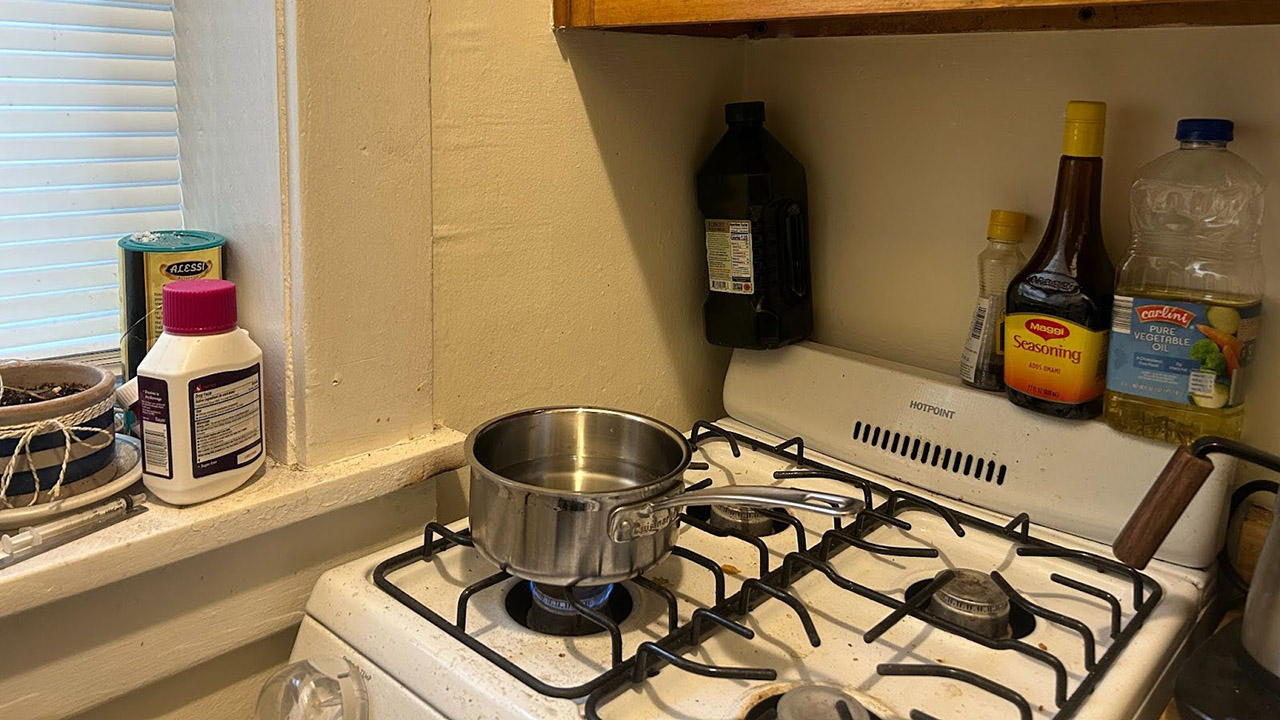
“I think they were all pretty surprised,” he said. “There’s something different when you experience something adverse like pollution in your own home, whether it’s real-time and you’re looking at the impacts of your gas stove in the moment, or if you’re looking at the longer-term historical data in your home.”
Dr. Nordgaard has worked for years helping people connect the dots between gas use in the home and human health. “Most people don’t go around thinking about air pollutants in their daily lives,” he said. “But thanks to this project, participants learned about the dangers of gas stove use and saw their own homes’ pollution levels. Once you can see that data, it really changes how you understand it.”
The health-first approach resonated deeply with participants. Gas stoves release harmful pollutants whether they’re on or off, including benzene (a known carcinogen), nitrogen dioxide (which irritates airways and contributes to asthma), formaldehyde, and particulate matter. The connection between childhood asthma and gas stoves is well-documented in public health research.
“People were engaged when we showed them the air pollution that was measured in their home, and how simple measures could cut down on the pollution,” Ayan remembers. “There were so many questions about what participants could do to cut down on the negative impacts from gas stoves.”
Advocating for systemic change to improve climate and human health
While reducing gas use is important to meet Minnesota’s climate targets — emissions from residential and commercial buildings are the fastest-growing source of greenhouse gas emissions in the state — it’s incredibly beneficial for human health, too.
“This project was intentionally focused on the health outcomes of gas stoves,” says Ethan Culver, senior associate of campaigns and coalitions at Fresh Energy. “This is about racial and economic justice as well. We’re aiming to empower communities with data and information so that they can make better choices for themselves, their landlord, their city council, and their utilities. There’s a lot we can do at the individual level to mitigate the worst impacts of gas in the home, but we need to advocate for system change as well.”
After making changes in their individual lives, participants learned how they can advocate for a better system with Minnesota’s decision-makers. COPAL and Ayada Leads utilized learnings from their projects to advocate for ending gas line extension allowances and other pro-gas subsidies in the Minnesota Public Utilities Commission’s Future of Gas docket. By helping community members understand the benefits of a clean, affordable energy system, Clean Heat Minnesota is then helping them understand and advocate for building a better future with key Minnesotan decision-makers.
Ayan was surprised at how energized the participants were: “People are telling their coworkers and friends and family,” said Ayan. “It’s really affected our community. My mom is talking to people about it every day at the health clinic she works at.”
What’s next?
The success of Ayada Leads’ project demonstrates a model that can be replicated across Minnesota’s communities. The key ingredients: partnering with trusted community organizations, providing hands-on support for participants, using accessible technology that helps participants visualizes the invisible, and focusing on health impacts that resonate with people’s daily lives.
“This project is about helping us understand how we interact with energy,” said Dr. Nordgaard. “We all interact with it every day, yet we don’t think about all the ways it impacts our lives. This has been a very tangible way for people to see the negative impacts of gas stove use in their home.”
More Minnesotans are beginning to use their hood ventilation fans during cooking time, unpack new induction cooktops for their kitchen, and think differently about the air they breathe — all because they can finally see what was there all along: harmful pollutants from the gas stove.
But that’s only the beginning: organizations like Ayada Leads, COPAL, Fresh Energy, and other Clean Heat Minnesota partners are working to empower community members to become advocates in arenas like the Minnesota Public Utilities Commission to improve our energy system and build a cleaner, healthier Minnesota. As we work with Minnesotans in dockets like the Future of Gas, Natural Gas Innovation Act, and Energy Conservation Optimization, we’re aiming to build an equitable, clean energy system.
Stay tuned as Clean Heat Minnesota engages in these dockets with the Commission, and get involved to join us and take future action.