
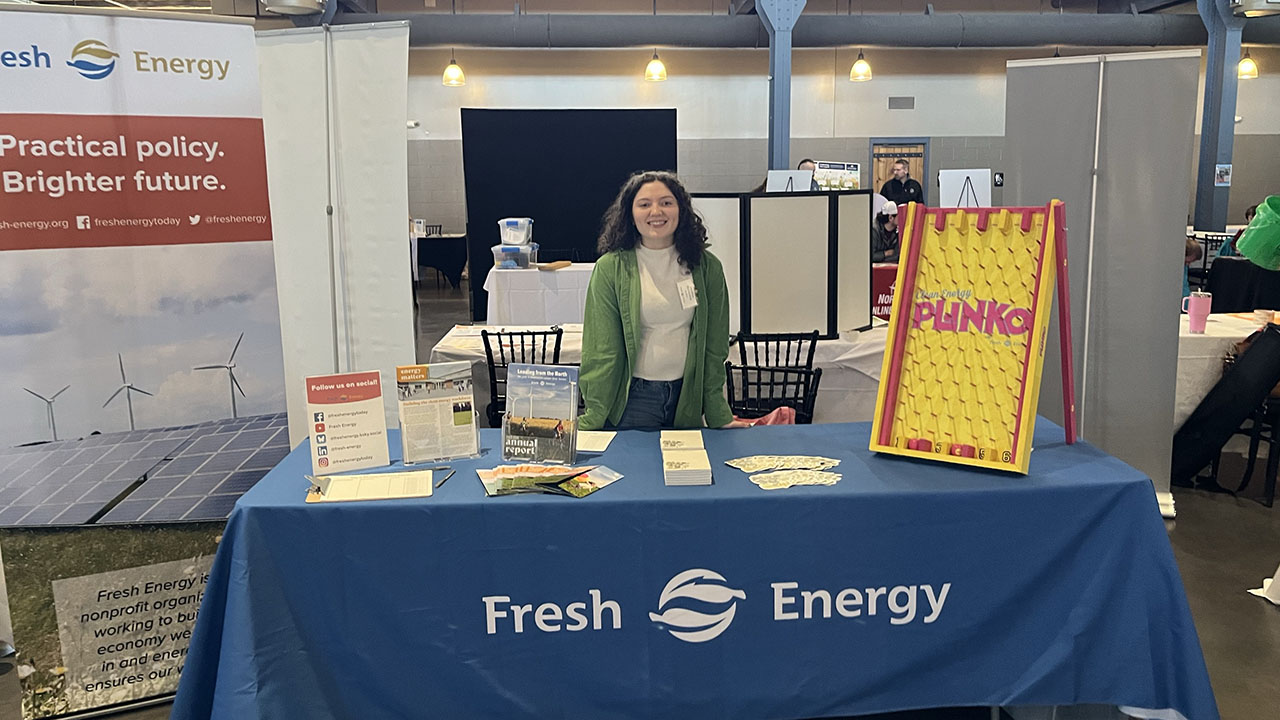
Editor’s Note: Over the past year, Fresh Energy has partnered with Change Narrative founder Jothsna Harris to help our staff explore and articulate their personal climate stories through guided workshops and reflective writing exercises. The following post is the second in a series in which Fresh Energy staff share their individual climate stories, providing an intimate, personal look into our staff’s diverse experiences, passions, and connections to place that shape our dedication to building a carbon-free economy that works for all Minnesotans. –Isak Kvam
I grew up in a small town in south-central Nebraska. If I were a chicken, you could label my childhood as “free range,” as my days largely consisted of my sister and me running around barefoot with kids in our neighborhood.
The weather was never an issue when it came to having fun outside. If it was raining, we’d march around in rain boots, jumping in puddles, and picking up worms. If it was hot, we’d seek water, playing in sprinklers, and diving in the cool waters of our town’s public pool.
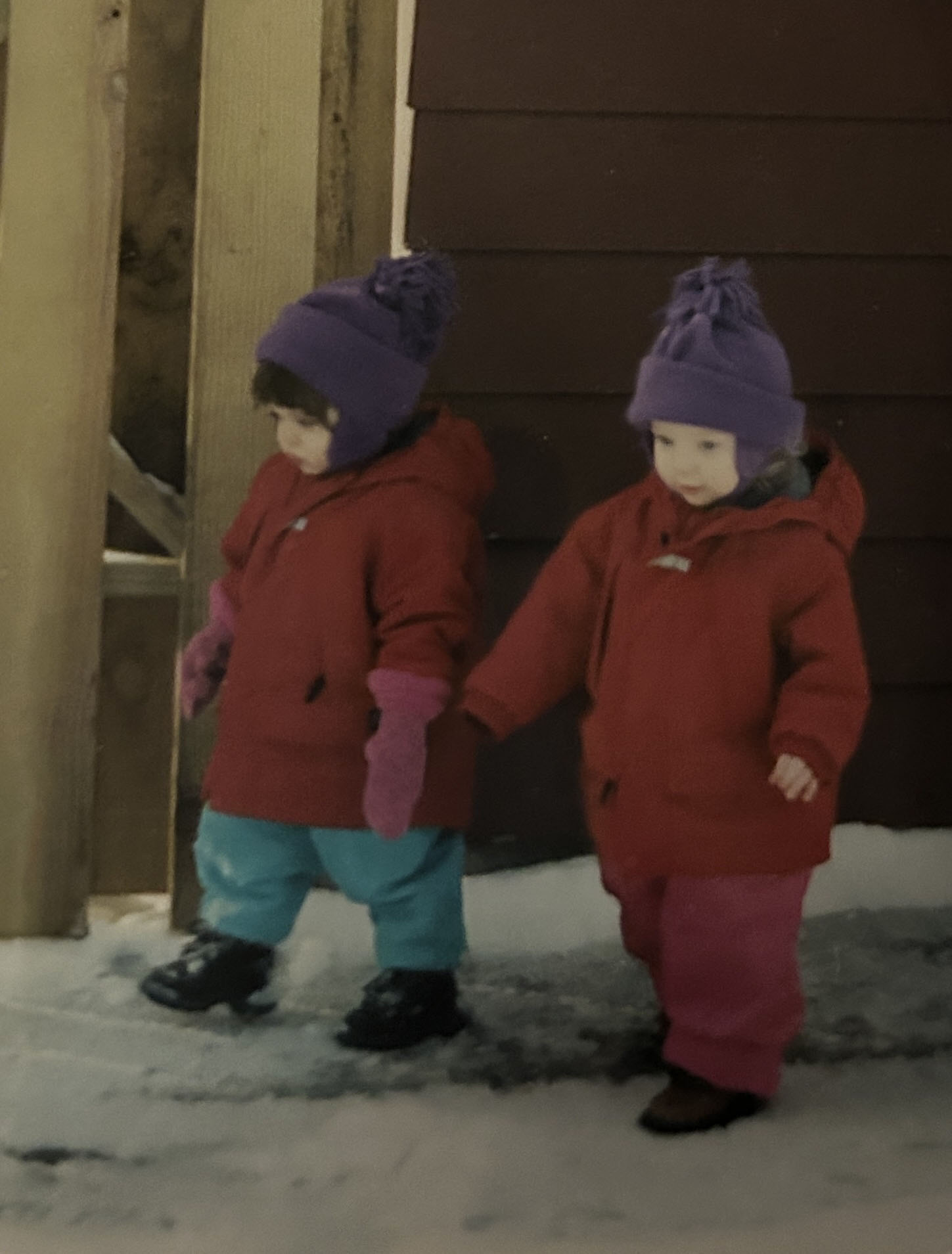
Even the cold of winter couldn’t keep us inside. Snowy days were my favorite. We’d bundle up head to toe in snow gear and meet the neighborhood kids outside. From there, we’d build a snow fort or spend hours carving sled paths out of the snow pile produced by the plowed church parking lot across the street. When our noses and toes got too cold, we’d march inside demanding hot cocoa from the first parent we came across. Needless to say, I have many fond memories of snowy Nebraska winters.
Upon reflection, my first formative experience with the effects of climate change could also be connected back to a Nebraska winter — an ice storm in the winter of 2007.
Leading up to the new year, our town experienced several days of freezing rain, and at 6 p.m. on December 30, the power went out. I didn’t understand its severity at the time.

At seven years old, my concern was directed toward our goldfish, Emily Elizabeth, and the sea monkeys I had gotten for Christmas the week before. I knew we lost power, but I didn’t really understand what that meant or how long it would be out. I didn’t know that our home would be without power for 17 days.
Now I know that there were over 40 steel transmission towers down, over 1,000 structures damaged, over 1,000 miles of high voltage lines out of service, 31 miles of transmission lines down, and around 35 communities with no power. The utilities alone faced $240 million in damages. Within a few days, vital buildings like the hospital received generators, but some parts of our town remained without power for six weeks.
I remember feeling slightly scared at first, but pretty quickly the ice storm felt a bit like a game. Our life started to remind me of the “Little House on the Prairie” books my mom had read to us. We ate dinner by candlelight, huddled together under blankets, and I started to realize why Laura Ingalls Wilder thought saltines and jam were an extravagant treat. In case you’re wondering, our goldfish Emily Elizabeth managed to survive the ice storm and live ten more years! The sea monkeys … well, who’s to say if they were even alive in the first place.

11 years after the ice storm, I moved to Minnesota for college, and believe it or not, the winters were one of my favorite parts! Nebraska winters seem to get less and less snowy every year, and the snow that managed to stick around for weeks (if not months) in Minnesota reminded me of the winters of my childhood.
It was in Minnesota that my perception of climate change and environmentalism expanded. I quickly learned that while climate change affects us all, it does not affect us all equally. Many communities are exposed to disproportionate amounts of pollution and catastrophic weather events. I learned that protecting the environment expands far beyond the great outdoors and that our indoor environment is equally important. It is this understanding of intersectional environmentalism that I apply to my work at Fresh Energy.
While the ice storm of 2007 was the first “unprecedented weather event” that I can remember experiencing, it certainly will not be the last.
It seems like we can’t go a week without a severe natural disaster wreaking havoc across a community and changing the way they view the world for good. I’d like to think that by doing the work we do, we’ll be able to lessen the suffering caused by climate change. And “these unprecedented weather events” will start to actually feel unprecedented.