
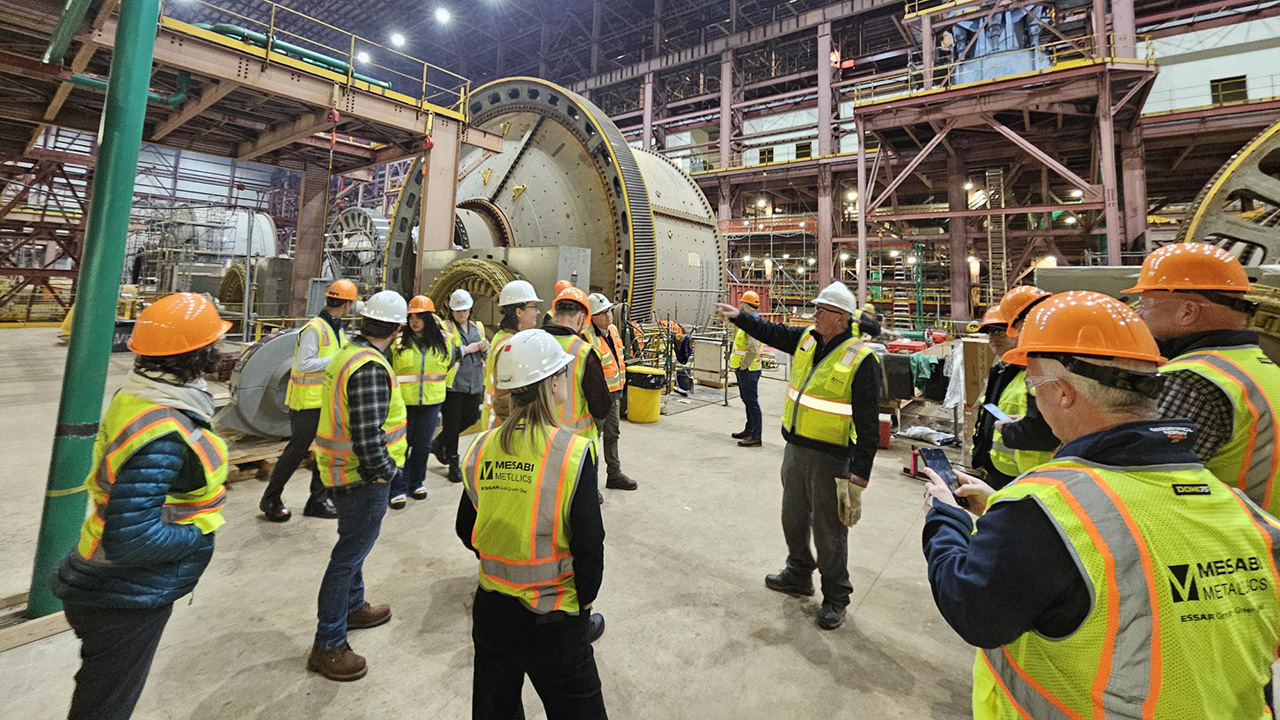
Manufacturing is a big economic driver in Minnesota. More than 8,500 manufacturers provide over 320,000 jobs, making it a backbone of the state’s economy. But here’s the challenge: factory pollution is rising, even as manufacturing jobs decline. The industrial manufacturing sector accounts for roughly 18% of Minnesota’s net climate emissions.
Most of the pollution comes from a very small number of sites. Just 59 factories produce almost all of the emissions from Minnesota’s manufacturing sector. Even more striking, 37 facilities across seven industries create about 87% of those emissions.
Emissions from factories are primarily produced by burning fuels and through chemical processes. Many of these facilities run 24/7, burning fossil fuels to produce large amounts of heat, much of which is lost as “waste heat.” While small and medium factories can often switch to cleaner options easily, these big facilities face greater barriers to change and need custom, long-term solutions.
Policy Solutions
| Energy Efficiency | Electrification of industrial heat sources | Fuel switching | |
| Overview | Prevent energy and heat waste through system and equipment upgrades | Replace gas- and coal-based heat with electricity using technologies like electric boilers, heat pumps, and thermal batteries | Replace fossil fuels with cleaner fuel alternatives |
| Benefits | Reduced operating costs and emissions. A recent CARD-funded study suggests that for every $1 that Minnesota invests in energy efficiency, the state should expect to see a return of $4 | Significant efficiency improvements, significant emissions reductions as MN’s grid becomes carbon-free. Can support grid-balancing through demand response | Lower-cost transition than wholesale equipment replacement. Using biomass as fuel rather than landfilling |
| Challenges | Requires significant upfront investment and planning around long-lasting equipment that may be decades old | Increased operating expenses due to relative cost of electricity vs natural gas/coal | While practical, and generally considered net-zero, resources like biomass still emit carbon when burned |
Why this matters NOW
Minnesota needs to work toward its 2050 net-zero goals to mitigate the higher health and environmental costs of emissions — and these goals cannot be achieved without prioritizing industrial emissions.
Minnesota has already shown a willingness to be forward-thinking with its manufacturing sector, but deeper support for efficiency and electrification is needed to ensure the state doesn’t fall behind peers like Illinois and Michigan. Investments into clean industrial technologies will encourage:
- Economic development – job creation, attracting new industry, skill diversification, onshoring through vertical integration
- Grid resilience – improvements to support industrial electrification benefit residential ratepayers as industrial thermal storage balances demand with the grid’s increasing carbon-free renewable energy generation
- Manufacturing competitiveness – ensuring Minnesota’s manufacturers are well-positioned to compete in a transforming global market
Timely changes — access to competitive time-of-use electricity rates, state funding to support feasibility studies and retooling projects — are critical now. Otherwise, every industrial boiler that reaches end-of-life will be replaced with a new fossil-fuel boiler, locking Minnesota into decades of additional pollution.
Next steps
To move forward, Minnesota should:
- Prioritize grants and incentives that encourage adoption of clean and efficient factory technologies
- Align push and pull mechanisms, balancing regulations vs incentives to ensure mutual collaboration between the state and industrial operators
- Educate manufacturers — support demonstration projects and technical assistance, industrial hubs, and cross-sector learning from best-in-class
- Implement modern electric rate structures — lower the cost of production through electric tariff reform
- Coordinate infrastructure, workforce training, and economic development at the regional level
- Support development of clean hydrogen opportunities to support industrial fuel-switching and diversification
Bottom line
Clean manufacturing is modern manufacturing — and that’s how Minnesota’s manufacturers will keep their competitive edge. That means supporting energy efficiency, industrial electrification, and fuel switching opportunities through thoughtful action now.
Want to learn more?
5 Lakes Energy, Great Planes Institute, the University of Minnesota’s Natural Resources Research Institute (NRRI), and Fresh Energy recently collaborated on a report, “Net-Zero Industry in Minnesota: Foundation for a state roadmap built on stakeholder perspectives” delving into this very topic. Read the report here.