
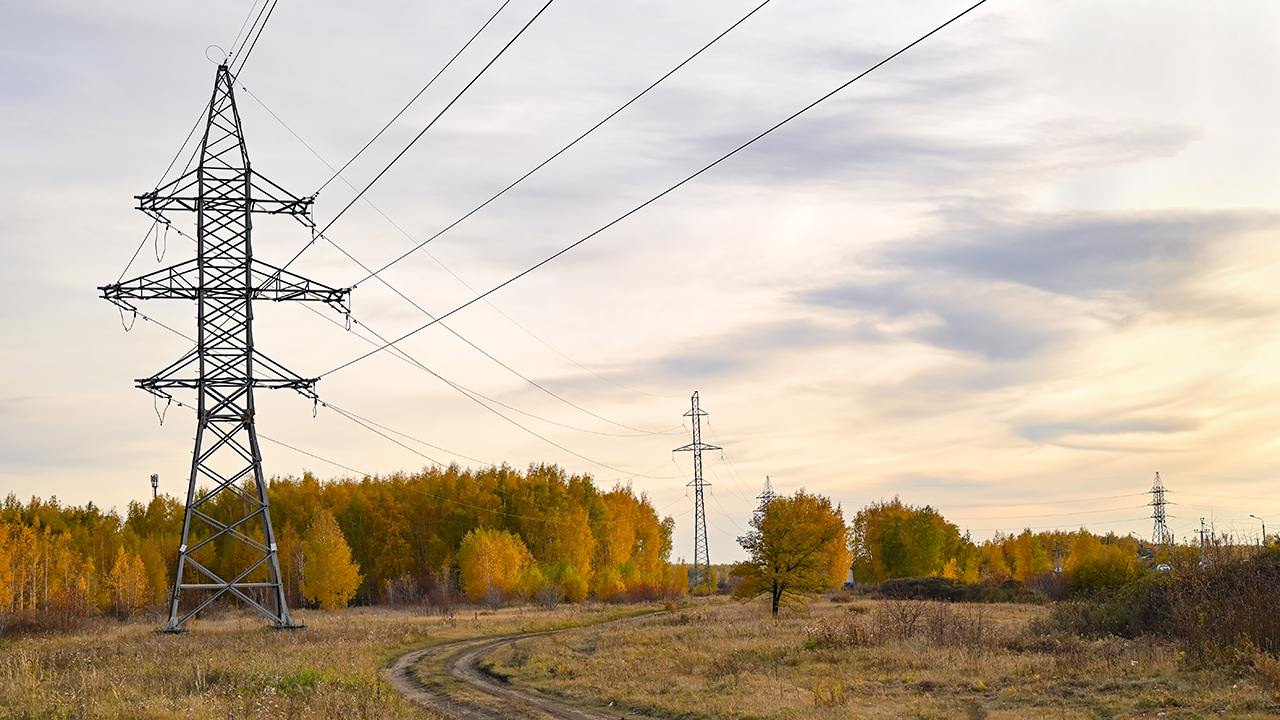
Public interest advocates from across the Midwest filed a protest with the Federal Energy Regulatory Commission (FERC) on September 9, 2025, urging it to reject a complaint that would stall efforts to add 24 new power lines in the Midcontinent Independent System Operator (MISO) region. The new lines would save customers between $26 and $83 billion over the next 40 years while improving reliability in the face of increasing weather extremes and rising energy demands from data centers and other industries.
Nearly a year after the portfolio of new power lines for the Upper Midwest was approved by MISO — and after years of state and stakeholder input and review informing the plan — a small group of mostly unaffected states in the Gulf South portion of MISO suddenly brought a complaint designed to derail implementation.
A coalition of organizations argue that the complaint seeks to unsettle the result of a years-long planning process that will provide billions in benefits to consumers and enable badly needed new generation to connect to the grid. If granted, the baseless complaint would make it much harder to build transmission lines anywhere in the United States. The coalition includes Clean Wisconsin, Environmental Defense Fund, Fresh Energy, Sierra Club, Solar Energy Industries Association, Sustainable FERC Project, Union of Concerned Scientists, and NRDC (Natural Resources Defense Council).
The organizations that filed the protest provided the following statements:
“Transmission expansion along the lines of MISO’s LRTP Tranche 2.1 enable both our country’s advancement of cheap clean energy and ability to remain economically competitive on a global scale,” said Mike Schowalter, Director for RTO Advocacy at Fresh Energy. “At a time when our nation’s heartland is poised to become a leading, clean industrial center of the globe, the complainants ask FERC that we step backwards and let other countries take the lead. Additionally, being centrally located in the middle of the Eastern Interconnection, MISO’s LRTP Tranche 2.1 further enhances our country’s resilience and ability to respond to the type of energy emergencies that MISO’s neighbors have recently experienced to the east and west.”
“We are fighting for families across the Midwest who need more affordable energy,” said Casey Roberts, Director of RTO Advocacy, Climate & Energy, at NRDC. “These new transmission lines help connect new sources of cheaper and cleaner power to the customers who need it. This complaint is a short-sighted effort by a group of states that have little to no skin in the game to deprive consumers in other states of these benefits. FERC should deny this complaint, which seeks to make it impossible to build new transmission lines anywhere in the U.S. This would hold up new power projects, making the grid less reliable, and electricity more expensive.”
“The power lines identified through MISO’s process to plan for the grid of the future, which took two years of collaboration and analysis, are needed now more than ever in this time of rapid change in the electricity sector” says Ciaran Gallagher, Energy & Air Manager at Clean Wisconsin. “This complaint is a threat to cheaper, cleaner, and more reliable electricity, not just for Midwesterners but all Americans. If FERC does not deny this complaint, then the needed long-term transmission planning will stop in its tracks across the country.”
“As our electricity grid expands and demand for electricity goes up, we must build out more transmission, for the same reason that growing children need new shoes,” said Greg Wannier, Senior Attorney with the Sierra Club. “Interrupting MISO’s well-vetted and conservative transmission planning process will create significant short-term and long-term problems for the region and will undermine grid reliability and energy affordability. We simply cannot have American energy dominance if FERC sides with the commissions that brought this frivolous challenge.”
Background:
MISO approved a historic transmission plan in December 2024 that would benefit Midwestern consumers with lower energy costs and a stronger and modernized electrical grid. The MISO transmission plan benefits consumers with enhanced reliability, clean energy sources, and reduced long-term energy costs.
The portfolio of 24 power lines in the upper Midwest – called “Tranche 2.1” — was planned by MISO to facilitate the energy resource plans of utilities and states, including North Dakota, South Dakota, Minnesota, Wisconsin, Michigan, Indiana, Illinois, Iowa, Missouri, Kentucky and Montana. The lines are vital to enabling development of nearly 116 gigawatts of new generation – mainly solar, wind and battery storage — to come online economically and reliably at a time of growing demand for power.
MISO’s plan, detailed in its MTEP24 Report, includes three distinct groups of projects: Tranche 2.1 portfolio, the Joint Targeted Interconnection Queue (JTIQ) portfolio, and a portfolio comprising local initiatives. It projects to provide between $26 and $83 billion in net benefits to consumers regionwide over 40 years.
The coalition’s petition argues that the complaint largely fails to recognize how efficient regional transmission planning is conducted. MISO planned the grid based on the resource plans of utilities and states all across the upper Midwest – from Michigan to Indiana to Iowa to North Dakota to Wisconsin. Most of the states who filed the complaint, Louisiana, Mississippi, and Arkansas, are not involved in paying or benefiting in any way in Tranche 2.1. Some of these are states have often sought to block and stall regional transmission progress because their monopoly utility Entergy doesn’t want access opened to power it doesn’t own or profit from.
Building more transmission lines is one of the most cost-effective ways to cope with data centers’ and AI’s rising demand for electricity. Expanding the grid with new power lines will bolster reliability in the face of severe weather and provide greater access to renewables, which are the cheapest sources of electricity. The Tranche 2.1 lines will do just that – saving upper Midwest households more than $16 billion just by avoiding the need to build about 20 big new power plants.