
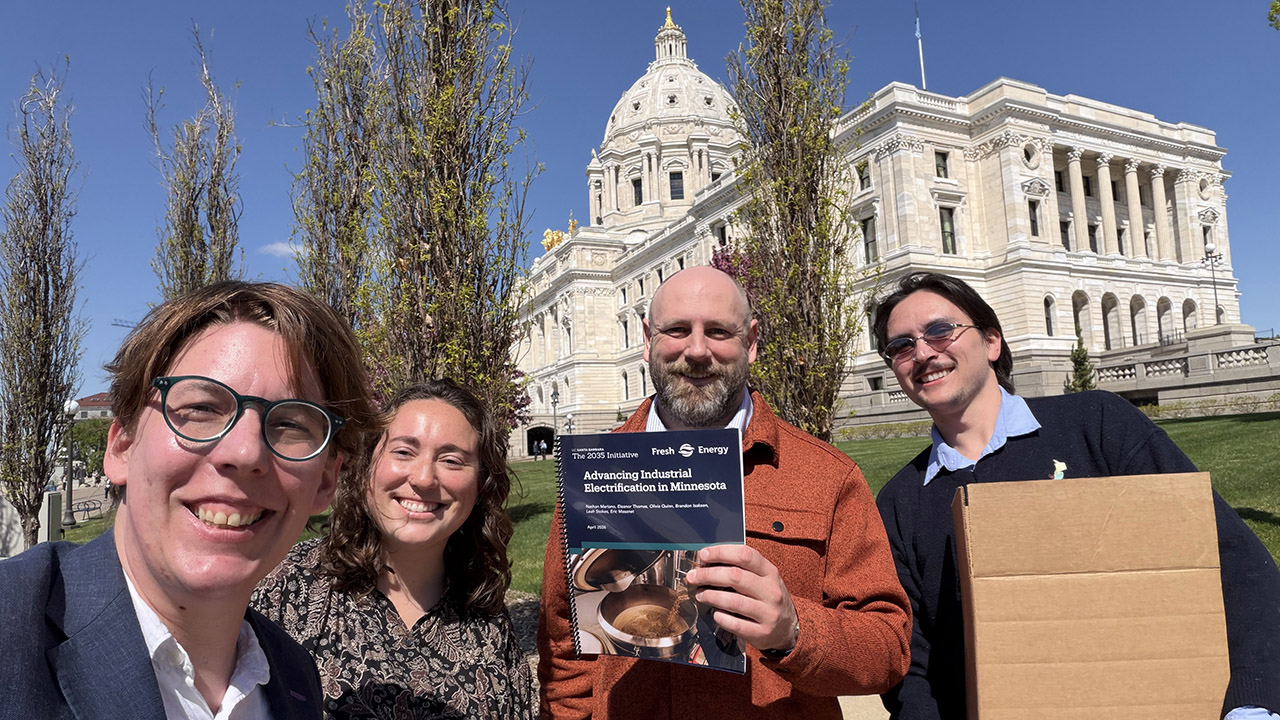
Through every winter and into spring, Fresh Energy works hard at the State Capitol to advocate for the Minnesota Legislature to pass strong laws and frameworks that equitably and rapidly build our clean energy future. This year’s legislative session ended late on the evening of Sunday, May 17, and some climate policies that will benefit Minnesotans did make it over the finish line. This also marks a close to our current biennium, our state’s two-year budget cycle.
Throughout the entire legislative session, Fresh Energy worked to defend and advance climate progress through historically tight margins, a tied House, and a one-vote difference in the Senate. This challenging political landscape required bipartisan support for any bills to pass and become law. Because of this, the window of possibilities for this year were narrower than we’d like to see.
However, through our work and advocacy, we did ultimately create opportunities to build issue-based support for future sessions and find bipartisan common ground on policies like Sustainable Aviation Fuel (SAF), a nuclear study, and geothermal technology.
Energy policies and emerging issues in Minnesota’s 2026 session
No matter the makeup of the Minnesota Legislature, Fresh Energy will always strive to defend and advance progress on climate and clean energy policy. This year, our staff testified nine times in person, submitted written testimony 21 times, and helped educate legislators on issues we want to advocate for in future sessions. The Fresh Energy Action Network of 3,000 super-engaged clean energy advocates also stepped up to send hundreds of messages to their elected leaders advocating for strong building codes, geothermal projects, and thoughtful gas infrastructure planning.
One of the biggest climate legislative wins this session was advancing new incentives and rules for Sustainable Aviation Fuel (SAF), which was included in the final tax bill. SAF presents the best chance at near-term, significant climate emissions reduction from commercial aviation — an industry that can’t be decarbonized through simple electrification. Defined as aviation fuels that emit at least 50% fewer greenhouse gas emissions than traditional jet fuel, SAF is a promising opportunity to reduce emissions from this hard-to-abate mode of transportation.
Fresh Energy’s advocacy this spring supported the passage of stakeholder-negotiated incentives and environmental guardrails to build a SAF industry in Minnesota while ensuring the cleanest fuel pathways receive the highest incentives. The policy included eligibility for “Power-to-Liquid” SAF or “e-kerosene” that uses green hydrogen and captured carbon dioxide to produce an alternative to conventional, oil-based jet fuel with over 90% fewer climate emissions. If you’d like to learn more about SAF, tune into the recording of our post-session debrief on Decarbonize: The Clean Energy Podcast for a deeper dive into SAF with Fresh Energy’s Anjali Bains.
A nuclear energy study that Fresh Energy supported also passed in the tax bill. This study is intended to help inform policymakers on the potential impact of new nuclear generation in Minnesota and will dig into its effects on affordability, reliability, environmental protection, and public health. The report is due to the Minnesota Legislature by February 1, 2027, and must include discussion of the prospects for small modular reactors and factory-built portable modules with a capacity of up to 300 megawatts.
Momentum grows for climate progress next year
While some climate policies did not make it across the finish line, there was significant momentum for Thermal Energy Networks, geothermal projects, green ammonia, and green hydrogen. Throughout the last two years, Fresh Energy has advocated for policies and funding to support the deployment of these clean, efficient technologies, and we look forward to advocating for them in the upcoming session.
This year the Minnesota Legislature considered additional money for geothermal planning grants and legislation that would designate Thermal Energy Network (TEN) systems as public improvements and grant municipalities the power to finance these clean, efficient geothermal systems with general obligation bonds. This would lower upfront costs to local governments and allow them to spread investments toward these systems over time. After passing the state Senate this session, these proposals are well-positioned for success in future sessions.
Defending our progress was a significant effort this session. There was an attempt to repeal advanced building codes, and our staff alongside nearly 20 partners activated swiftly to show up and demonstrate the clear public benefits of efficient, climate-ready buildings. It was exciting to see the Minnesota Efficient Builders Coalition add their advocacy to this legislative defense.
Fresh Energy also defended against attempts to repeal an existing sunset on a utility rider for gas infrastructure investments. As we accelerate work to understand what a decarbonized future means for the current gas system, Fresh Energy believes that having utility investments reviewed in context as part of a general rate case serves utility customers more effectively than a legislatively approved rider, and we appreciate that the planned sunset date remains in place.
What’s next?
In the coming biennium we are sure to see more changes. All legislators are up for re-election, and we have seen a near record number of retirements. Minnesota is sure to see a large class of new members and new leaders.
Fresh Energy is already planning our climate legislation priorities for 2027 and looking to advance deployment of affordable and reliable clean energy that will benefit all Minnesotans.
Learn more by tuning into the post-session recap podcast episode recorded by Fresh Energy staff on May 19, 2026. Decarbonize: The Clean Energy Podcast is available on your favorite podcasting app.